How to Upload Raw Photos to Vsco
VSCO is a powerful iPhone photograph editor and the best free camera app for iPhone. Merely with so many features, it can be confusing to use. That'south why we created this in-depth VSCO tutorial. Read on to discover how to use VSCO app to shoot and edit beautiful iPhone photos.
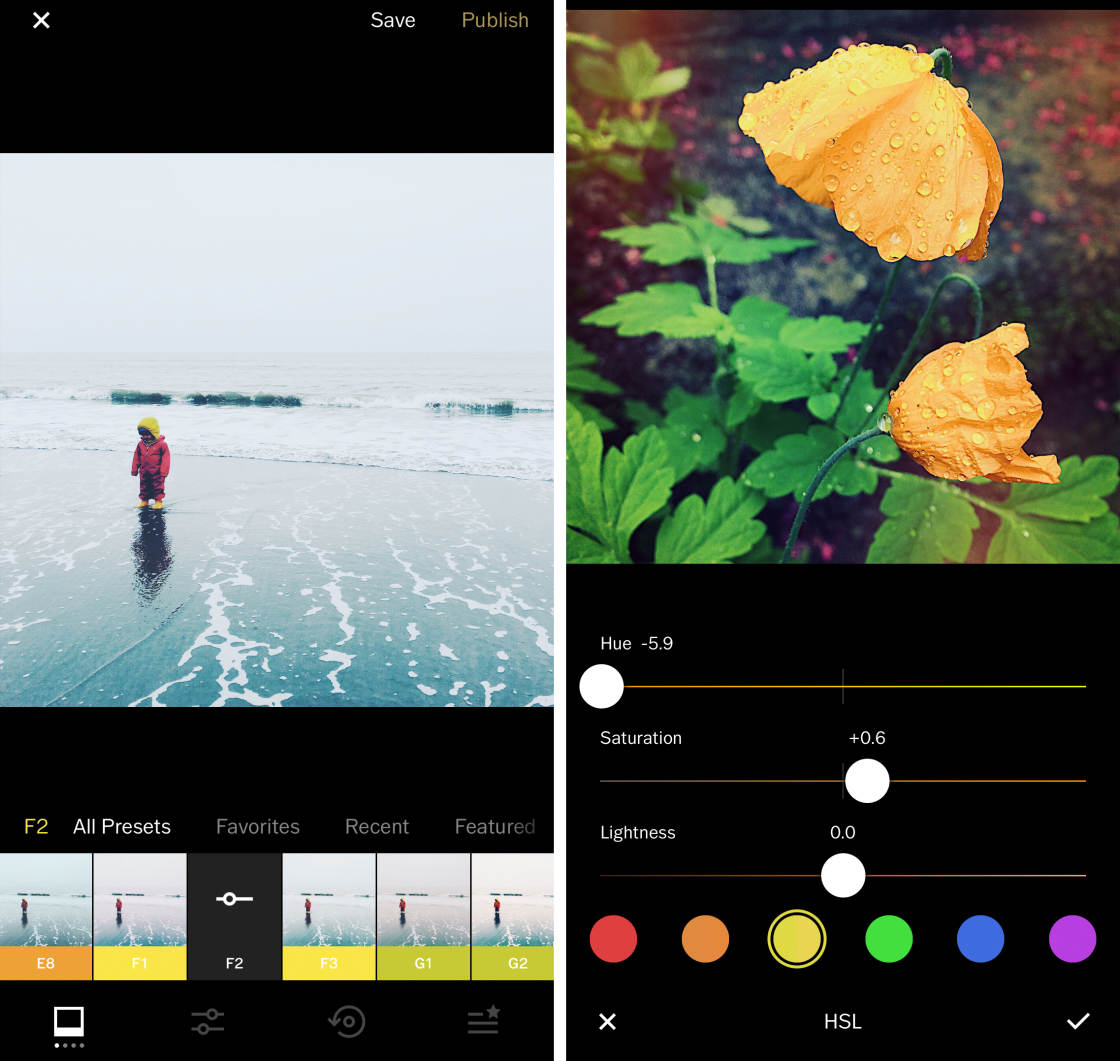
Table Of Contents: VSCO Tutorial
Click any title link below to go straight to that section of the article:
i. How To Apply VSCO App: Overview
1.1 Navigate The VSCO App
i.2 Import Photos Into VSCO For Editing
1.iii Open The VSCO Photo Editor
two. VSCO Filters
2.ane Utilise A VSCO Filter To Your Photo
2.2 Download More VSCO Filters
3. VSCO Photo Editing Tools
3.1 Exposure
3.ii Contrast
three.three Adjust (Crop, Rotate, Straighten & Skew)
3.4 Sharpen
3.5 Clarity
3.6 Saturation
3.7 Tone
3.eight White Residue
3.9 Skin Tone
3.10 Vignette
3.xi Grain
3.12 Fade
3.thirteen Split Tone
3.14 Borders
iii.15 HSL (Hue, Saturation & Lightness)
3.sixteen Change Or Delete Individual Edits
4. Save Your Edited Photo
5. How To Employ VSCO Camera
5.one Focus & Exposure
5.2 Transmission Camera Controls
5.3 RAW Format
5.4 Filigree & Tiltmeter
5.five Flash
5.6 Exposure Bounty
5.7 White Residuum
5.8 Manual Focus
5.9 Shutter Speed
5.10 ISO
5.11 Preview Your Photos
5.12 VSCO Photographic camera Vs. iPhone Camera App
1. How To Utilize VSCO App: Overview
What is VSCO?
Information technology's a fantastic app that lets you shoot, edit and share your iPhone photos.
But if you're new to the app, it tin can be hard to find your manner effectually. And some of the icons don't have labels – which can make it even more disruptive.
And then, in this department, you'll larn how to navigate around VSCO and import your photos for editing.
i.i Navigate The VSCO App
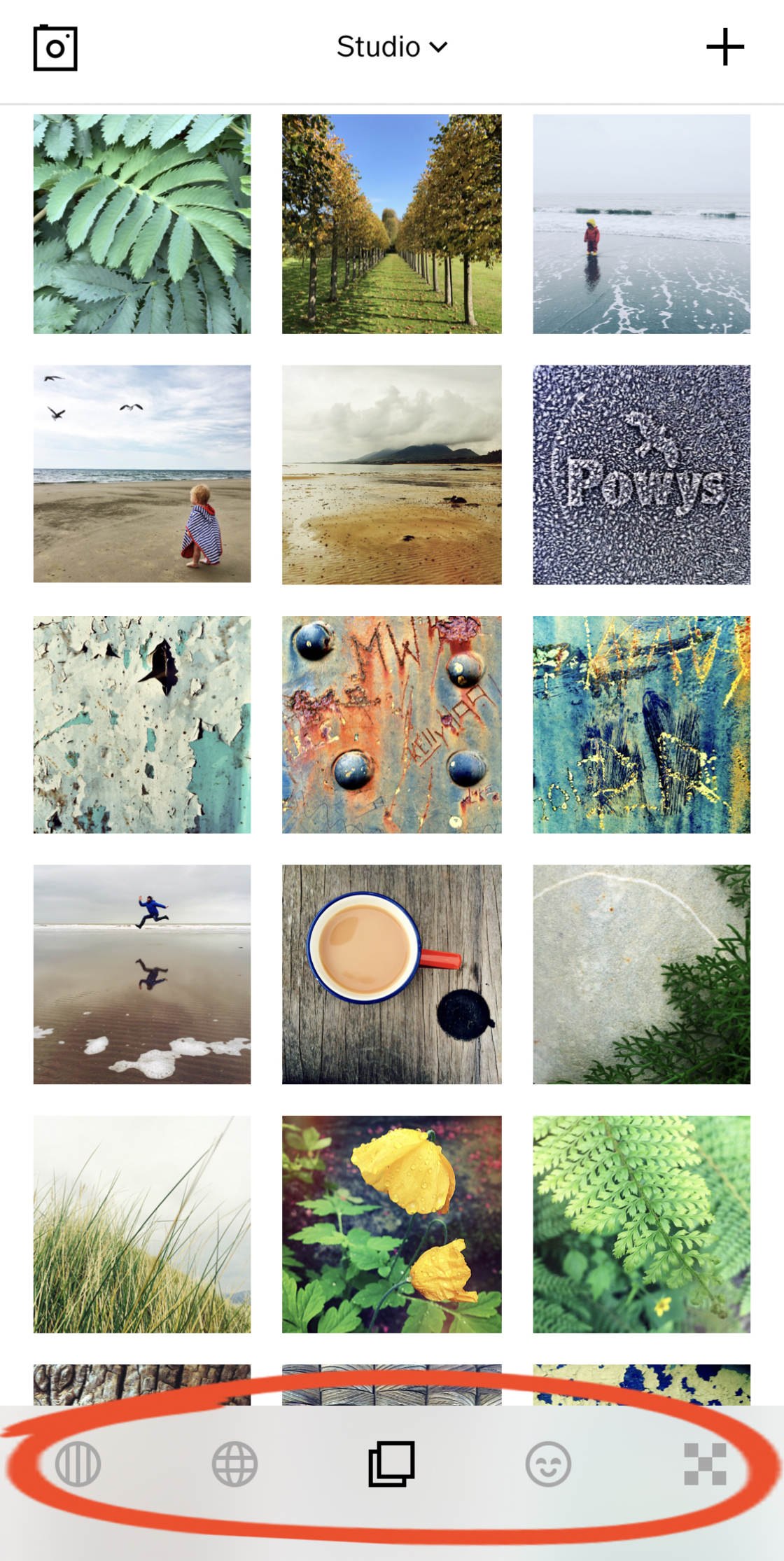
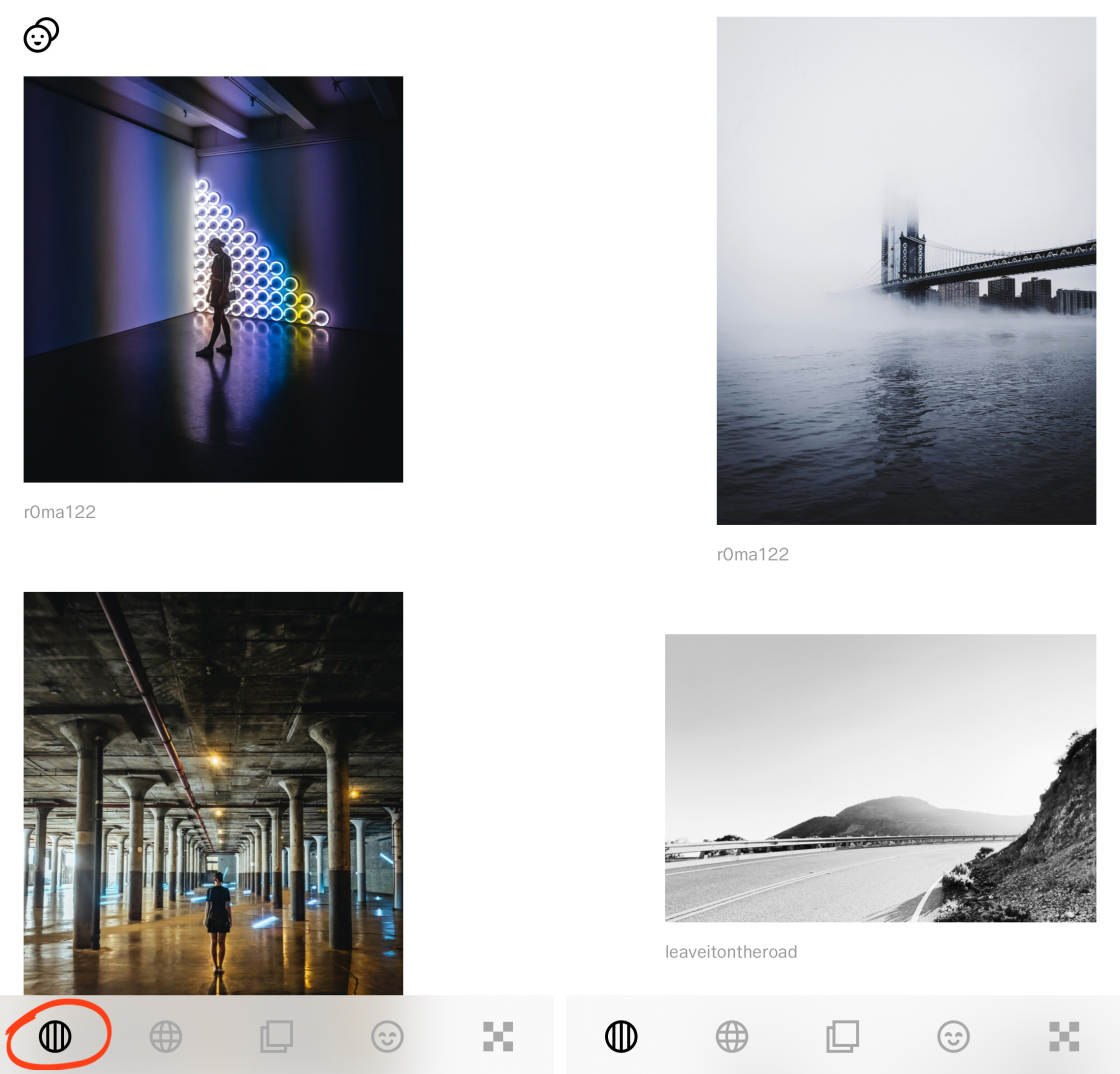
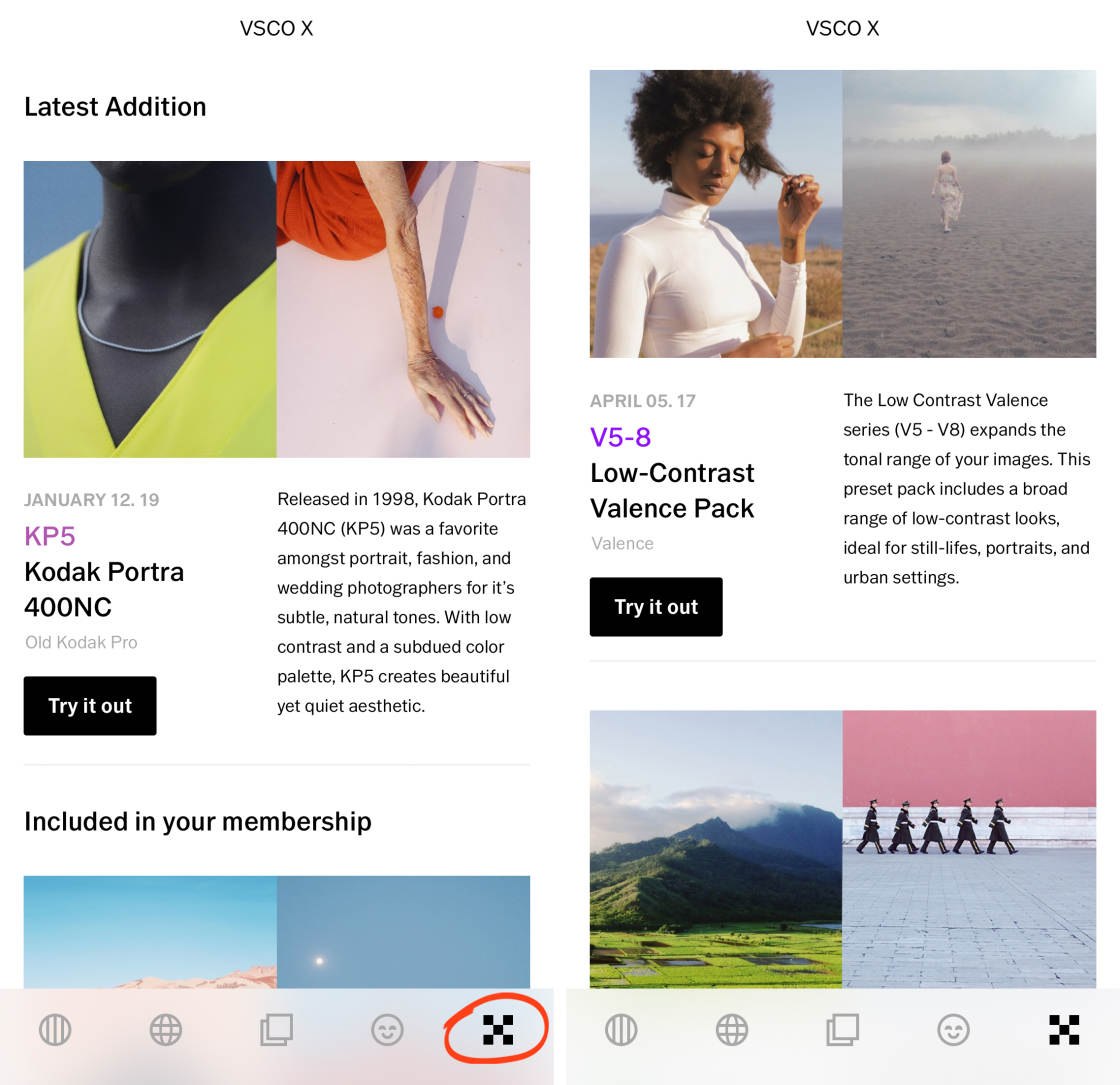
When you open the VSCO app, you'll see five icons at the bottom of the screen. From left to right, these areVSCO Feed, Discover, Studio, Profile, and VSCO X.
The VSCO Feed (circle icon with three lines) displays photos from people y'all follow on VSCO.
The Discover icon (circumvolve icon with 4 intersecting lines) lets you discover new photographers in the VSCO community.
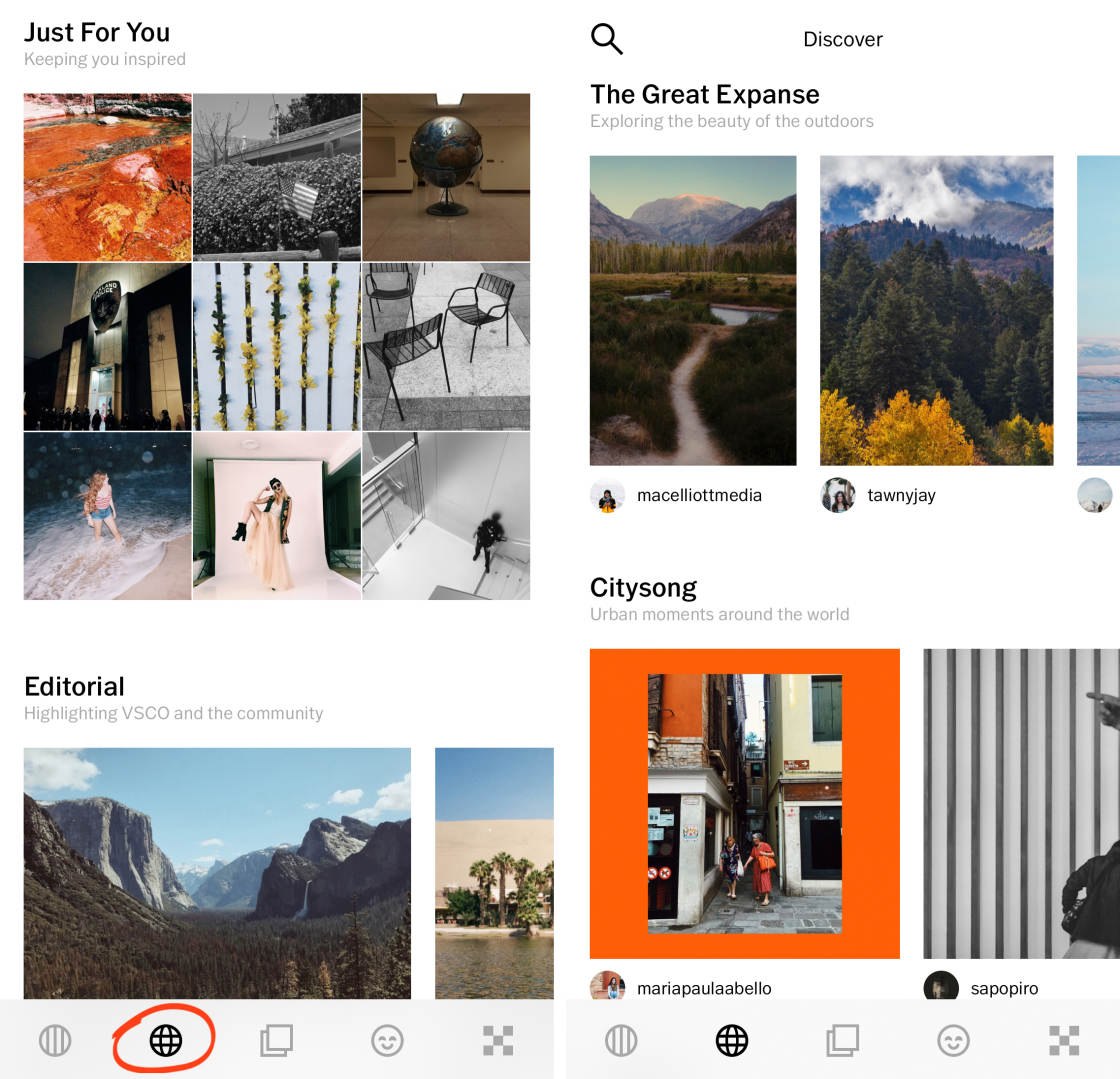
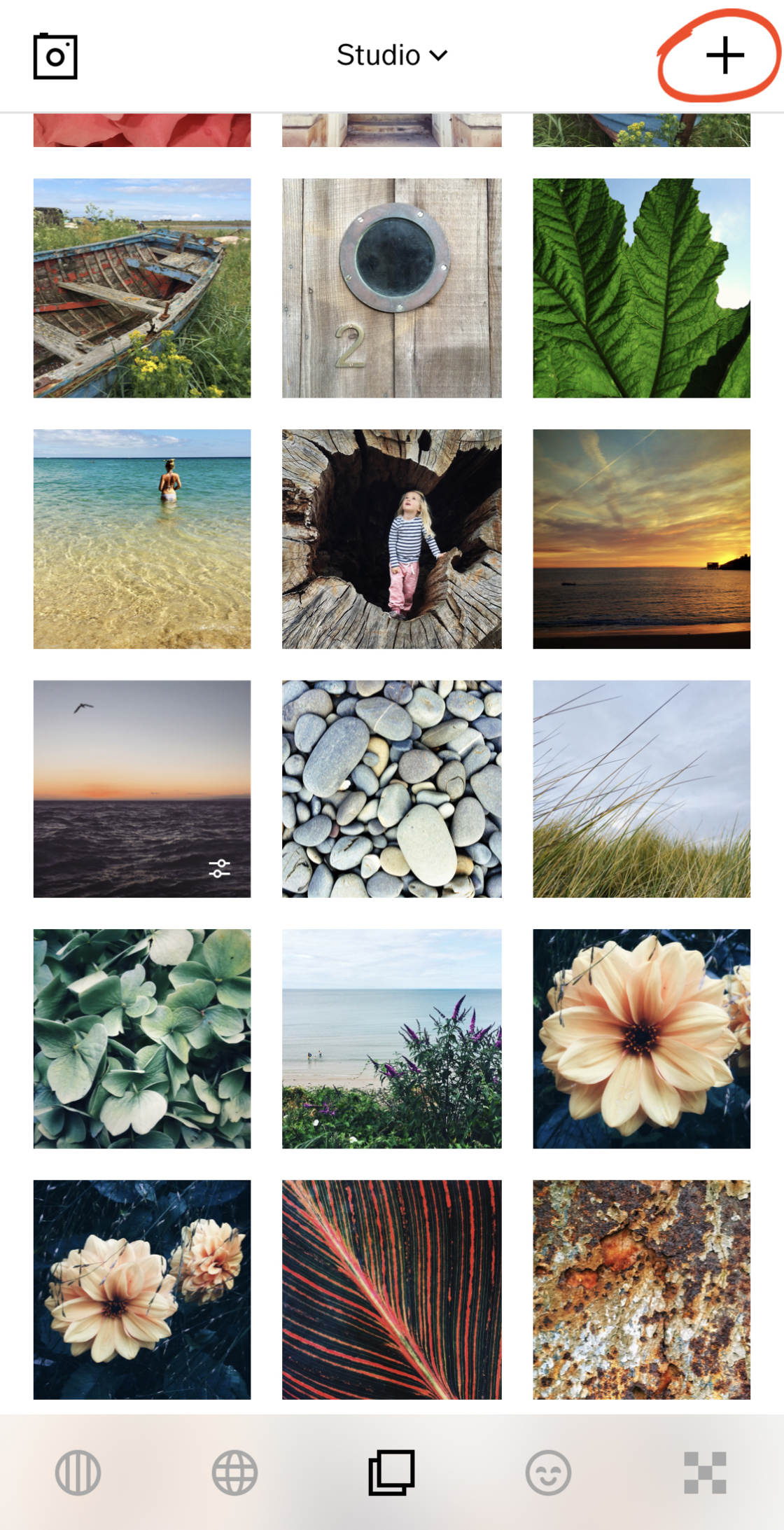
The Studio (two stacked squares icon) is where you import your photos fix for editing.
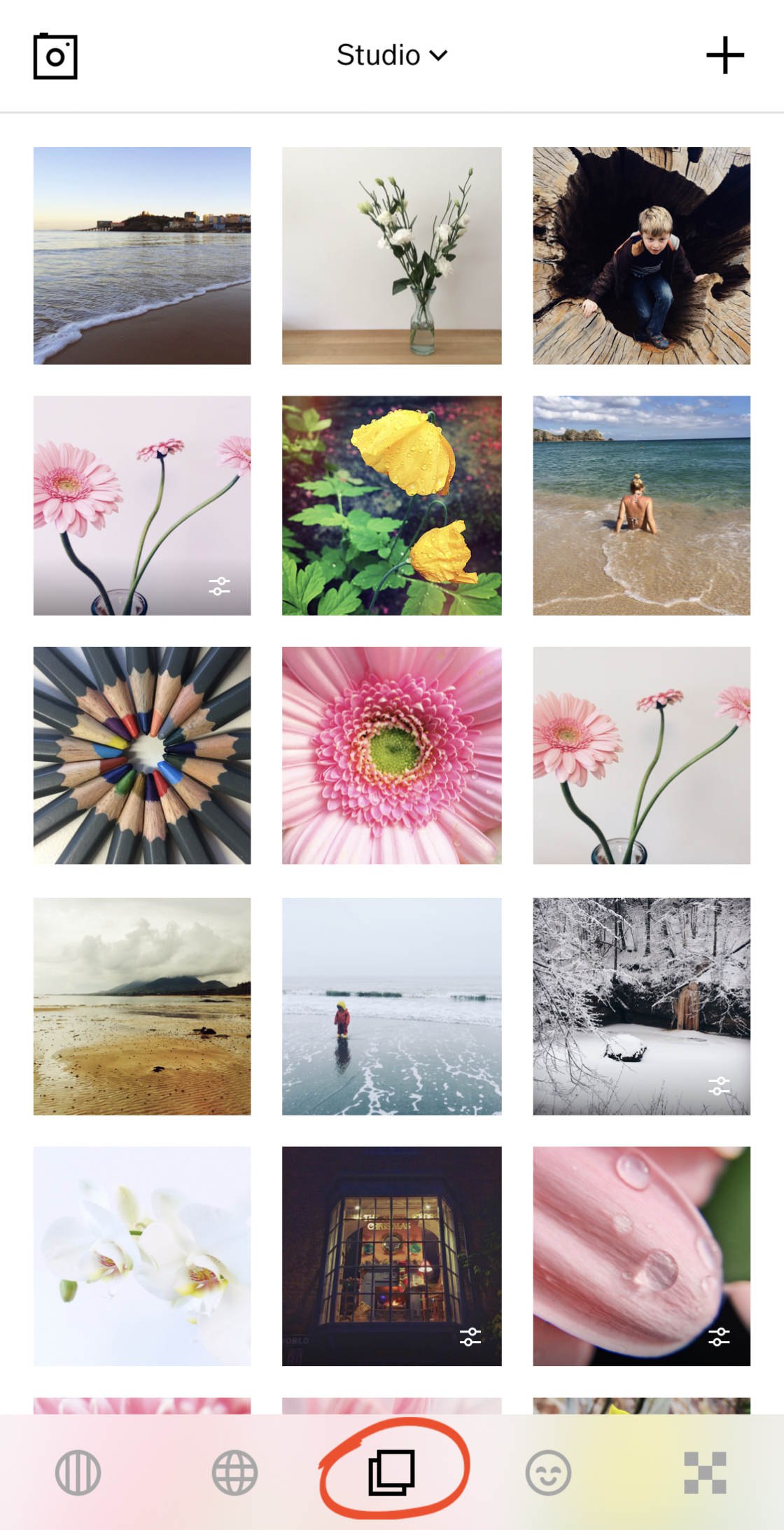
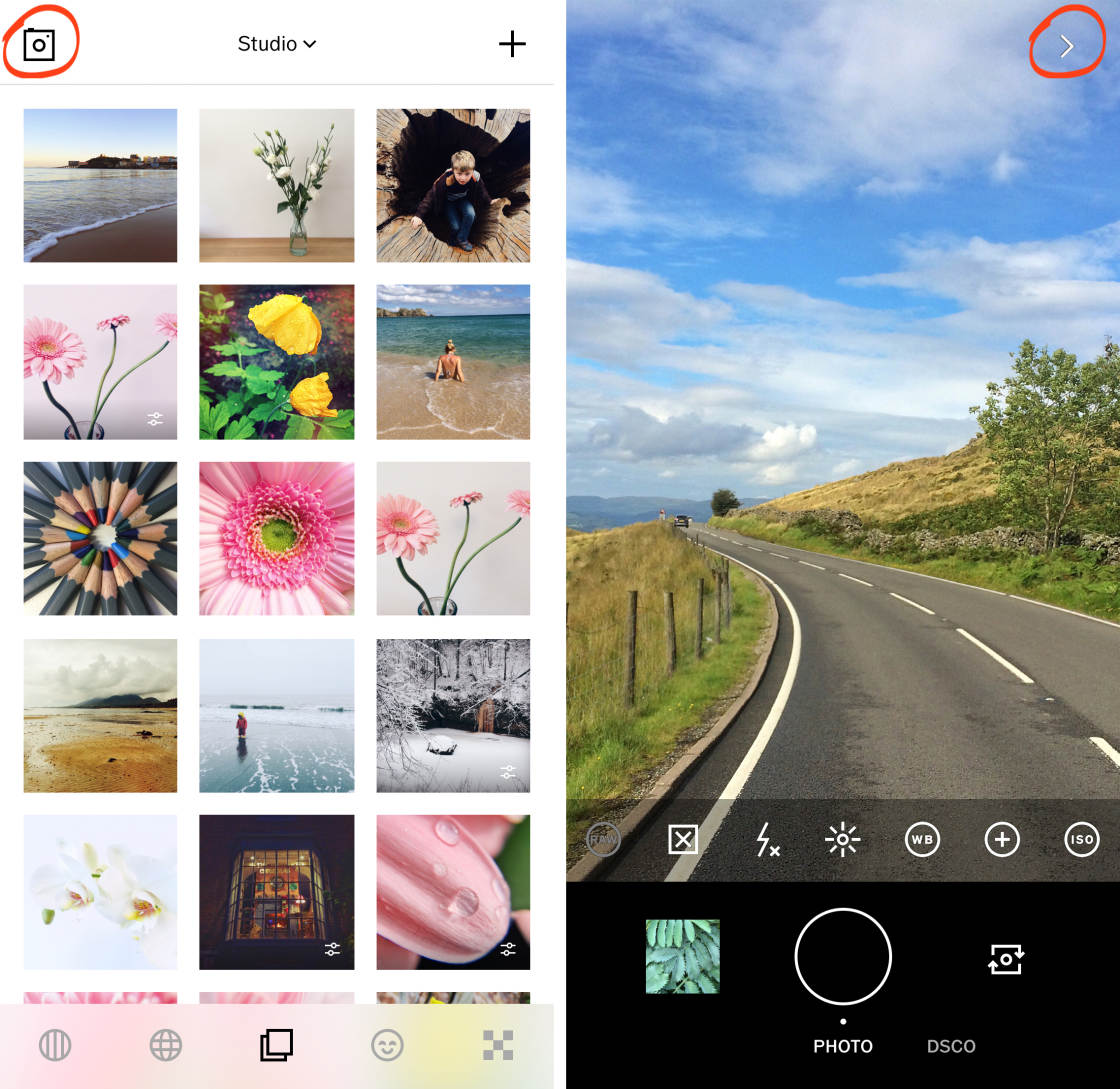
To open the VSCO camera, tap theCamera icon at the meridian left of the studio screen. When y'all've finished taking photos, tap the arrow at the top correct to get out the camera.
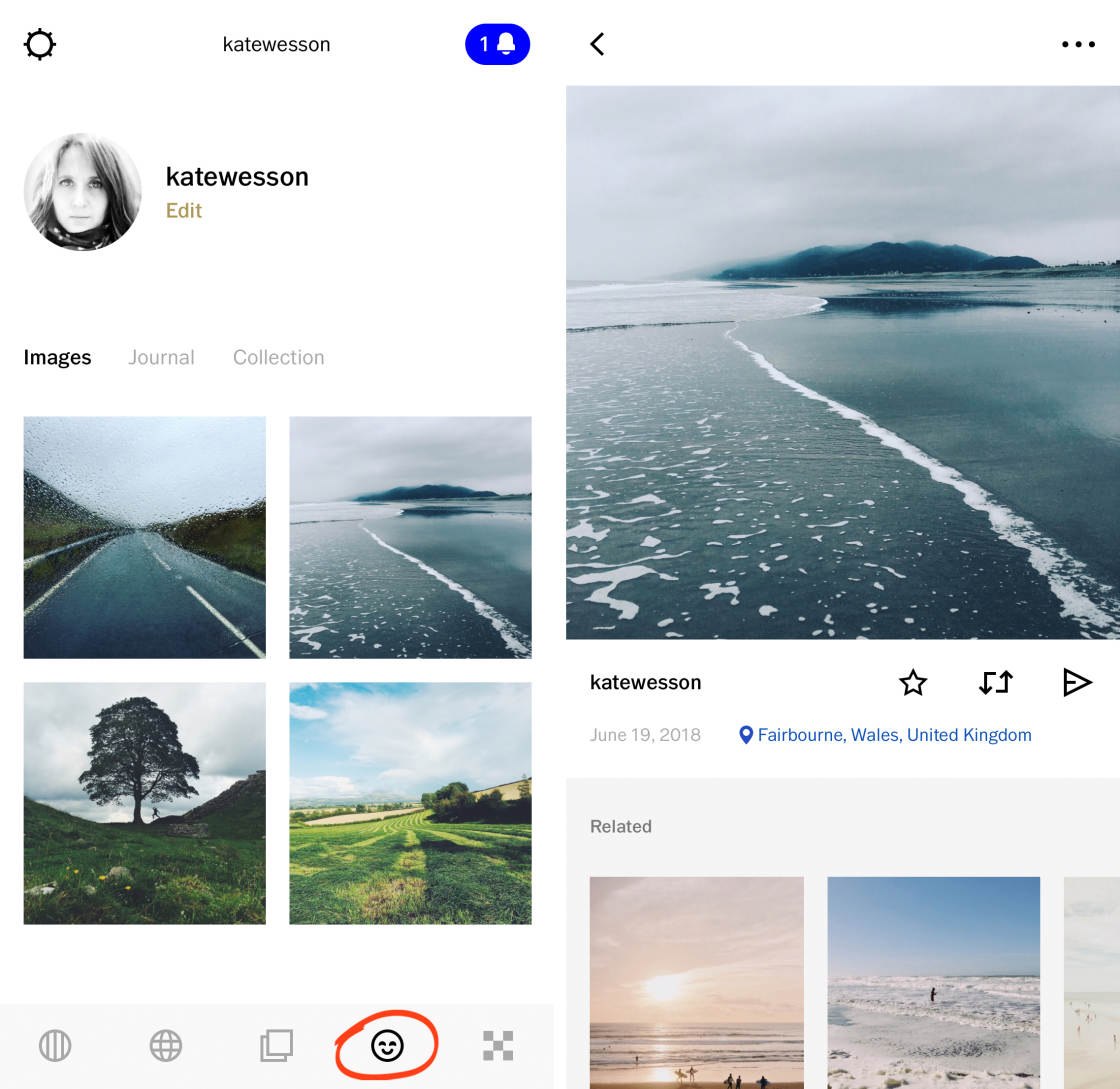
The Profile icon (smiley face icon) displays photos that y'all've shared with the VSCO customs.
TheVSCO X icon at the bottom correct allows yous to subscribe to VSCO X membership. For $xix.99 a yr, you lot'll get access to the unabridged range of VSCO filters, every bit well every bit additional editing tools.
1.two Import Photos Into VSCO For Editing
To edit a photo in VSCO, you commencement have to import the paradigm from your iPhone's photo library. Tap the [+] icon at the top right of the VSCO studio.
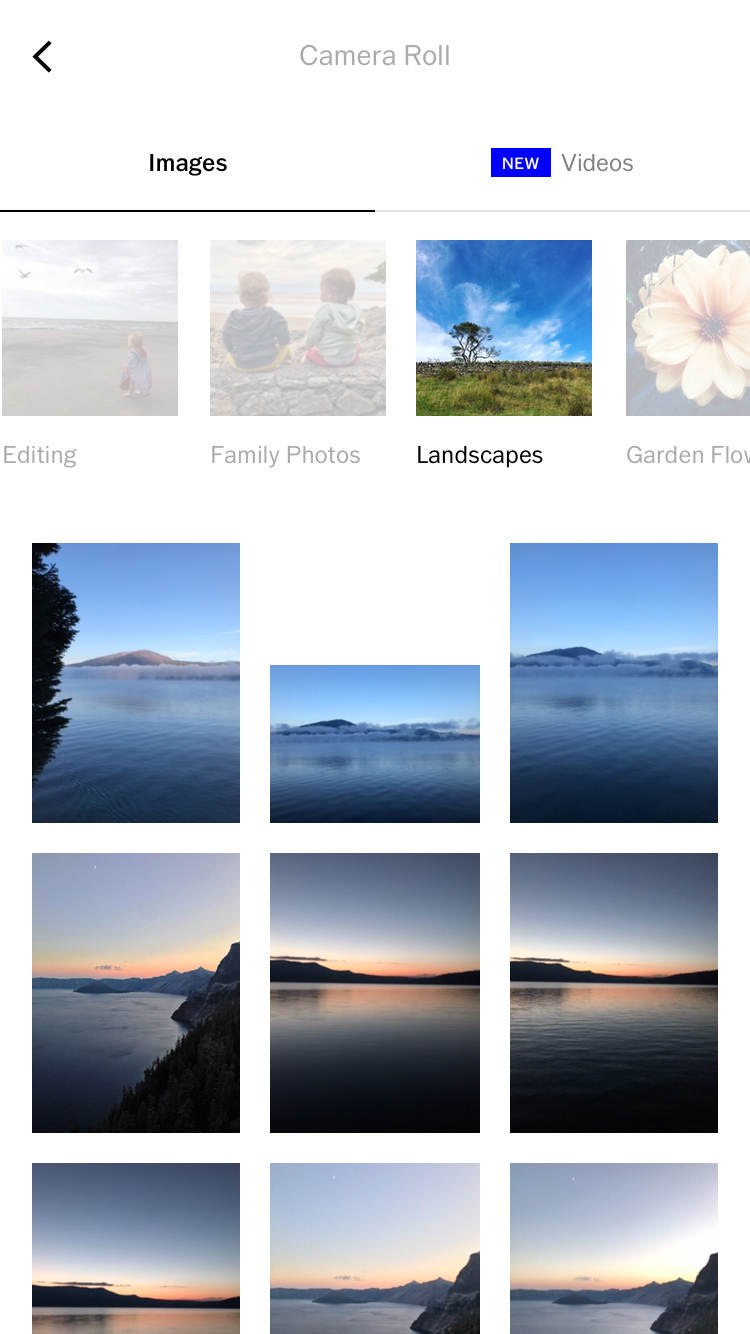
The Camera Roll screen will announced. This displays the images from your iPhone's photo library.
Coil down to view more images. Or select a different album from the row of albums at the meridian of the screen.
Tap on the photo or photos you lot desire to import for editing. Then tapImport at the lesser of the screen.
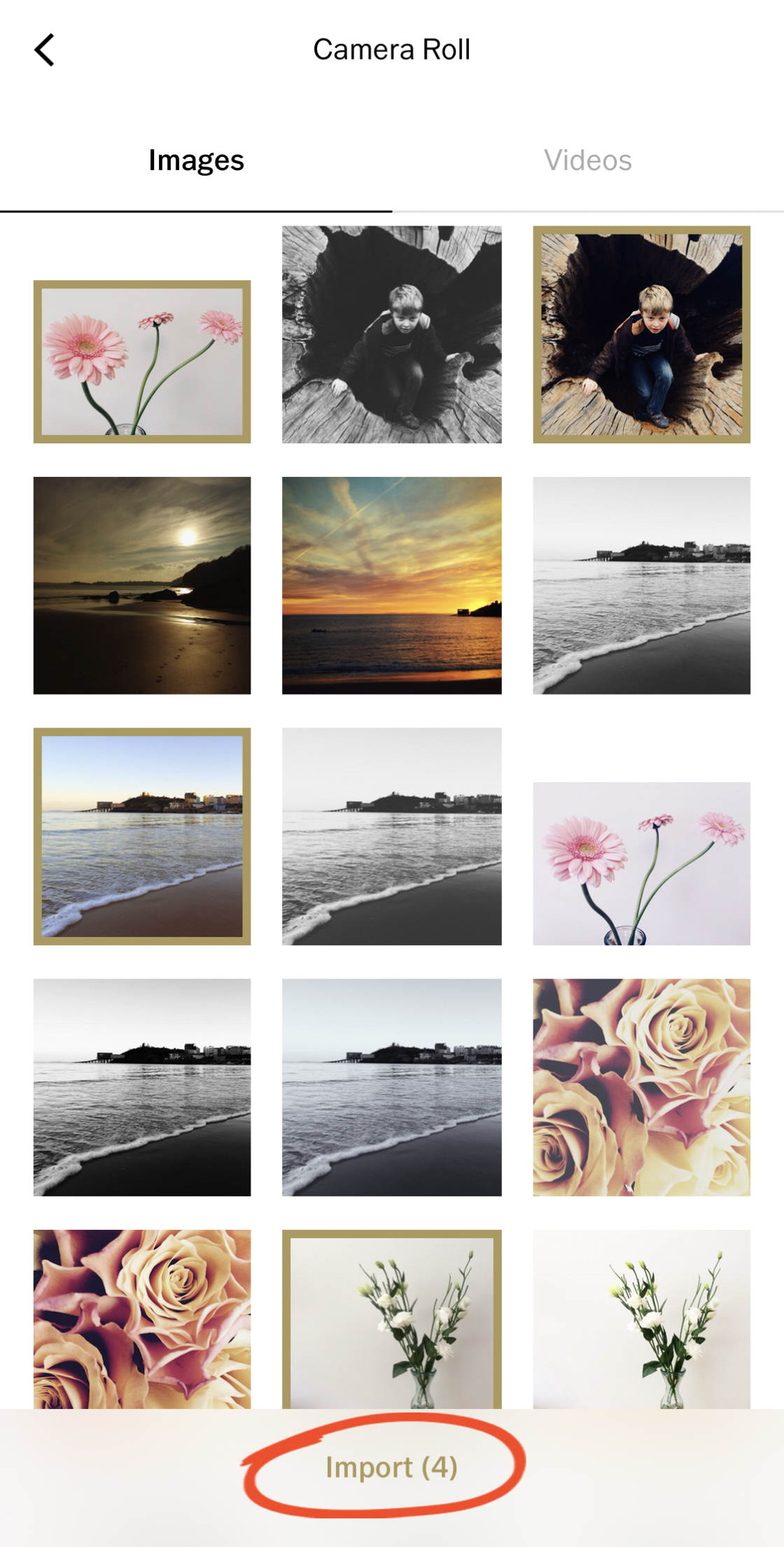
The imported images volition appear in your VSCO studio.
1.3 Open The VSCO Photo Editor
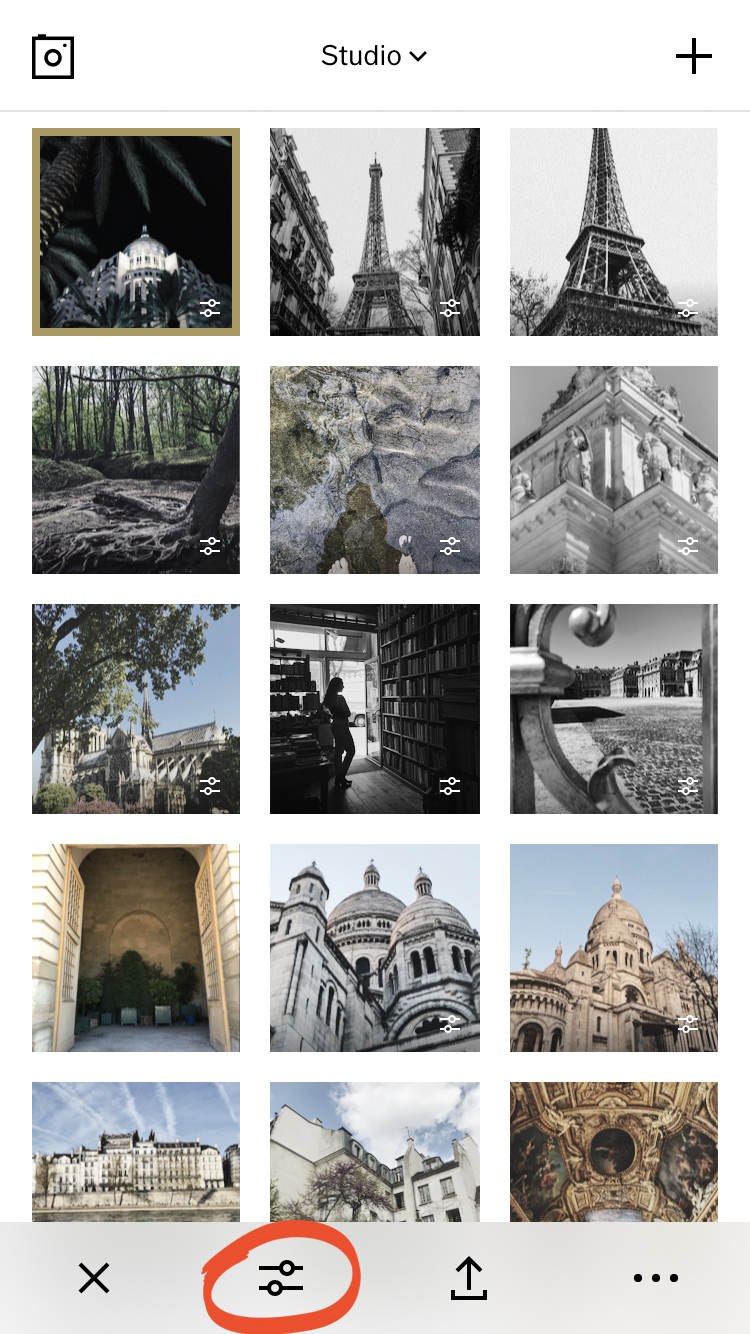
In the VSCO studio, select the photo you want to edit. A gold outline appears around the selected image.
Tap the Edit icon (two sliders) at the bottom of the screen to open the VSCO editor.
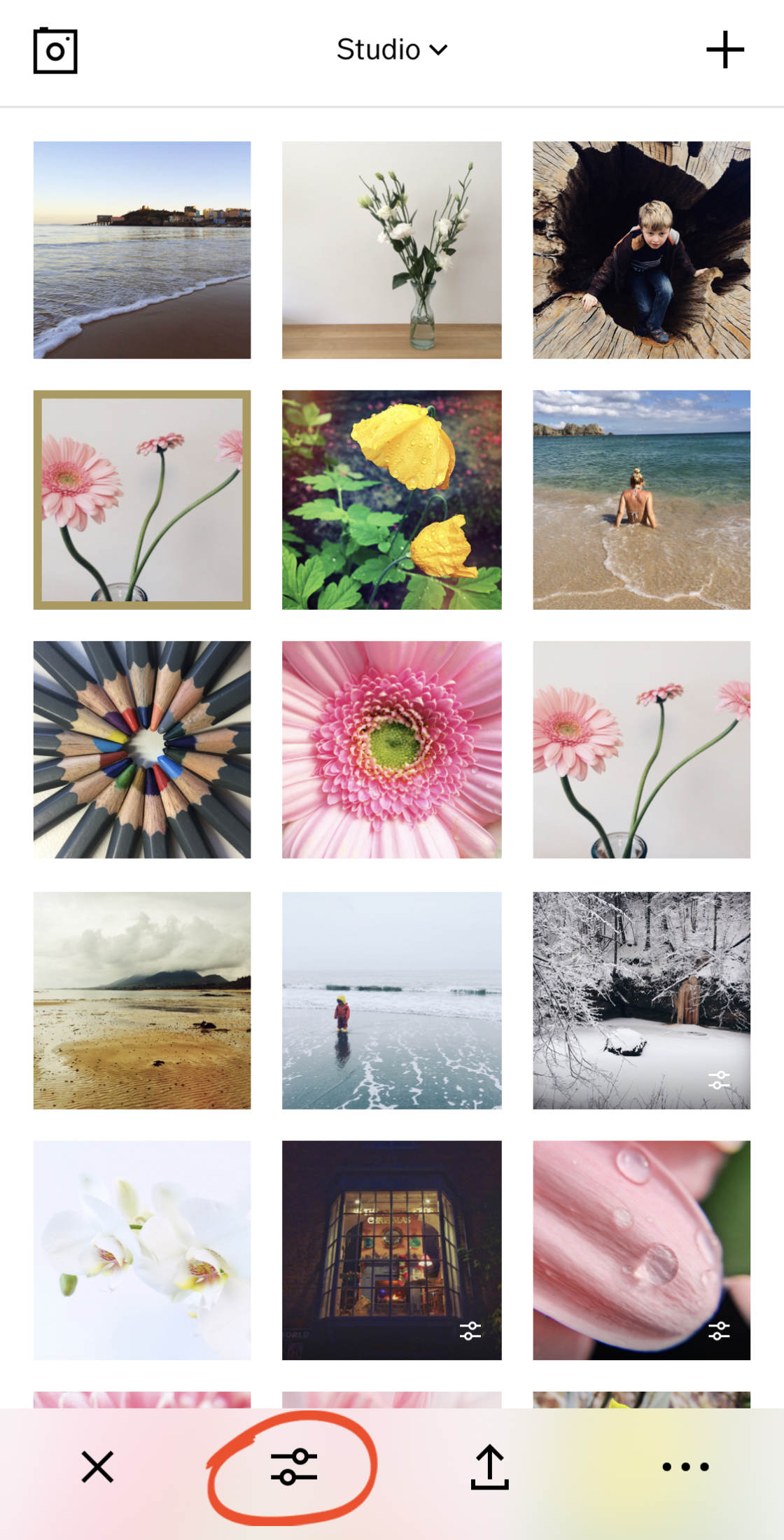
Annotation that if you've selected multiple photos, yous won't be able to access the editing tools. If you lot've selected more than one photo, tap theXat the bottom left to deselect all images. And then select the photo yous desire to edit.
There are 2 ways to edit a photograph in the VSCO app. You can employ one-tap VSCO filters to quickly change the look and mood of your image. Or yous can brand manual edits using a range of VSCO editing tools.
Of course, you lot can edit using both filters and manual adjustments to create the exact look you lot want.
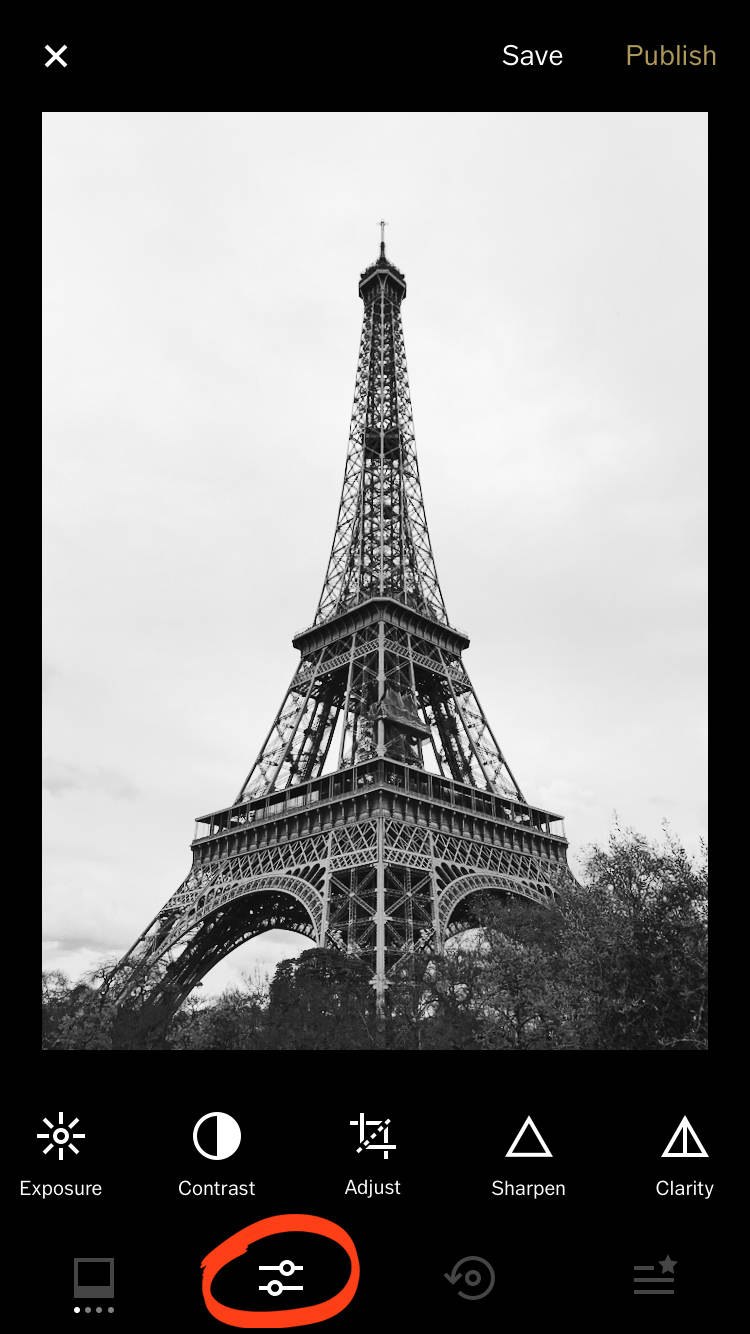
To open up the VSCO filters, tap the Filters icon (white square) at the bottom left. To admission the VSCO editing tools, tap theEdit icon (ii sliders).
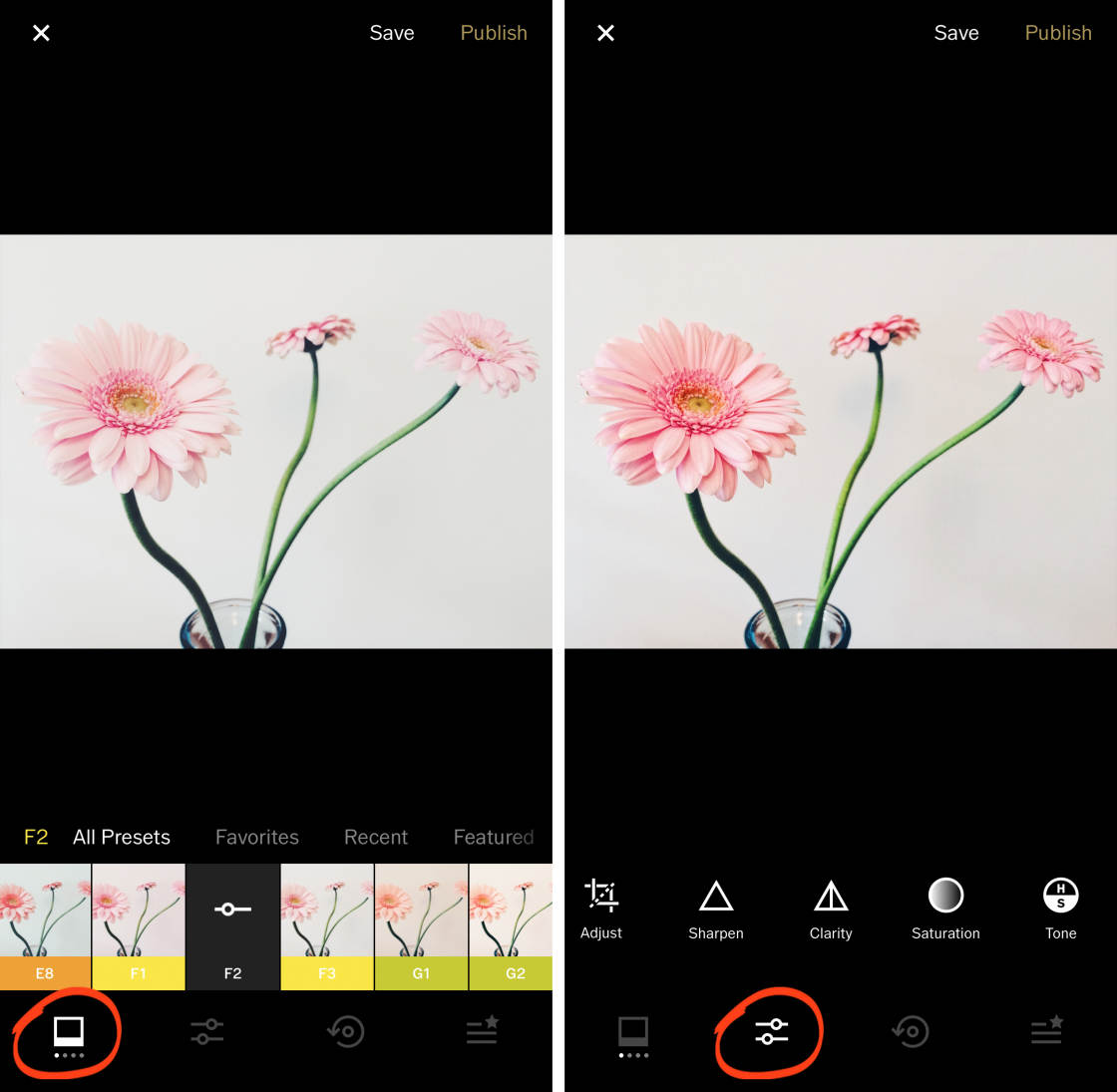
Next, you'll learn how to create cute edits using the VSCO editing tools and filters.
ii. VSCO Filters
VSCO filters (also known every bit 'presets') offering a quick one-tap editing solution. Each filter creates a different wait by applying preset color and exposure adjustments.
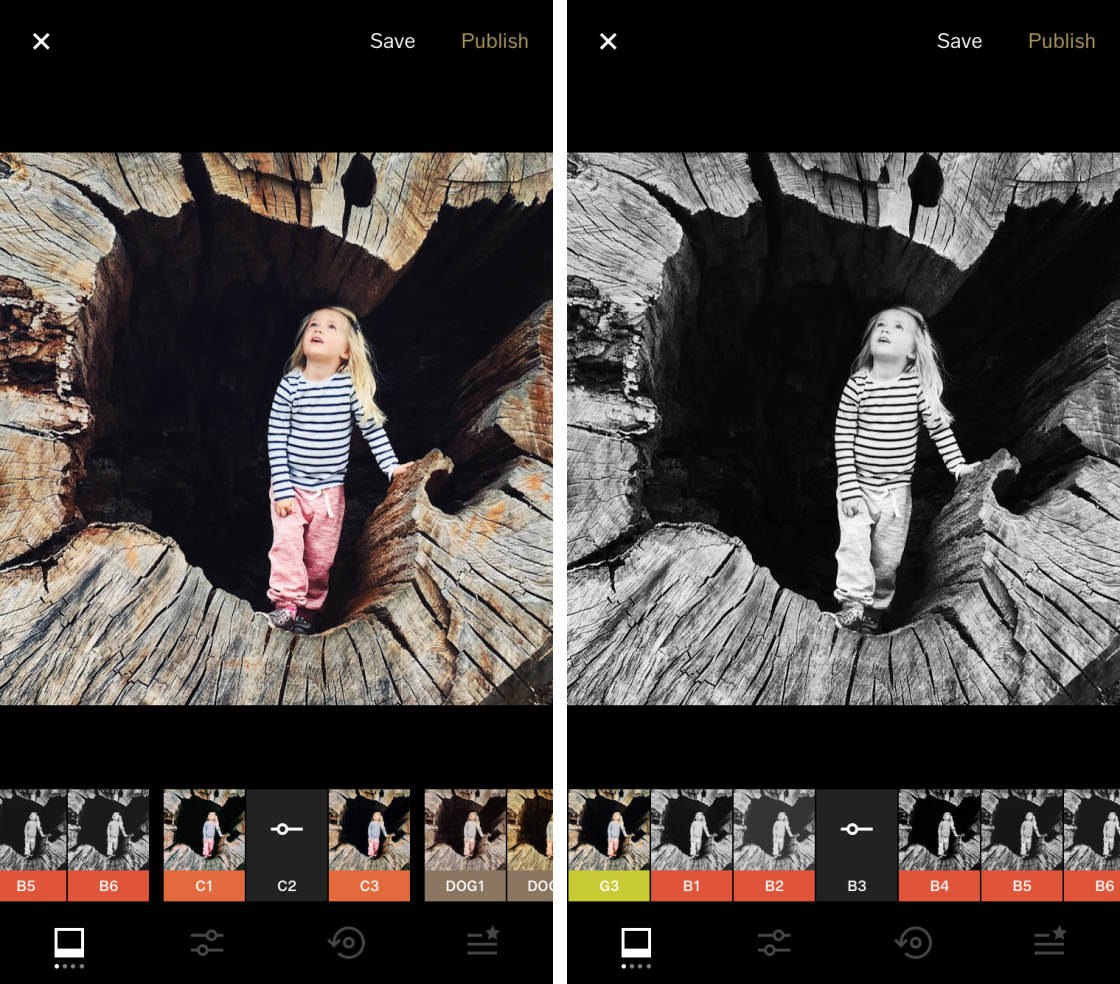
VSCO is one of the best photo filter apps for iPhone. Its presets are subtle and have a wonderful film-like quality.
Read on to larn how to create beautiful VSCO edits using filters.
2.one Apply A VSCO Filter To Your Photo
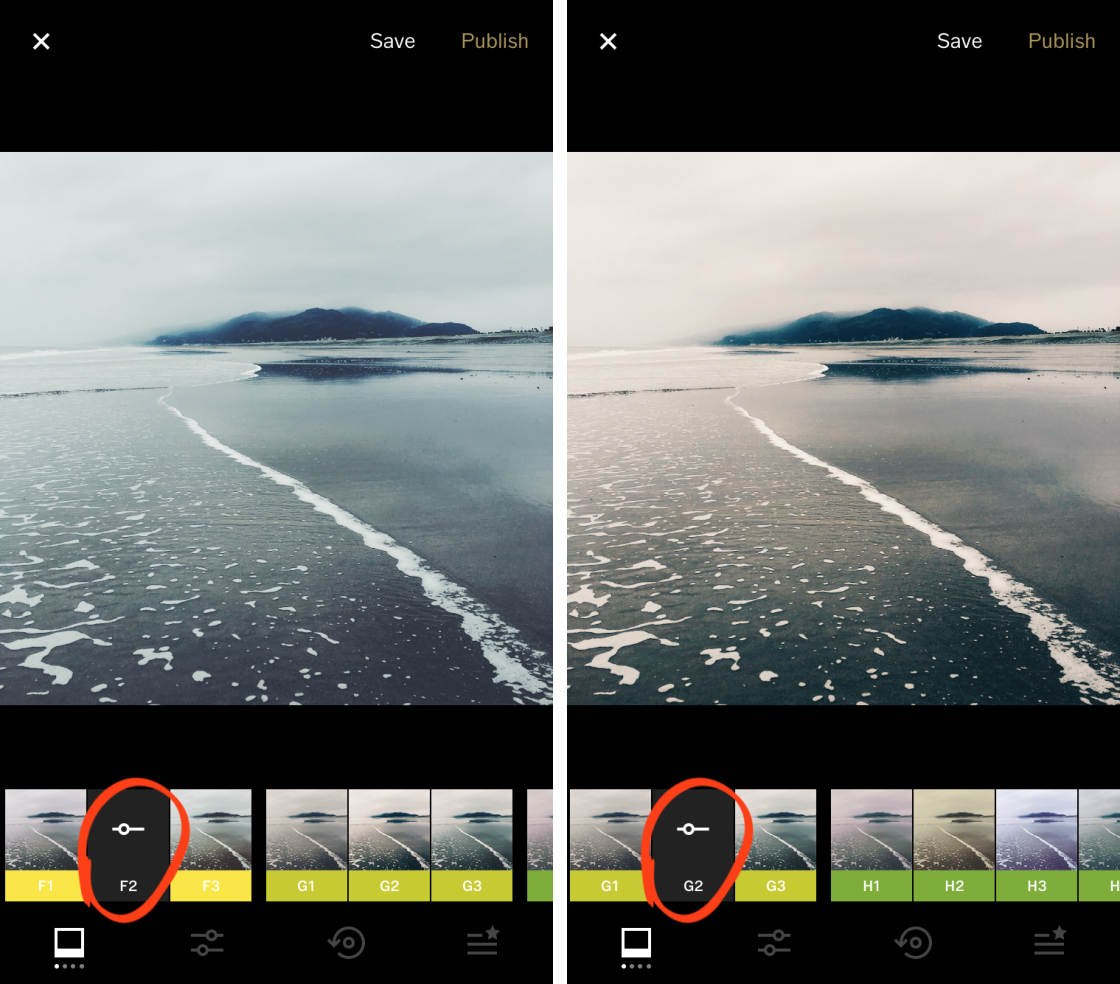
To apply a filter, first select the photo in your VSCO studio. So tap the Edit icon (2 sliders) at the bottom of the screen. On the next screen, ensure the Filters icon (white square) is selected.
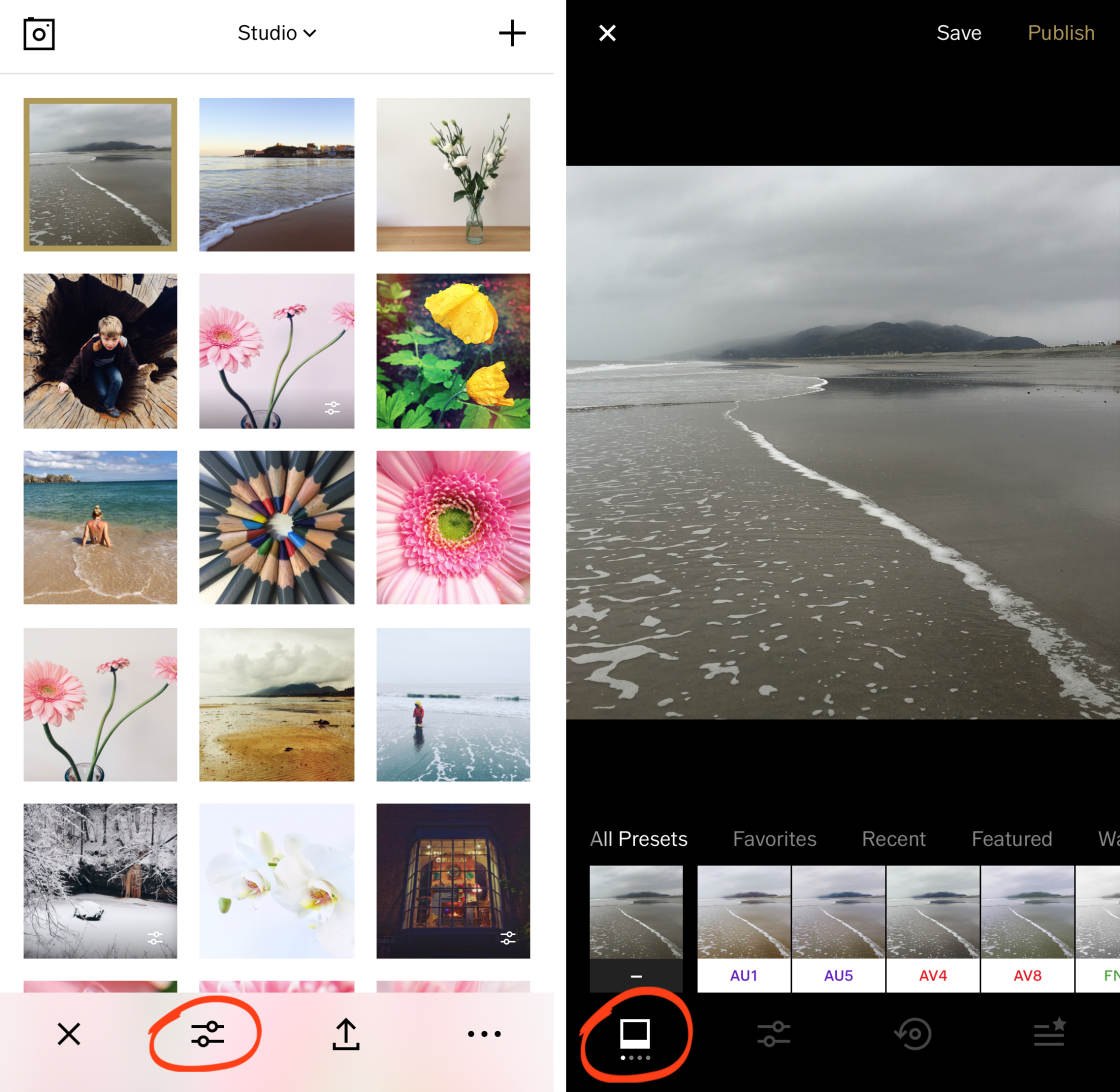
The VSCO filters appear below your photo. Swipe beyond to encounter more filters.
Tap on a filter to utilise it to your photo. If you don't like the consequence, tap a different filter.
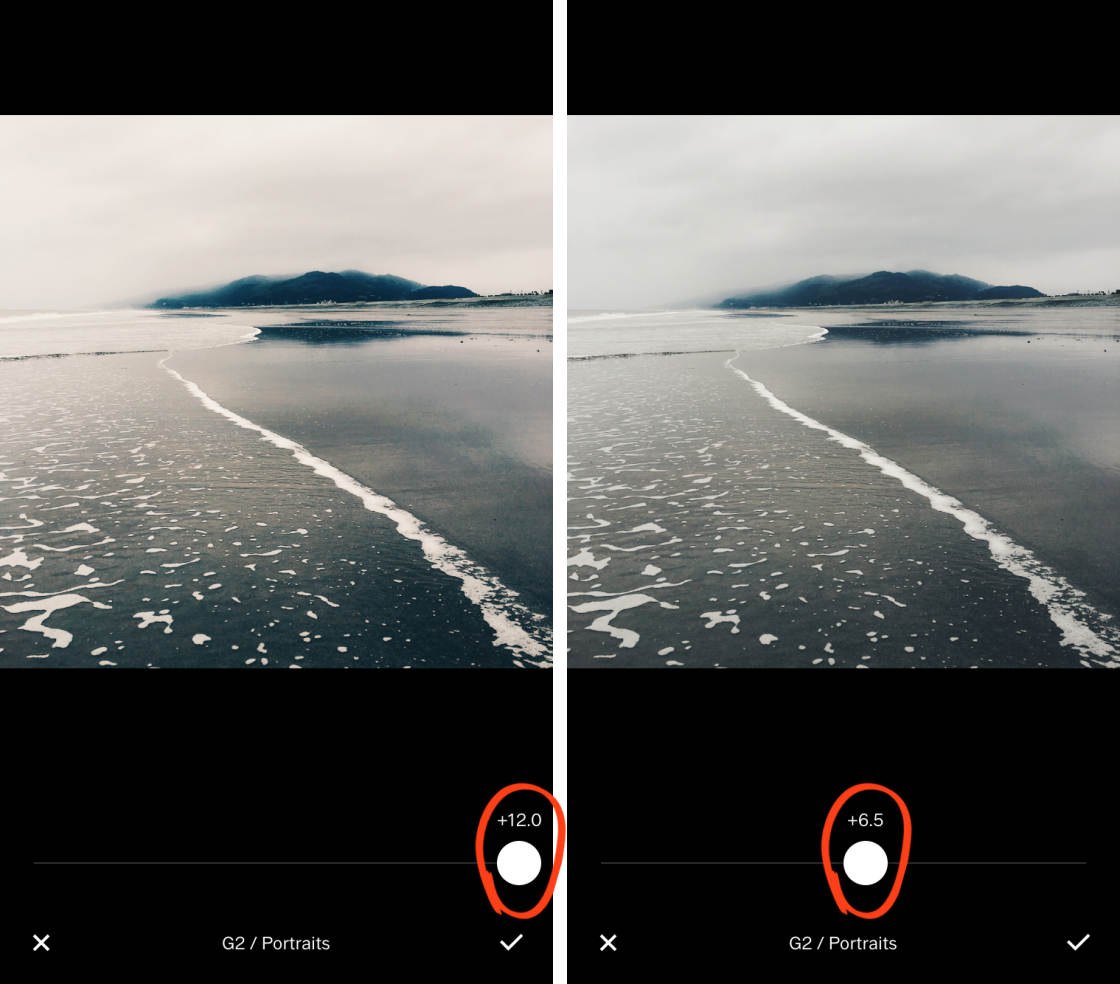
After applying a filter, you lot tin reduce its intensity to tone down the effect.
Tap on the active filter, then employ the slider to adjust the filter forcefulness. Tap the checkmark when yous're done.
When editing photos in VSCO, you can easily compare the before and after images. Tap and hold the image to see the original unedited version. Release your finger to return to the edited photo.
ii.2 Download More VSCO Filters
The gratis VSCO app comes with a bones set of 10 filters to get you started. Simply there many more filters available.
To access to the entire drove of over 130 VSCO filters, you'll need to subscribe to VSCO X.
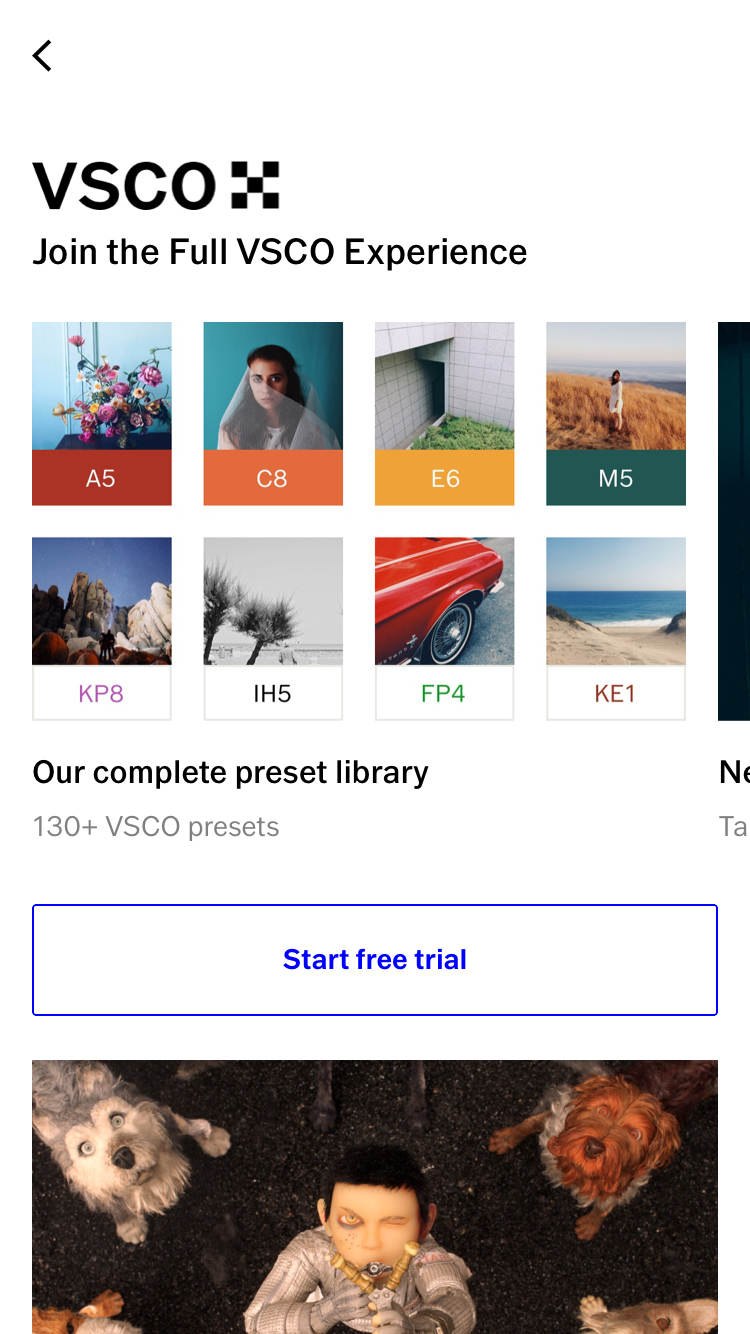
It costs $19.99 a yr, simply information technology's well worth it for the huge choice of filters that you'll be able to employ.
Edited with VSCO filter HB2
As a VSCO X member, you'll too get admission to some additional photograph editing tools.
And then, how practice y'all subscribe to VSCO Ten?
Simply tap theVSCO 10 icon at the bottom right of the studio screen. And so tapStart Free Trial.
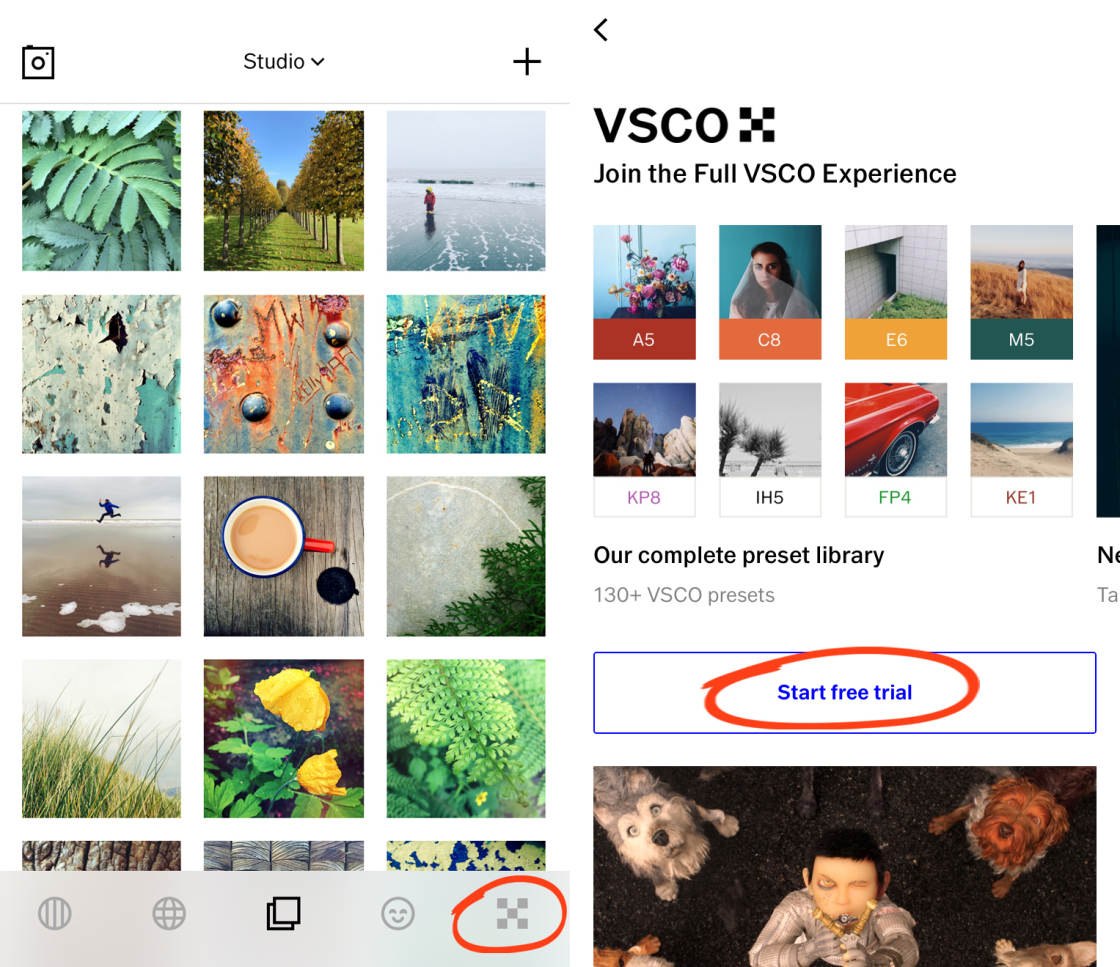
The 7-solar day complimentary trial allows yous to try out VSCO 10 (and all of the filters) before y'all commit to paying the annual subscription.
Edited with VSCO filter G1
Once you lot've signed up to VSCO Ten, you'll have admission to the full range of VSCO filters.
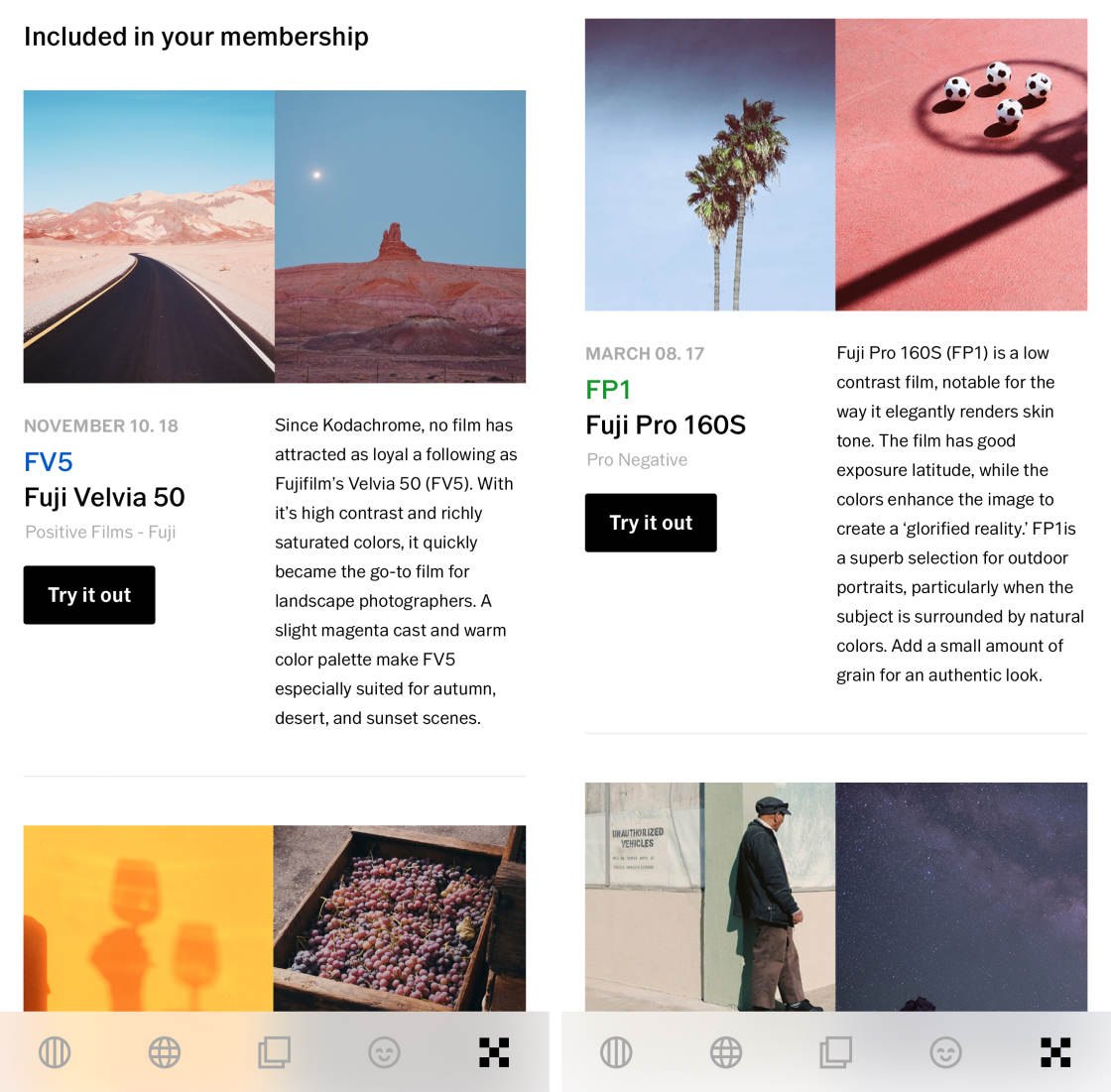
Now you can experiment with different filters to create but the look that you lot want.
VSCO has a broad range of photograph editing tools for fine-tuning color, effulgence, and sharpness. It also has adjustment tools for cropping, straightening, and correcting perspective problems.
To access the photo editing tools, select the photo you want to work on in your VSCO studio.
Then tap the Edit icon (two sliders) at the bottom of the screen. If you've already opened your photograph to utilize a VSCO filter, you tin skip this stride.
Tap the Edit icon (two sliders) at the bottom of the adjacent screen. The VSCO photo editing tools appear beneath your image.
Swipe across the row of editing tools to see the full range of tools available.
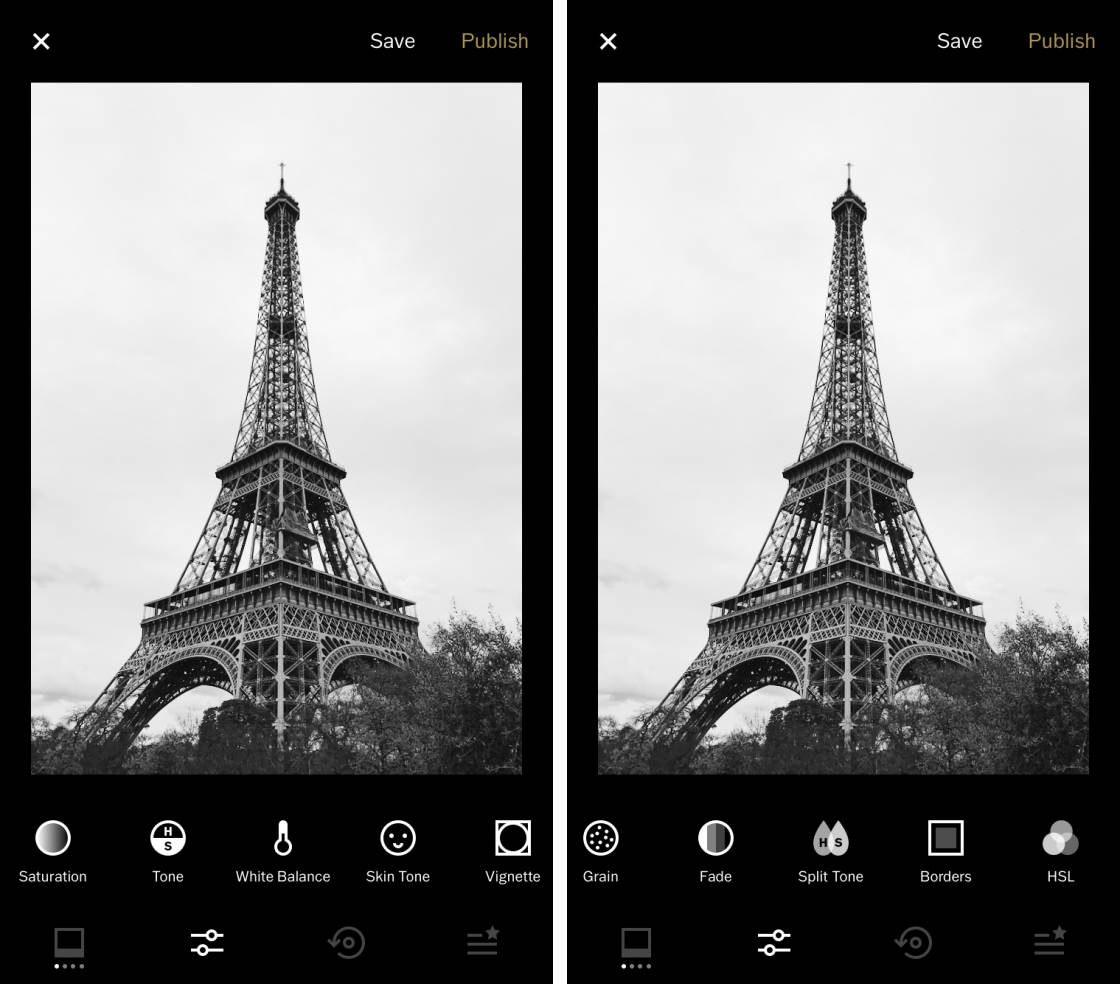
Tap on a tool to access the options for that adjustment. Almost tools have a single slider for making adjustments. But some tools have other options too.
Beneath you lot'll notice how to create stunning VSCO edits using these photograph editing tools.
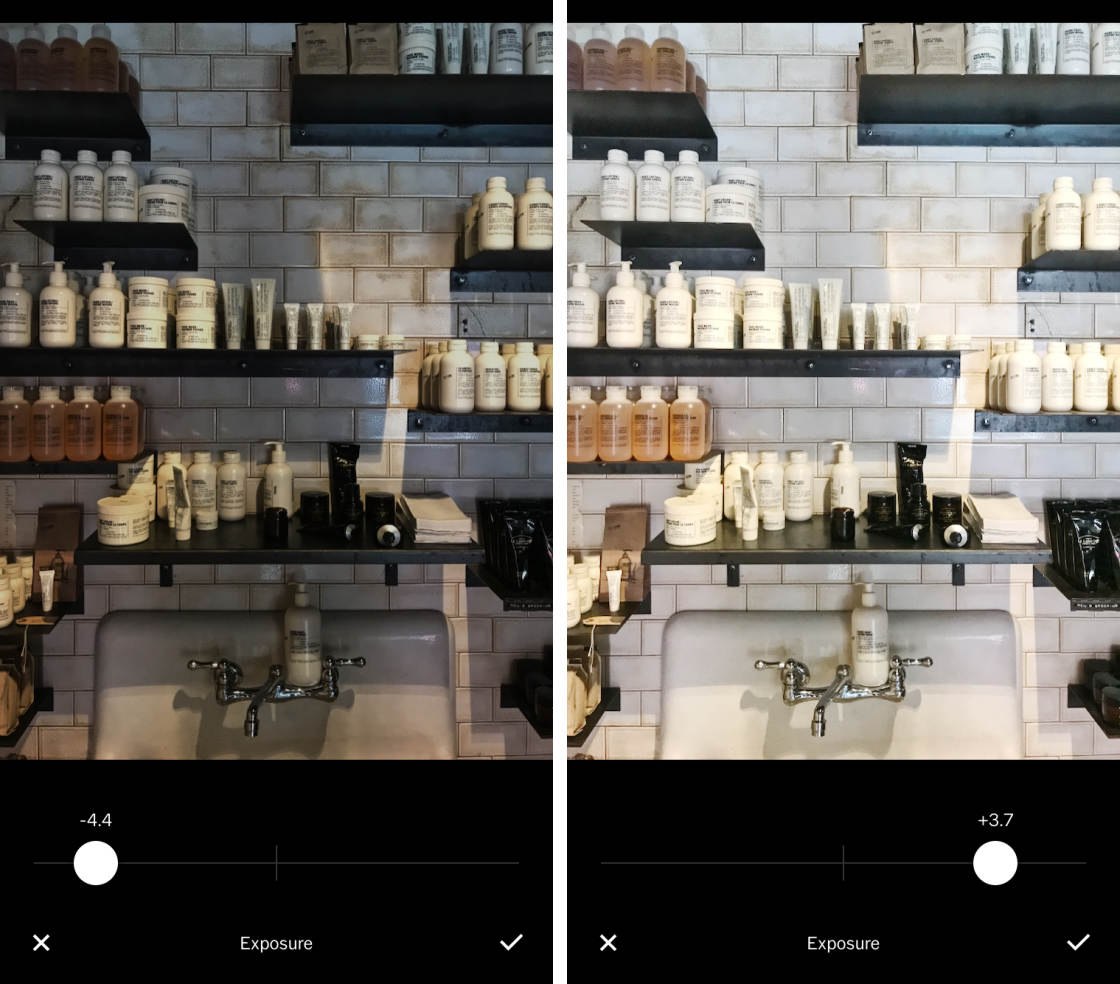
3.1 Exposure
The Exposure tool lets you change the image brightness. Drag the slider left to make your photo darker, or right to make information technology brighter.
3.ii Contrast
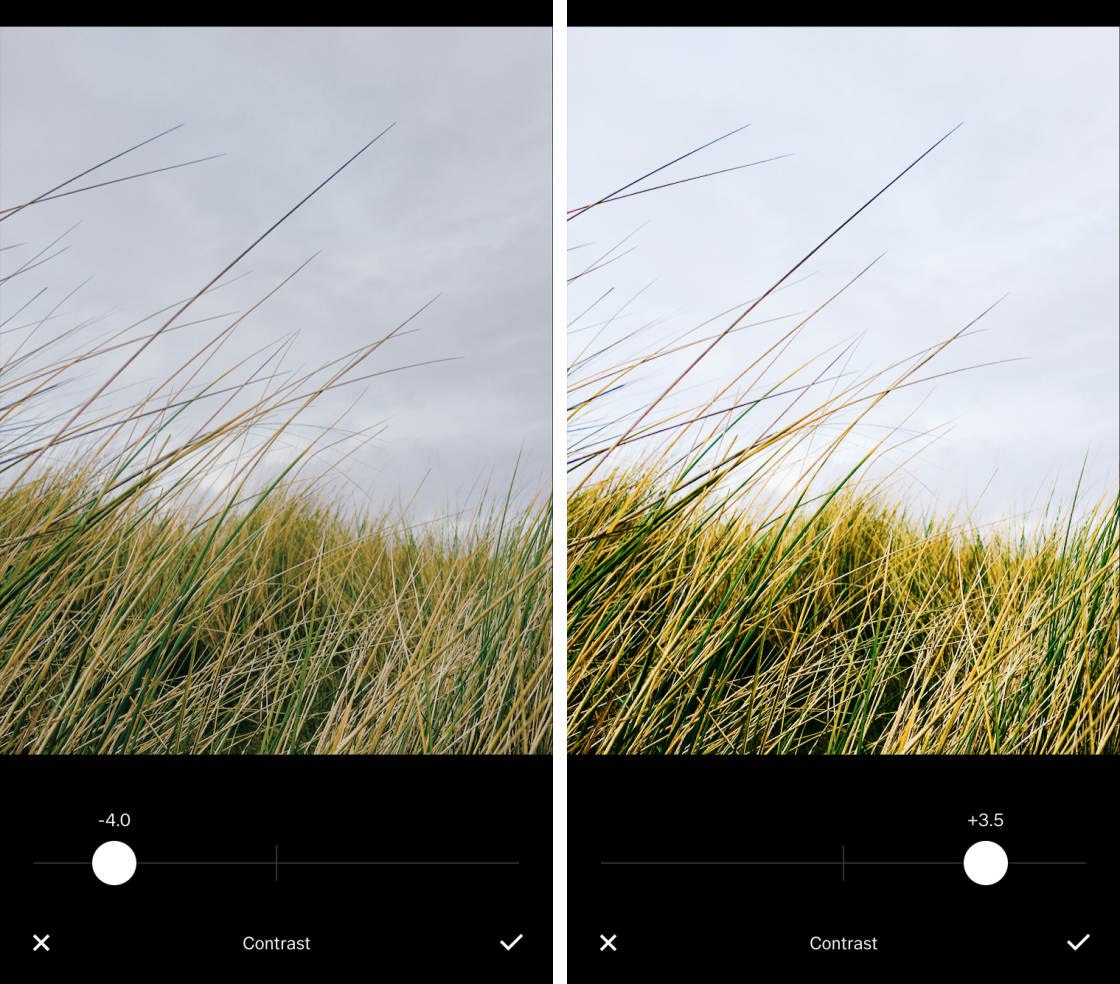
The Dissimilarity tool adjusts the amount of contrast between the bright and night areas.
Increasing contrast makes the dark areas darker and the bright areas brighter. This creates a bold, dramatic image. Reducing contrast creates a softer image with less divergence betwixt night and light.
three.3 Arrange (Crop, Rotate, Straighten & Skew)
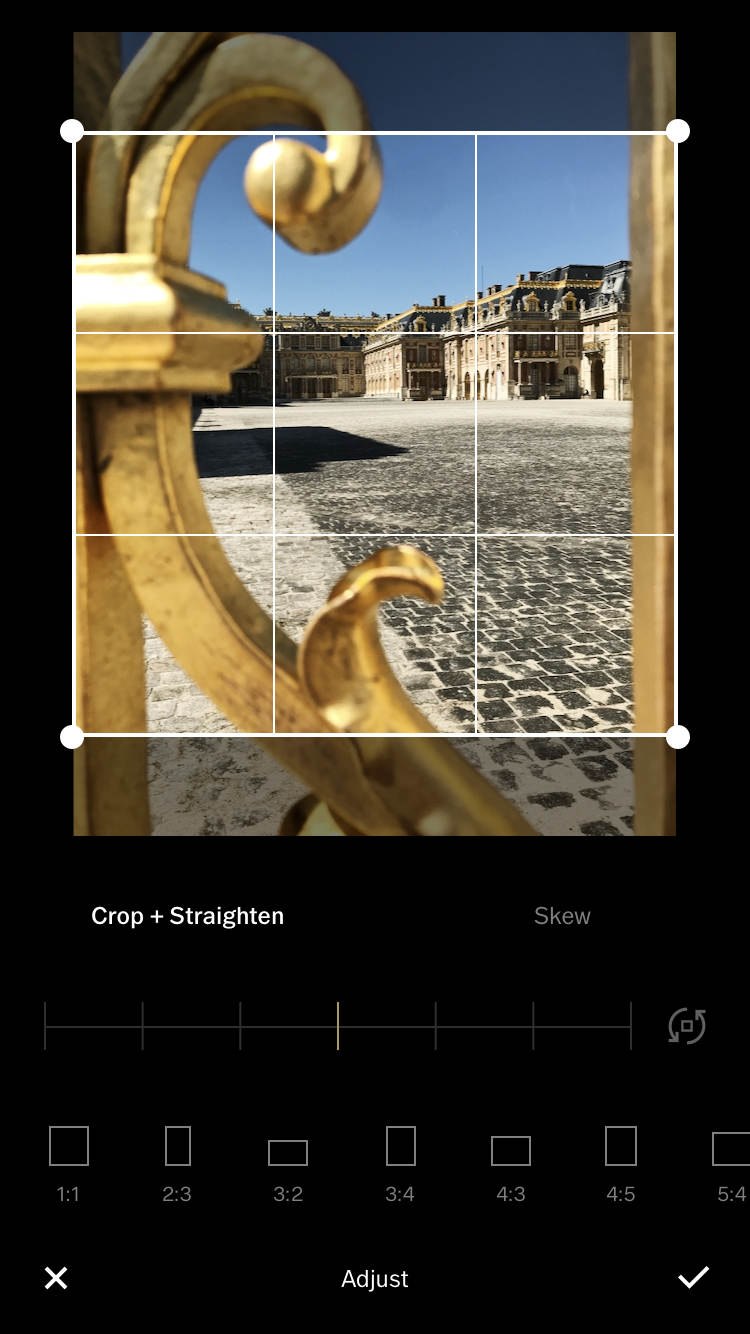
The Accommodate tool contains four prototype aligning options: Ingather, Rotate, Straighten and Skew.
To crop away the edges of your photograph, ensure the Ingather + Straightenchoice is selected. Then drag the corner handles to a new position. You tin can crop to a specific aspect ratio by tapping one of the options at the lesser of the screen, e.g. 1:ane (square), 4:five, 16:ix, etc.
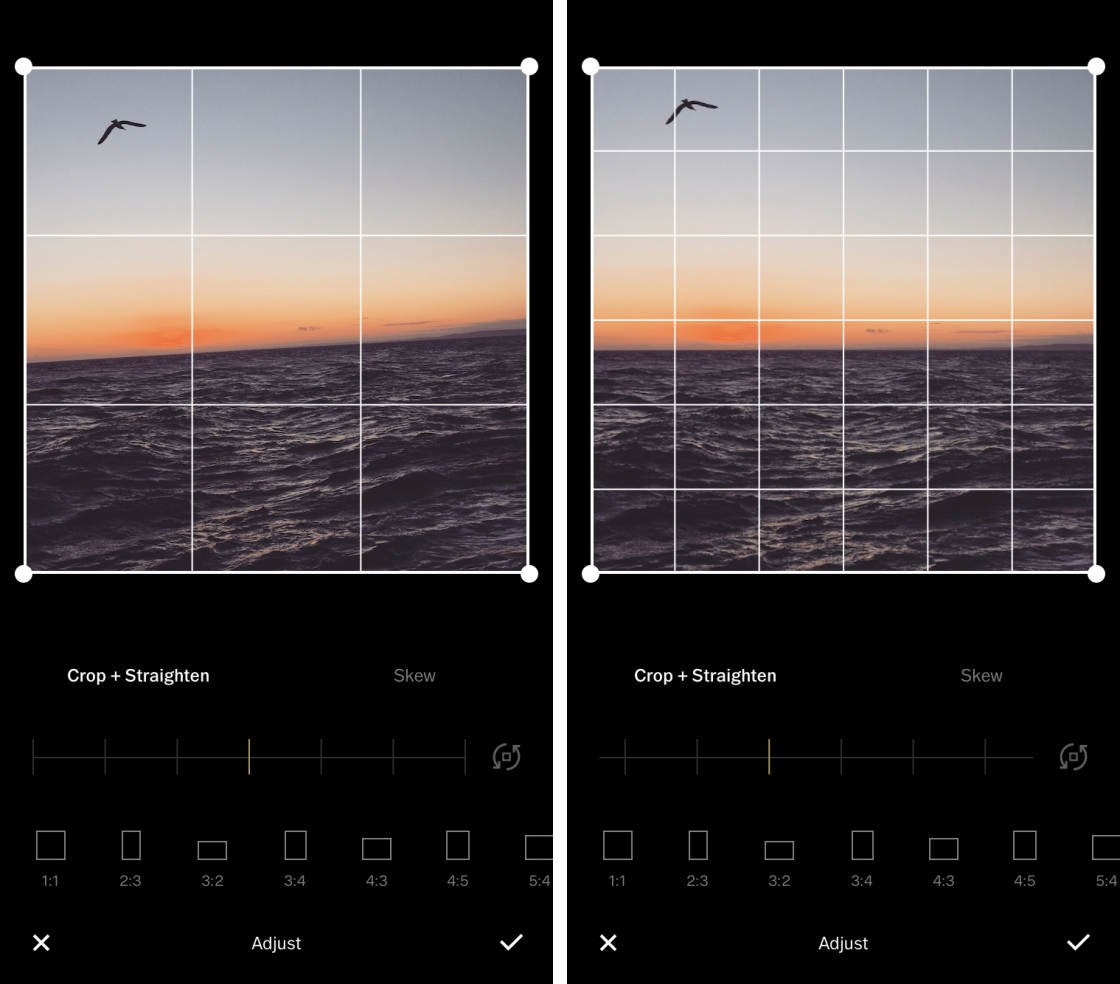
To straighten your photograph, drag the slider left or correct. This is perfect for leveling up slanted horizons in your landscape photos.
To rotate your image 90 degrees at a fourth dimension, tap the Rotate icon (curved arrows) to the right of the slider.
The Skew option lets you correct bug with horizontal and vertical perspective.
If yous've taken a photo looking up at a building, the top of the edifice will announced narrower than the bottom. Adjusting the vertical perspective tin can fix this problem, making the edifice appear straighter.
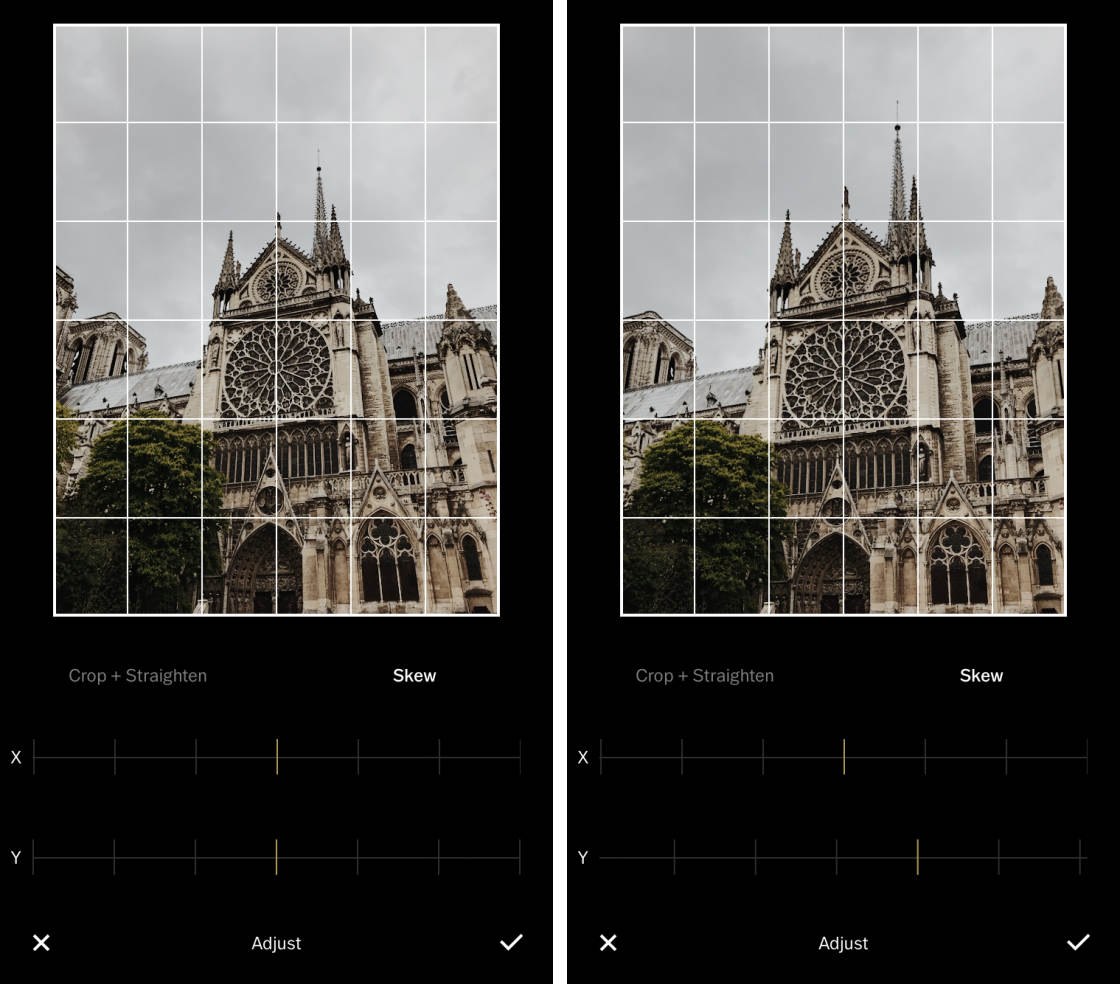
Tap Skew, and so employ the Yslider to adjust vertical perspective. Use theTenslider to control horizontal perspective.
To render to the Ingather, Straighten and Rotate tools, tapCrop + Straighten.
3.iv Sharpen
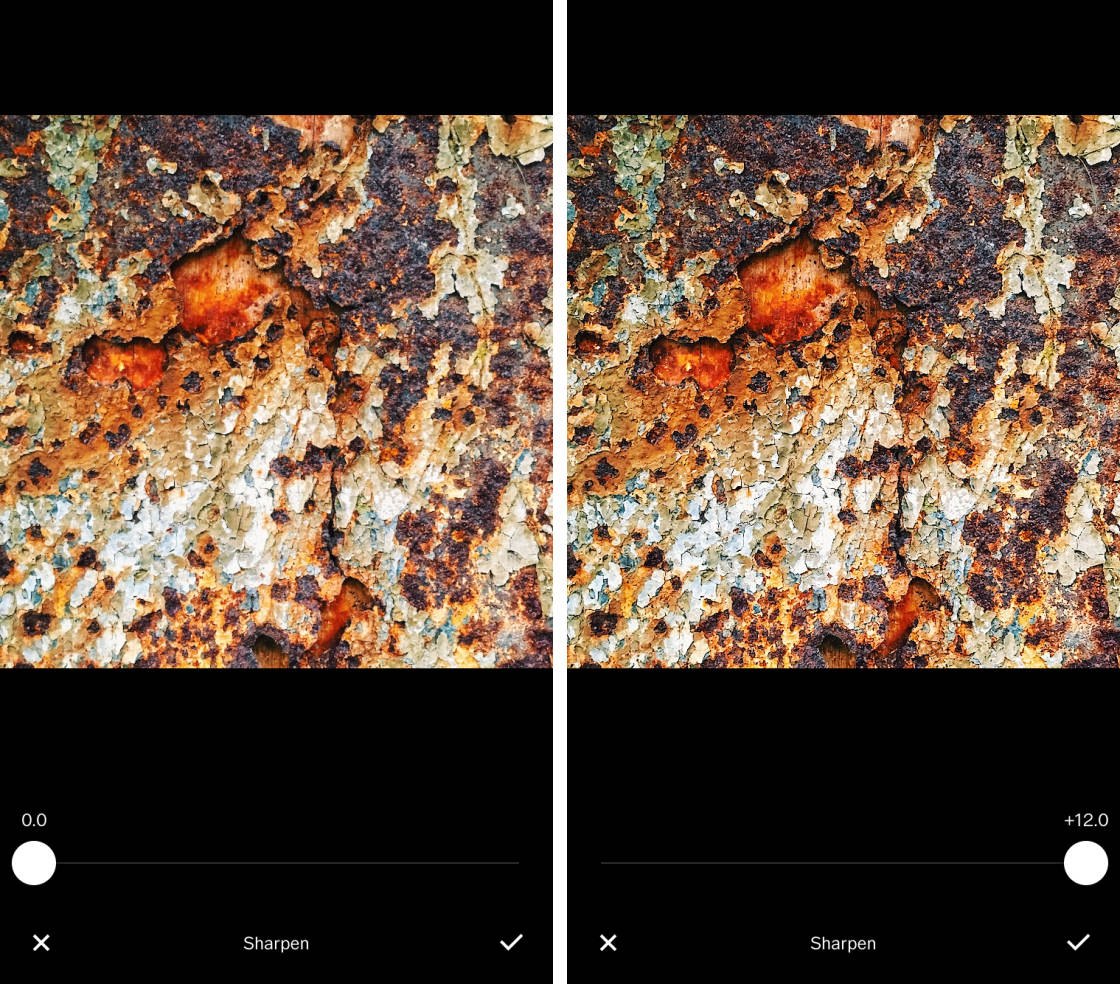
Use the Sharpen tool to makes the detail in your photograph appear sharper and more divers.
Be conscientious not to over-sharpen though. Too much sharpness can dethrone the quality of your photo, making information technology appear slightly grainy.
three.5 Clarity
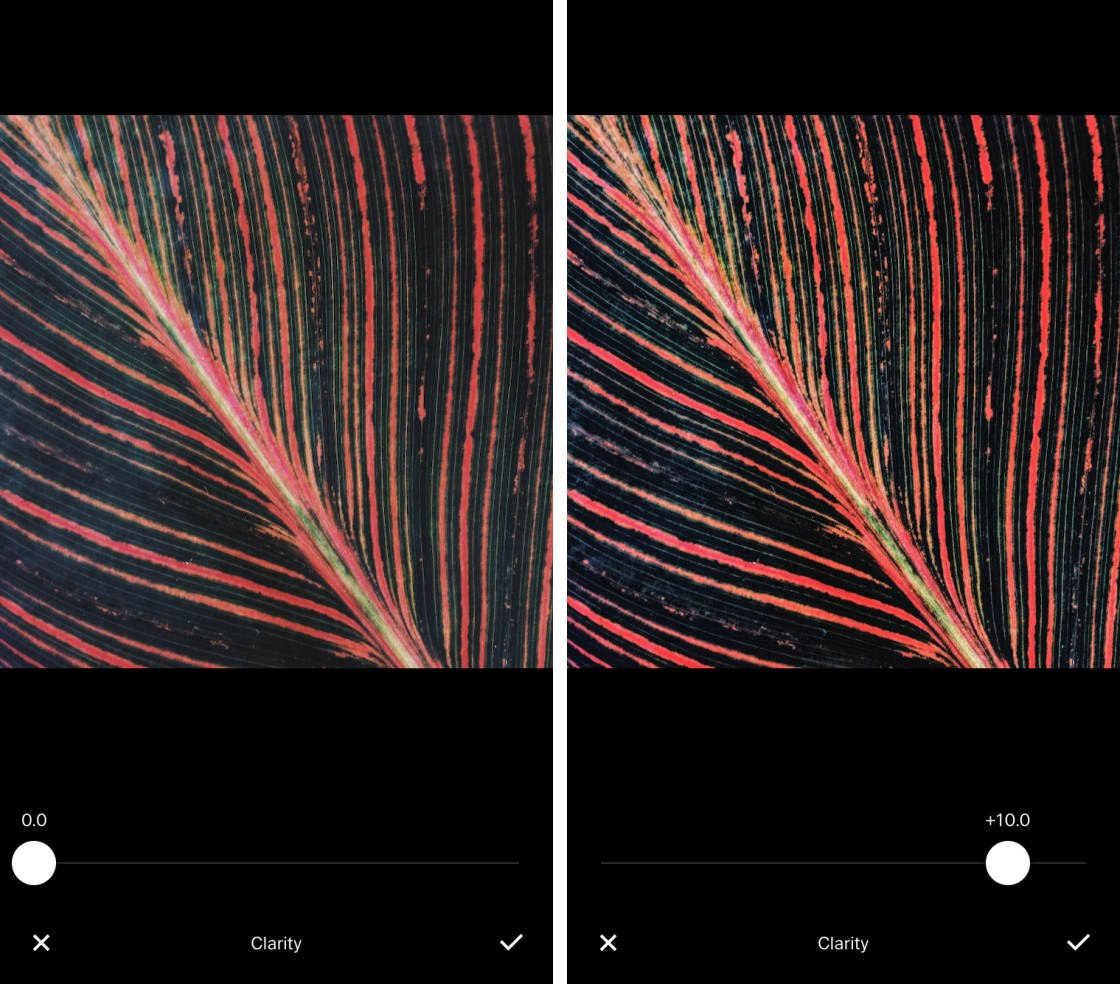
The Clarity tool enhances detail in your photo and makes your image "pop."
3.6 Saturation
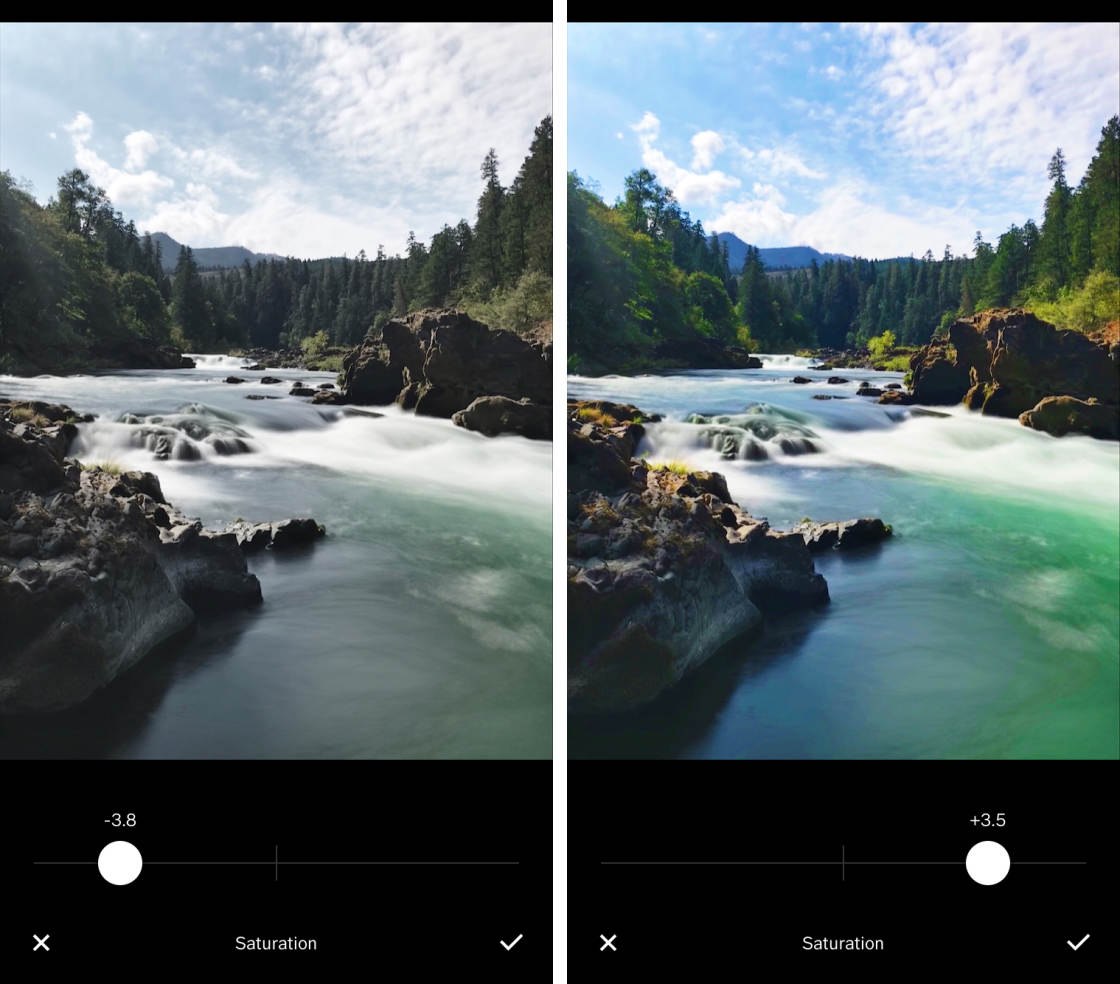
The Saturation tool controls the vibrancy of colors in your photo. Increase saturation to make the colors more vibrant. Or decrease it to make colors more than muted.
three.7 Tone
The Tone tool lets you lot control the brightness of highlights and shadows separately. Highlights are the bright tones in your image. Shadows are the dark tones.
Apply the Highlights slider to darken areas of your image that are likewise bright. And use the Shadows slider to brighten areas that are as well dark.
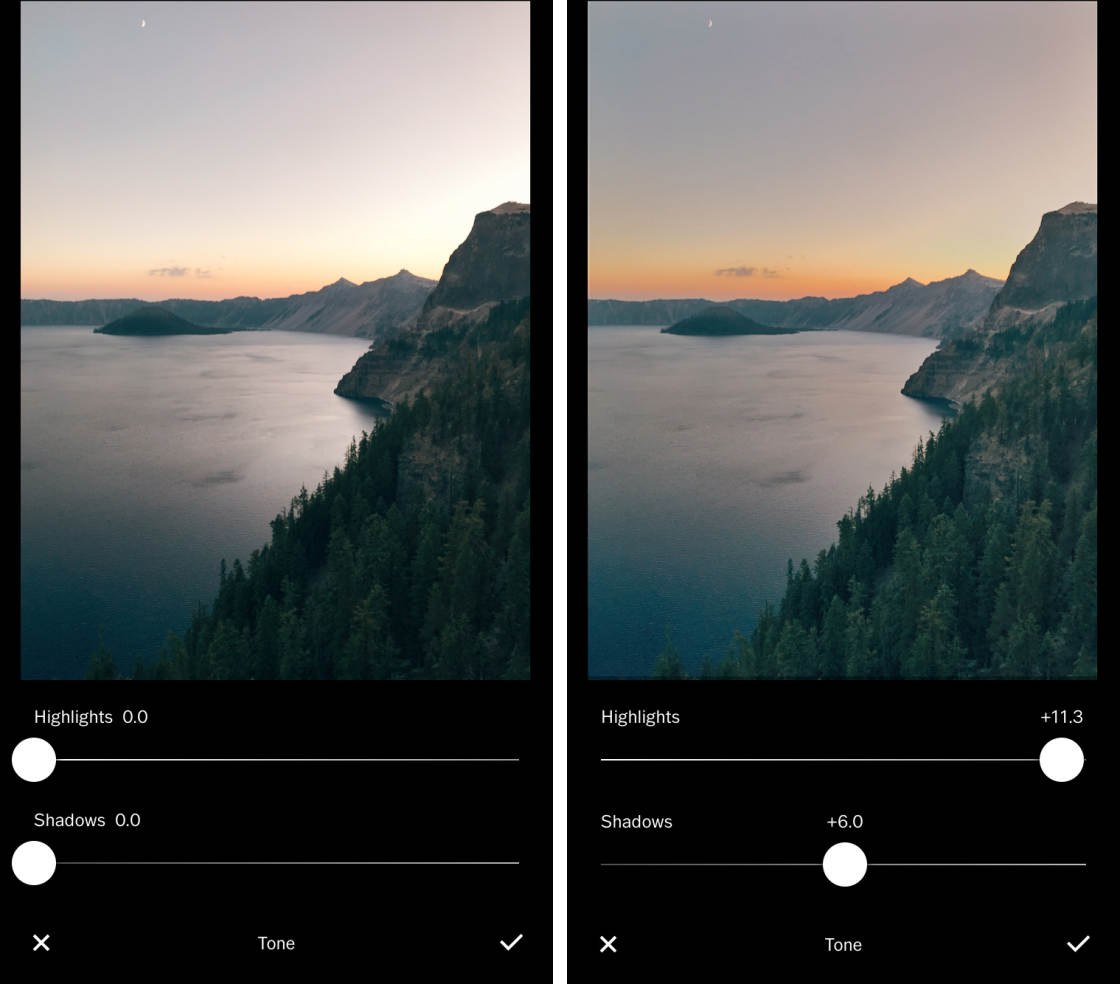
These tools bring out color and detail in the bright and dark parts of your photo. Only if an expanse is so over-exposed that information technology appears pure white, you probably won't exist able to think whatsoever item.
Besides, be careful not to over-employ these settings. Darkening highlights and brightening shadows can consequence in an image with not plenty contrast.
iii.viii White Balance
The White Residuum tool lets you adjust the color tone of your photo with two sliders. Yous can use this tool to change the mood of your photo. It'south also useful for correcting color casts acquired by different types of low-cal.
The Temperature slider makes the colors cooler (more blue) or warmer (more orange).
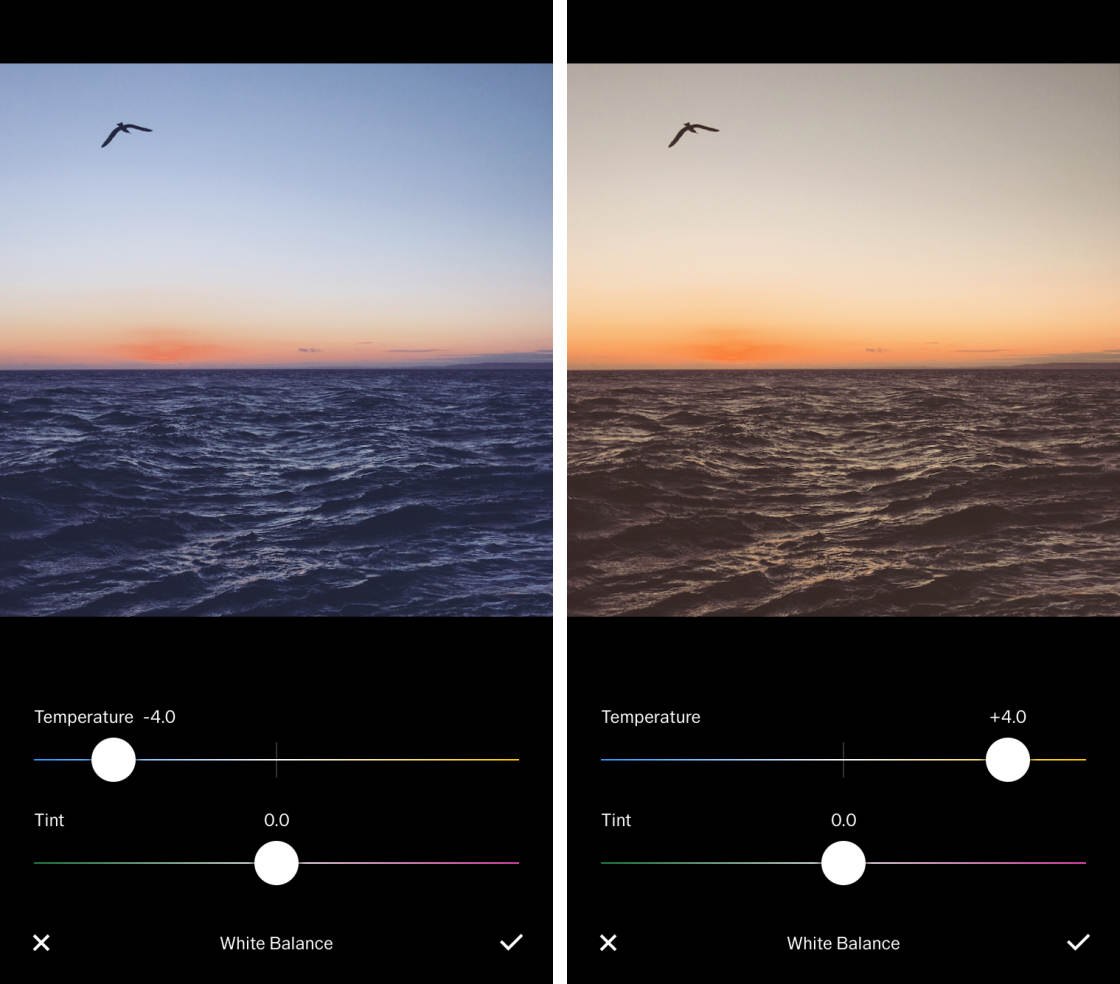
Making the colors cooler can create a cold, alone or melancholy mood. A warmer orangish tone creates a happier, vibrant mood. Warming up the color temperature is perfect for enhancing your dusk photos.
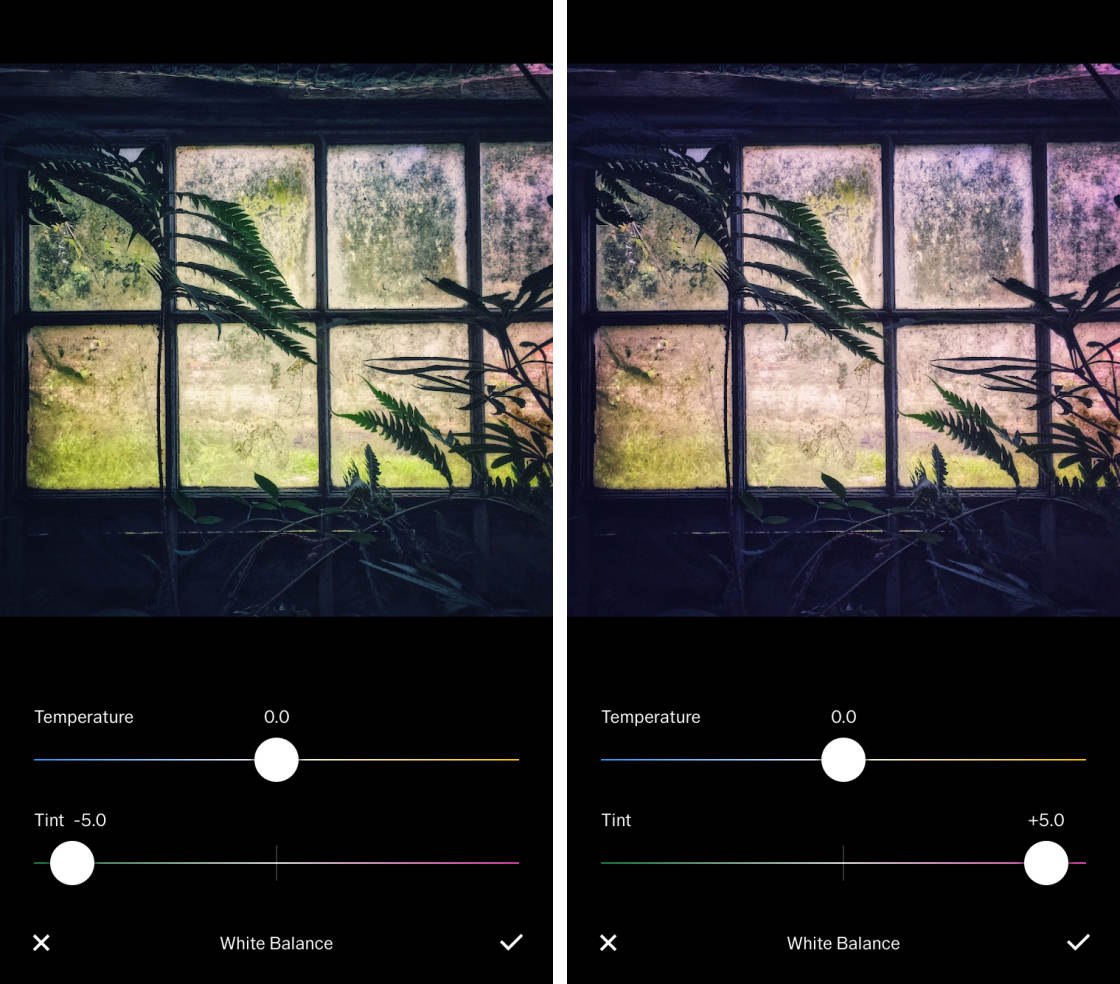
The Tint slider adds a green or majestic color tint to your image. Dragging the slider to the light-green end of the scale is great for boosting the green tones in your photos.
three.9 Pare Tone
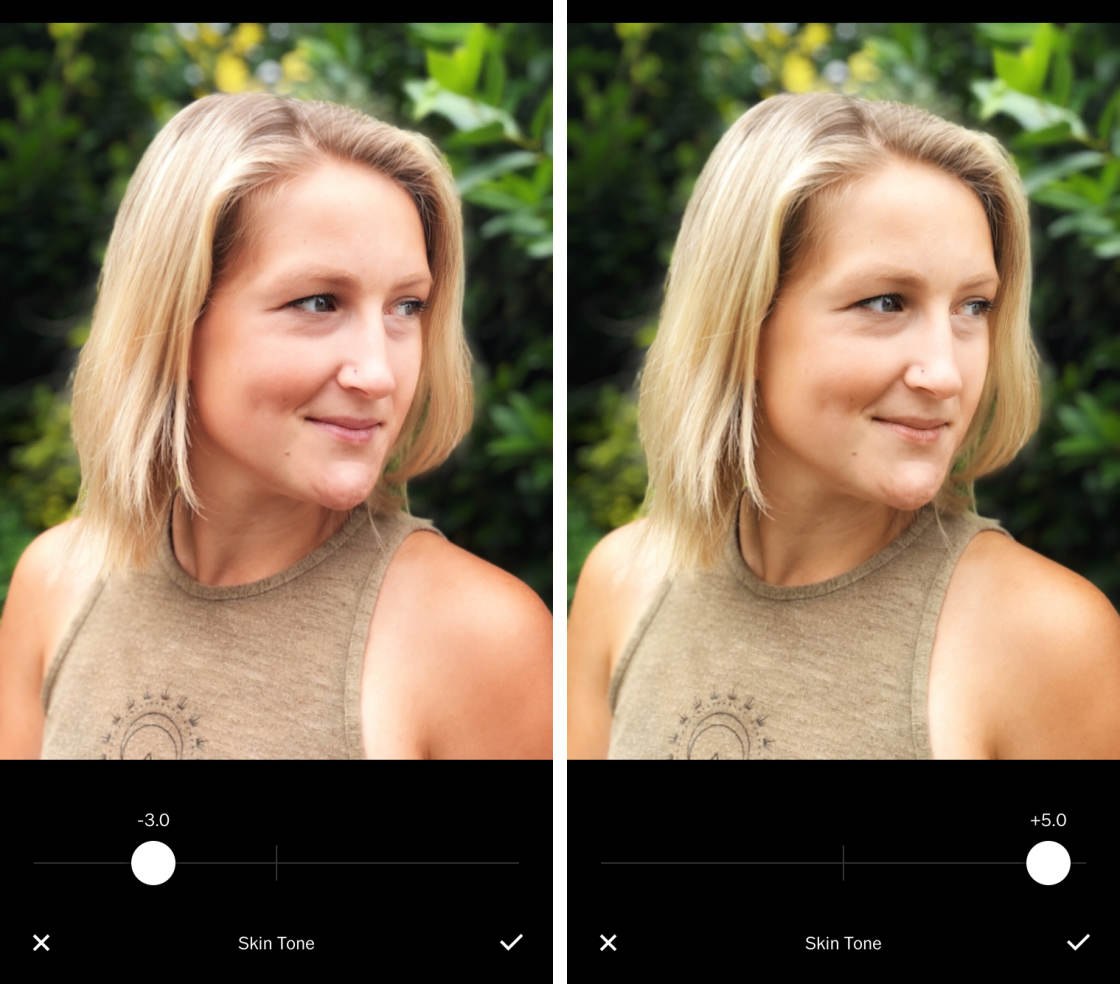
TheSkin Tone tool is great for enhancing the skin color in your portrait photos. Drag the slider left to add together more pink tones. Or drag information technology right to make the skin tone appear yellower or more tanned.
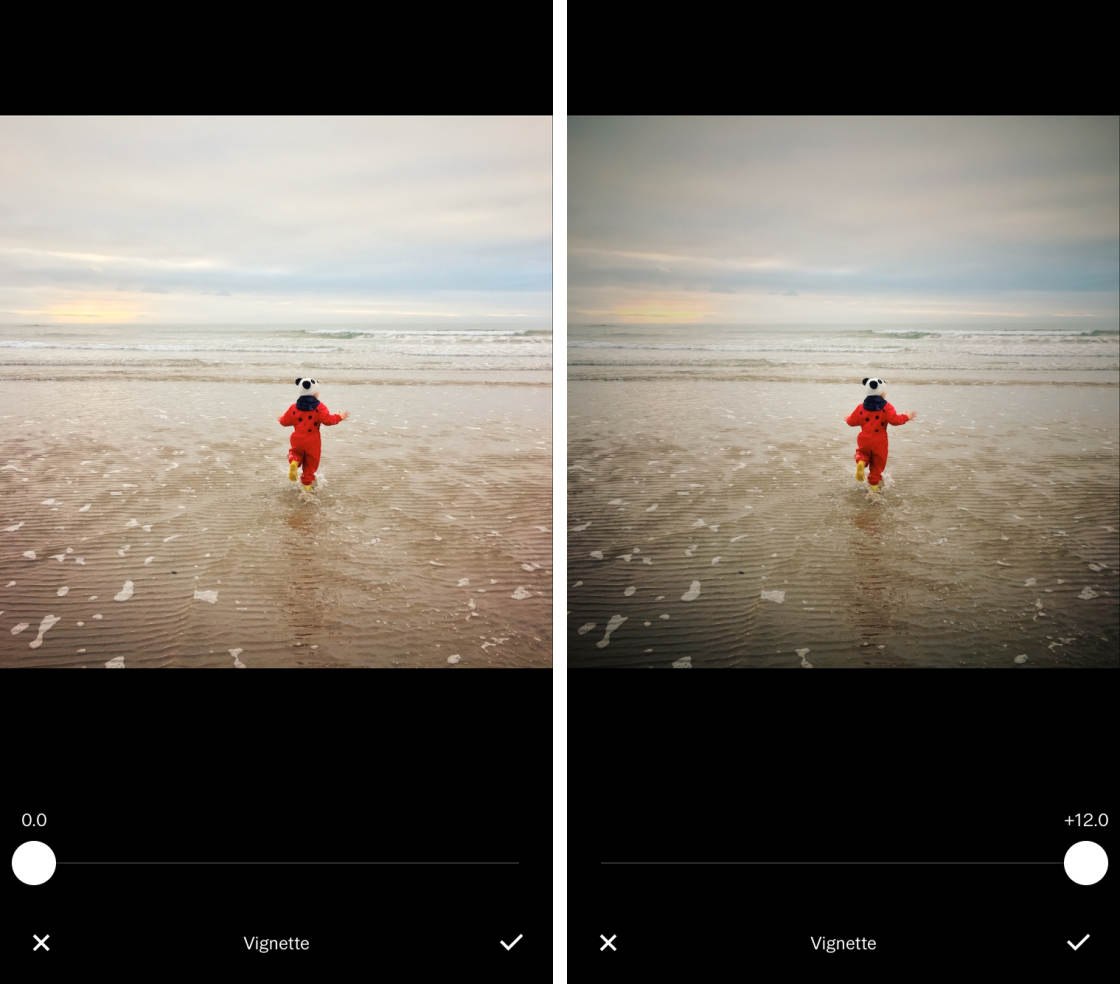
3.x Vignette
The Vignette tool subtly darkens the edges of your image. Vignettes can add together drama to your photos. And you can use them to draw the viewer'due south attention to the center of the scene.
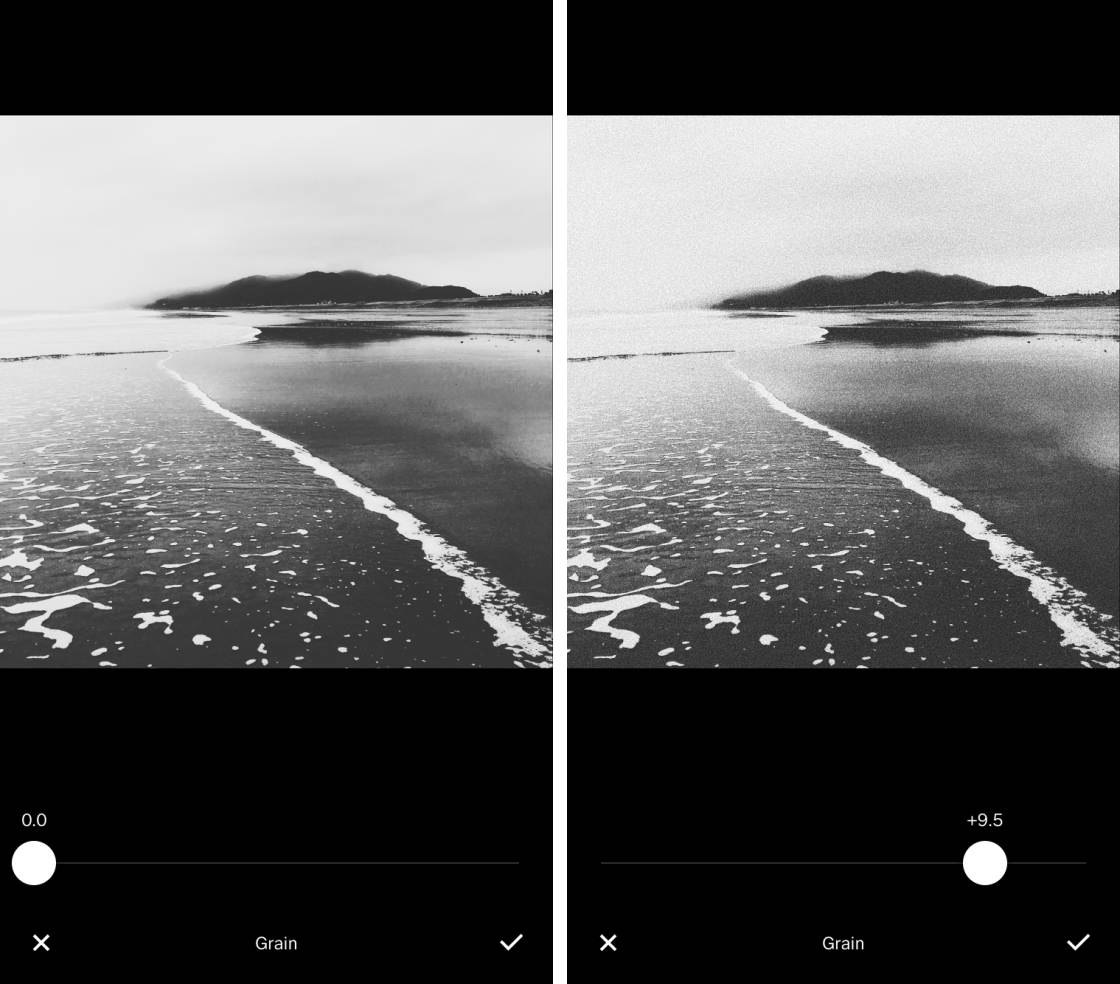
3.11 Grain
Use the Grain tool to create the look of film grain in your photo. Grain isn't usually a desirable feature in a photo, but in certain situations it can work.
Grain tin add a gritty, vintage look to your images, especially when used with a black and white filter.
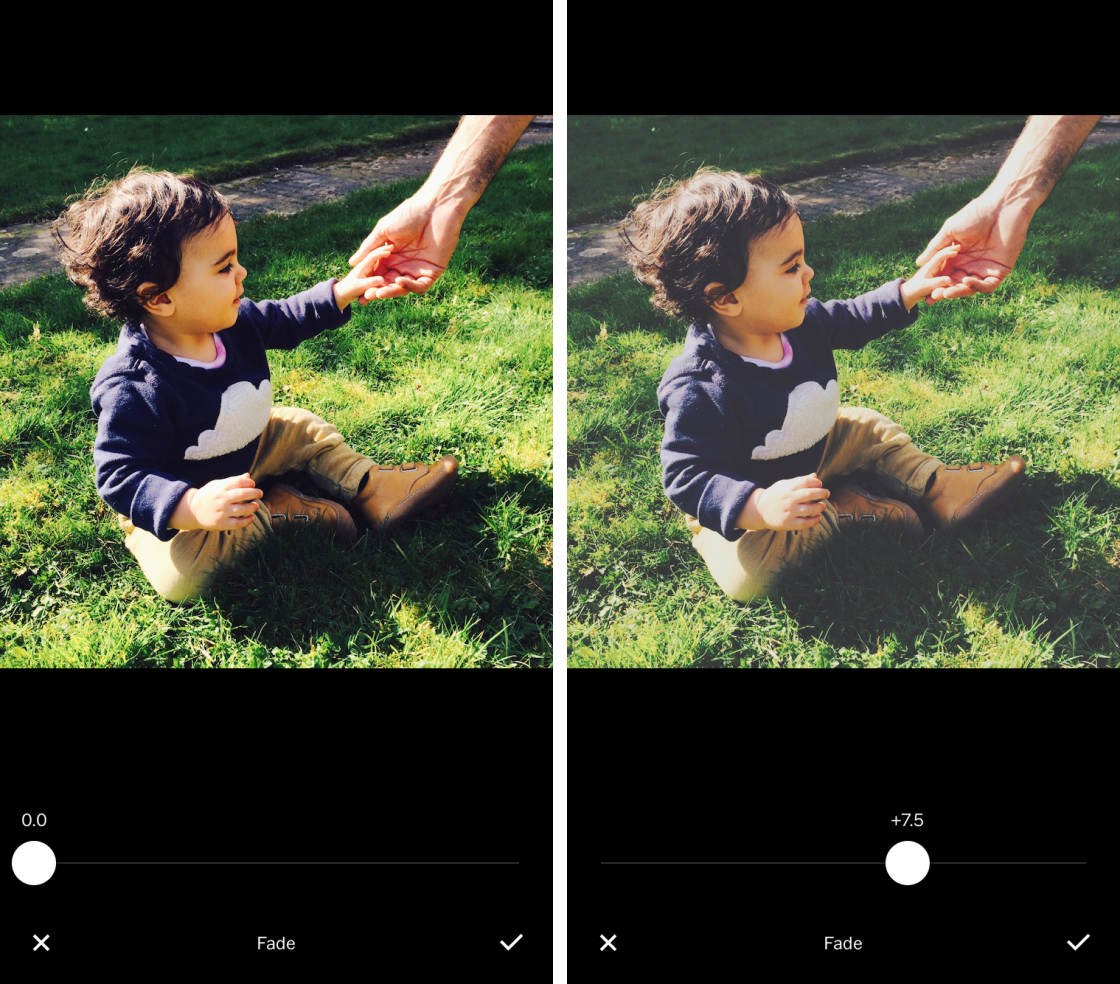
3.12 Fade
The Fade tool washes out the colors in your photograph to create a faded, vintage look.
iii.13 Split Tone
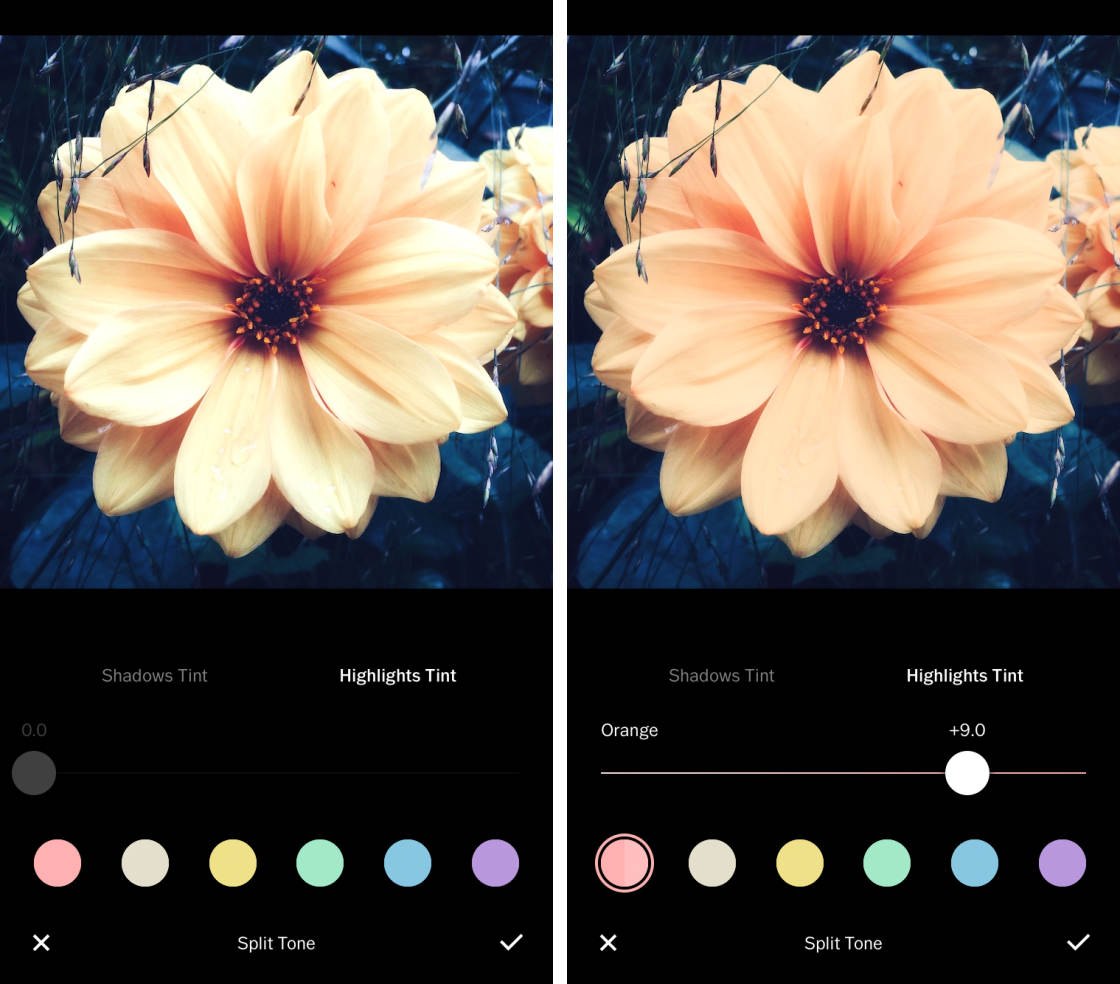
The Separate Tone tool lets you lot add together different colored tints to either the shadows or highlights.
To tint the dark areas of your photo, selectShadows Tint. Side by side, select a color at the bottom of the screen. Then employ the slider to adjust the strength of the tint.
The instance on the right has a bluish tint applied to the night areas of the image.
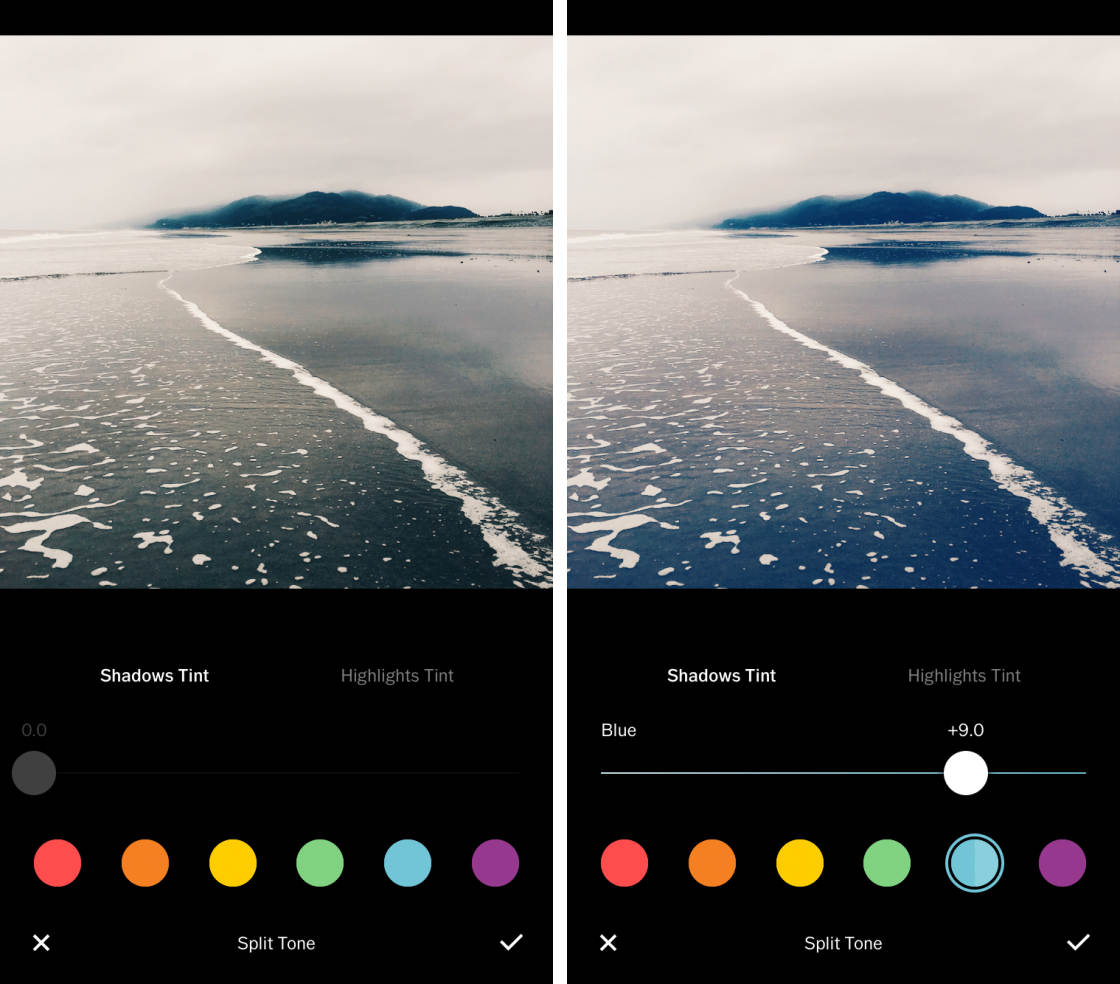
To tint the bright areas, selectHighlights Tint. The example of the right below has an orange tint practical to the bright areas of the photo.
iii.14 Borders
You can add together a border around your epitome using the Borders tool. A border can add together a finishing bear on to your edited photos.
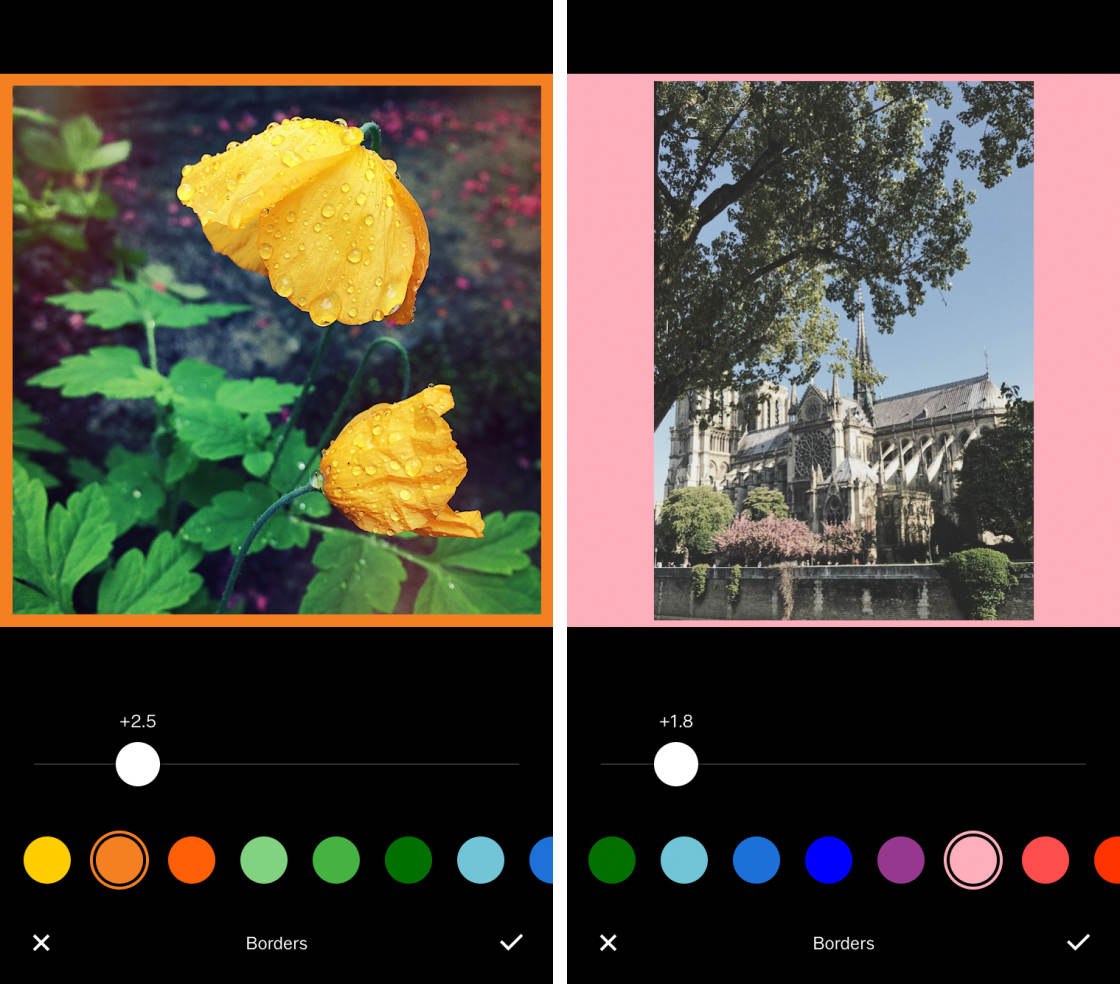
Drag the slider right to increment the width of the edge. So choose a border colour from the circles below the slider.
Note that the Borders tool is locked with the free version of the app. You can use the tool, but you lot can't relieve your border unless y'all subscribe to VSCO X.
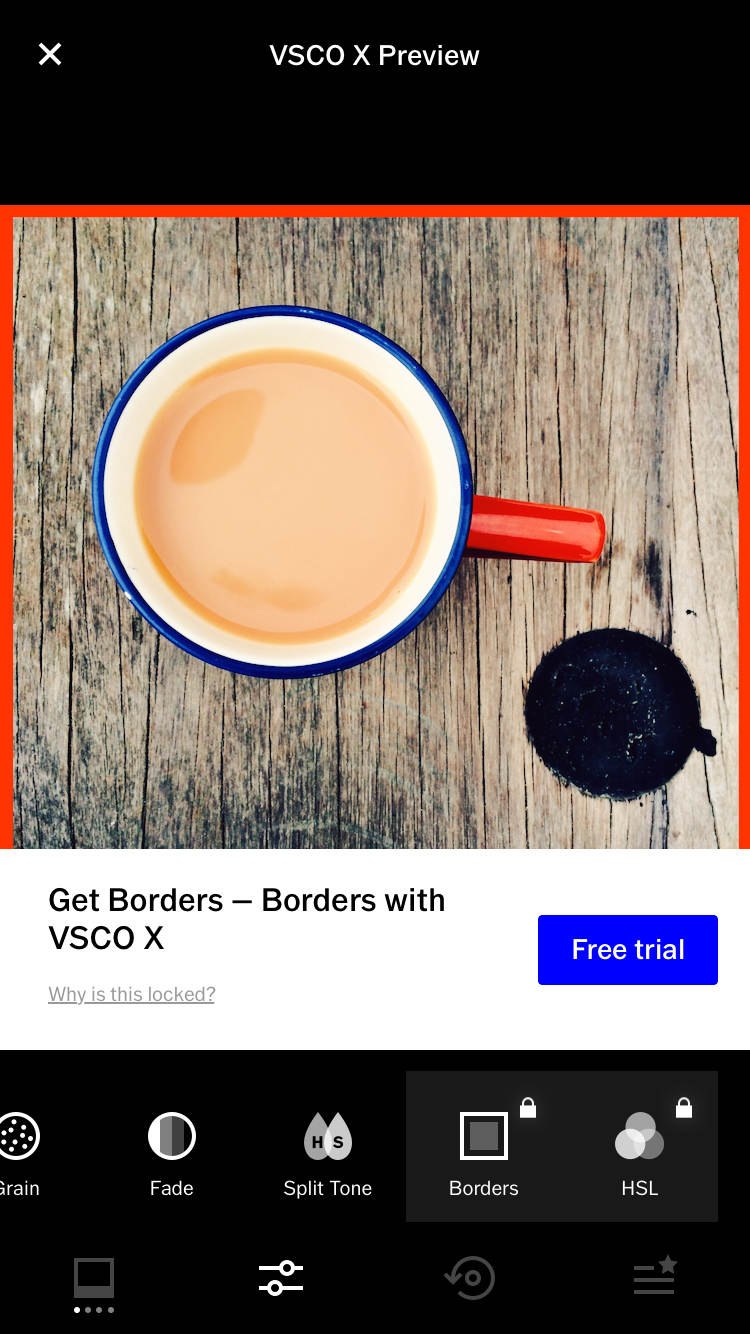
With VSCO 10, you lot pay $19.99 a yr to go access to every VSCO photograph editing tool and filter.
3.fifteen HSL (Hue, Saturation & Lightness)
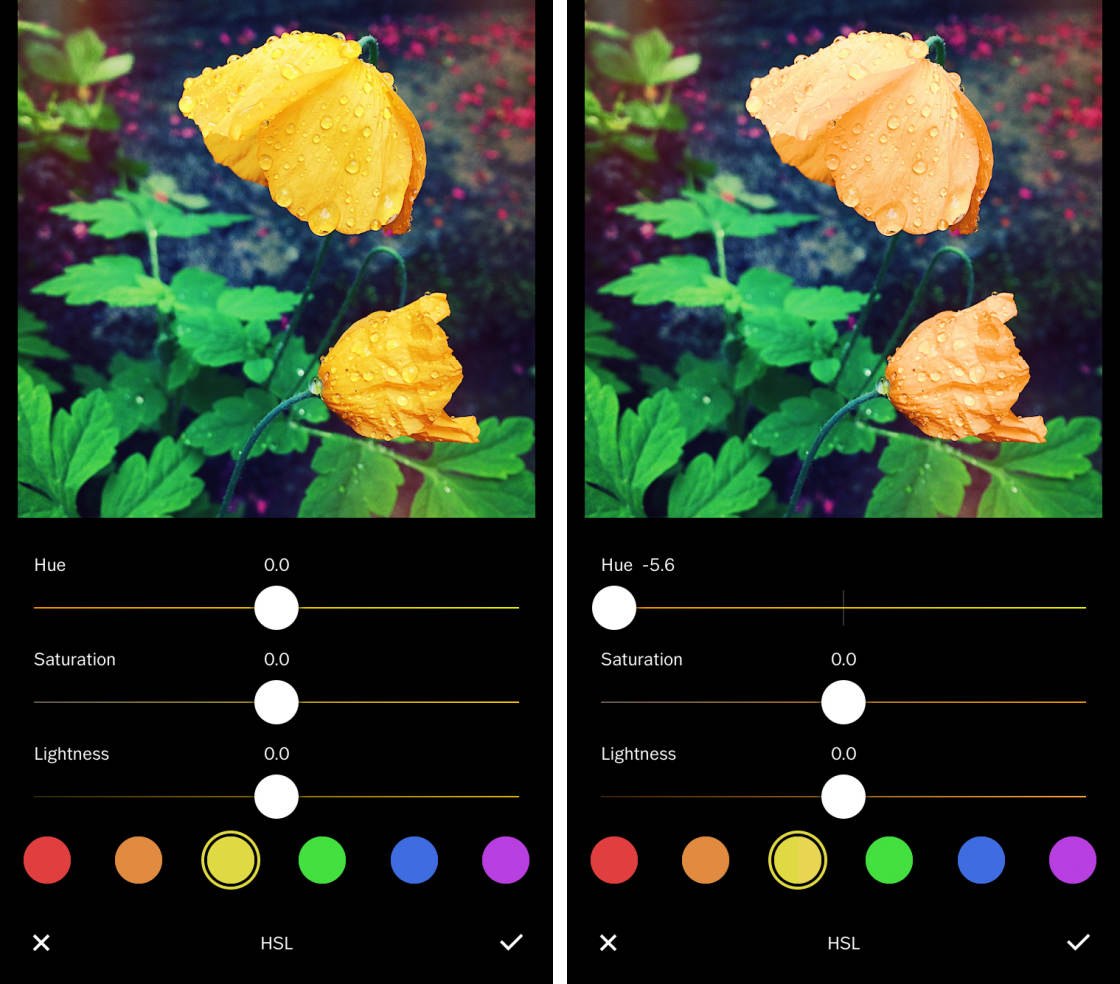
HSL stands for Hue, Saturation, and Lightness. These tools let y'all control the hue, saturation, and lightness for each color in your image.
First by selecting the colour you lot desire to change using the colored circles at the lesser of the screen. And so drag one of the sliders to accommodate only that colour in your photo.
Hue refers to the particular shade of a color. In the case below, only the yellowish hues in the photo have been changed using the Hue slider.
Saturation describes a colour's intensity. In the examples below, the Saturation slider was used to accommodate the vibrancy of only the blue colors.
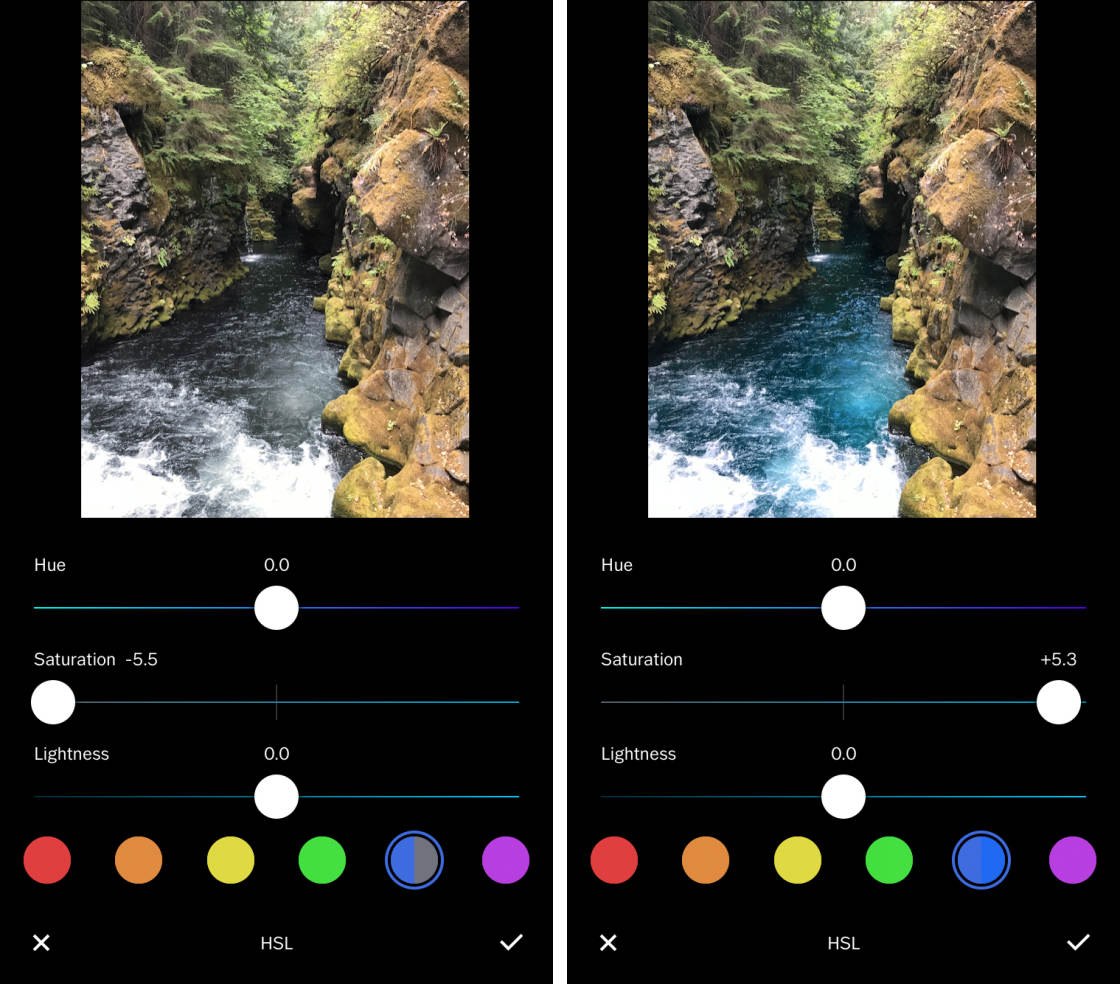
In the left photograph, saturation was reduced, making the blues appear more muted. In the right photograph, saturation was increased, making the blues appear more vibrant.
TheLightness slider lets you lot change how dark or light a particular color is. In the examples below, the lightness of just the blues was adjusted.
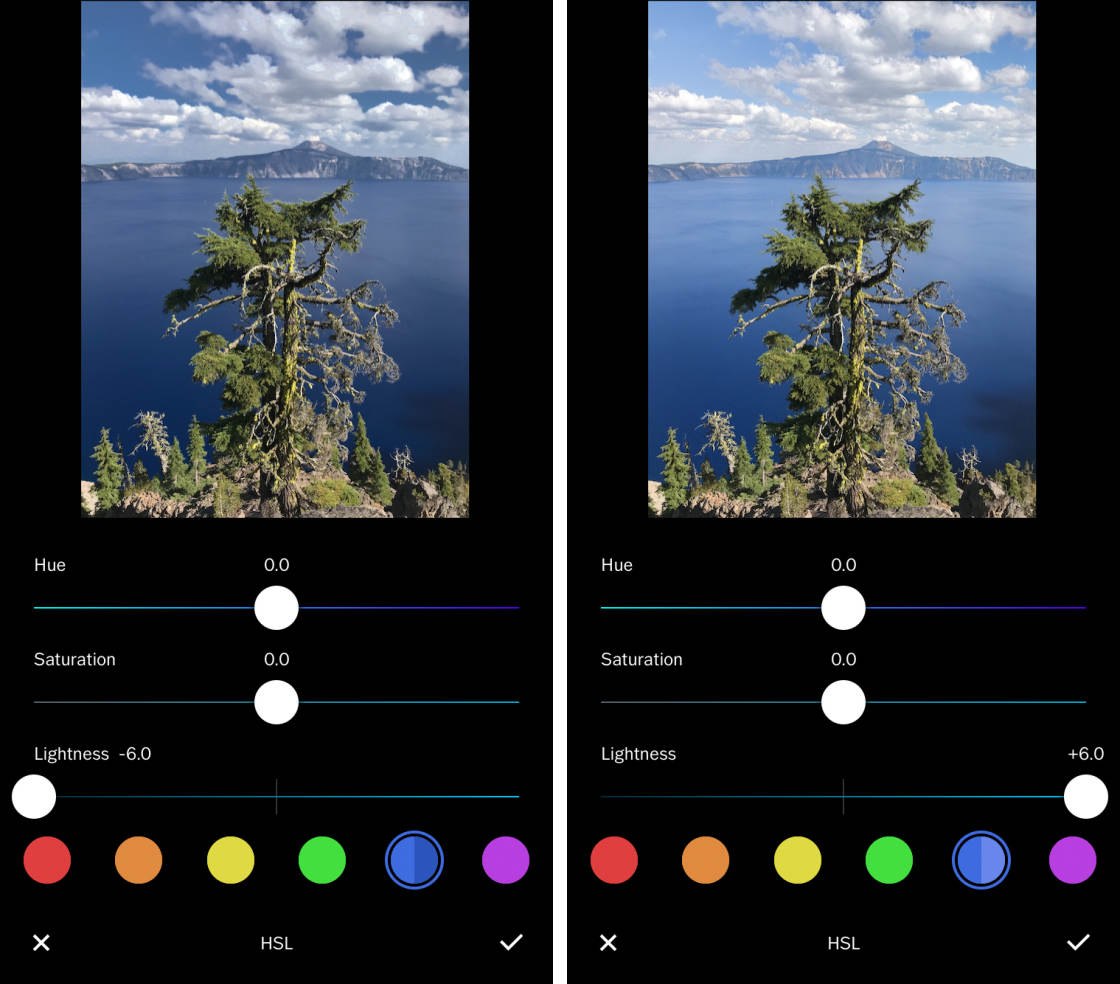
In the left photo, the lightness of the blues was reduced. This makes the bluish sky and water appear darker. In the right photo, the lightness of the blues was increased. The sky and h2o appear lighter, while the residue of the colors in the photo are unaffected.
As you can see from these examples, the HSL tool gives y'all ultimate control over every color in your photograph.
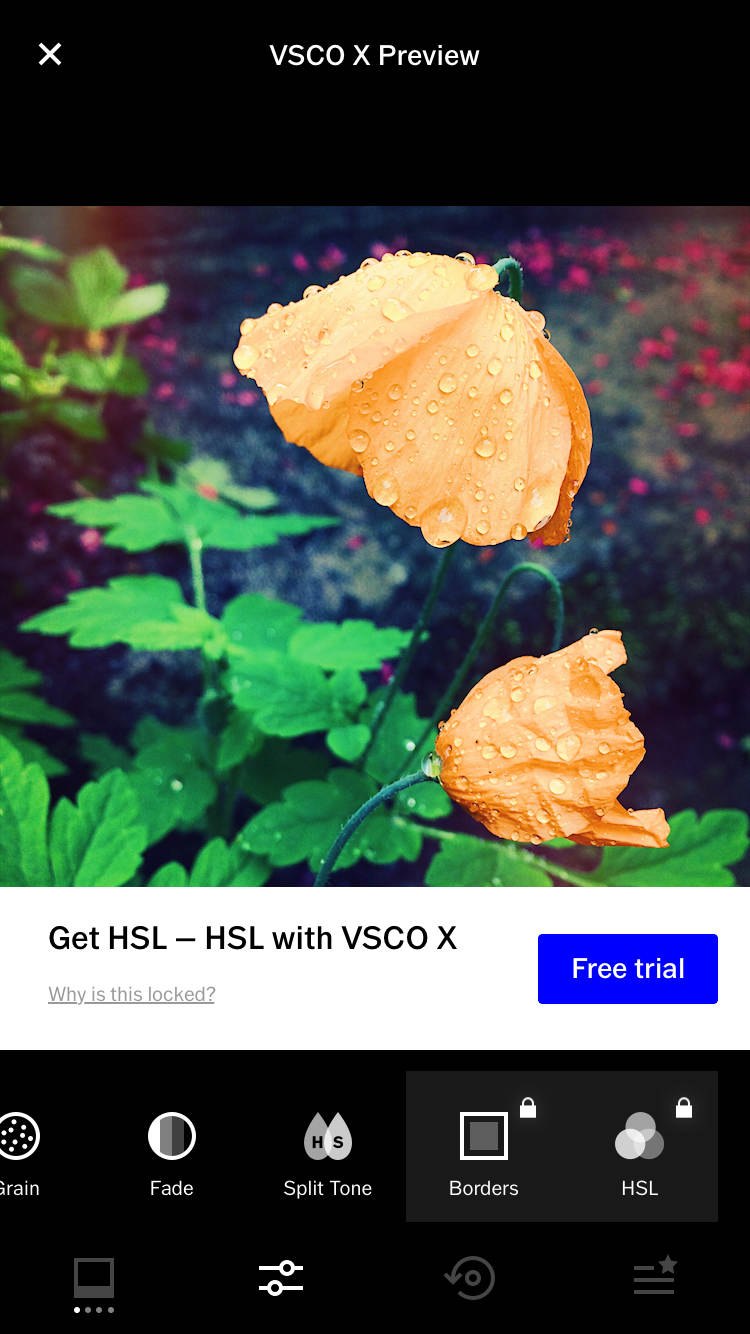
It'due south a powerful photo editing tool, only information technology's locked in the free version of the app. Yous can use the tool, just you tin't save your edits unless you subscribe to VSCO X.
3.sixteen Change Or Delete Private Edits
VSCO allows yous to view, change or delete individual edits that yous fabricated to an epitome. This is a useful tool for seeing what edits you've fabricated and tweaking them further. It'southward also helpful if you want to delete an edit that you lot no longer want.
At the bottom of the VSCO editor screen, tap the round arrow icon. A listing of your VSCO edits appears beneath the prototype. Scroll down to see more than edits.
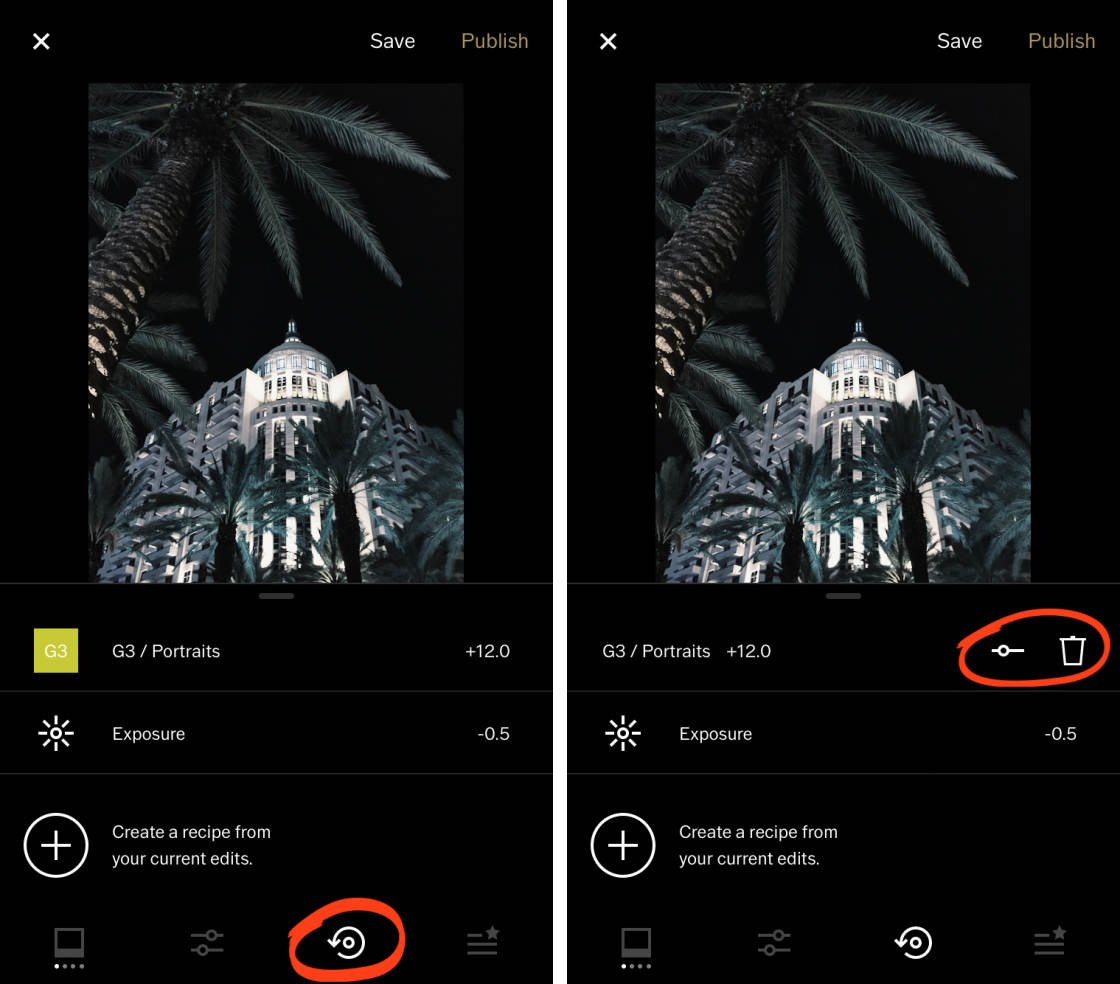
When you tap an item in the listing, two icons appear. Tap the trash icon to delete that edit from your image. Or tap the slider icon to open the adjustment slider for that particular edit.
To delete all edits that you lot made to the epitome, scroll to the bottom of the list and tapArticulate All.
4. Save Your Edited Photo
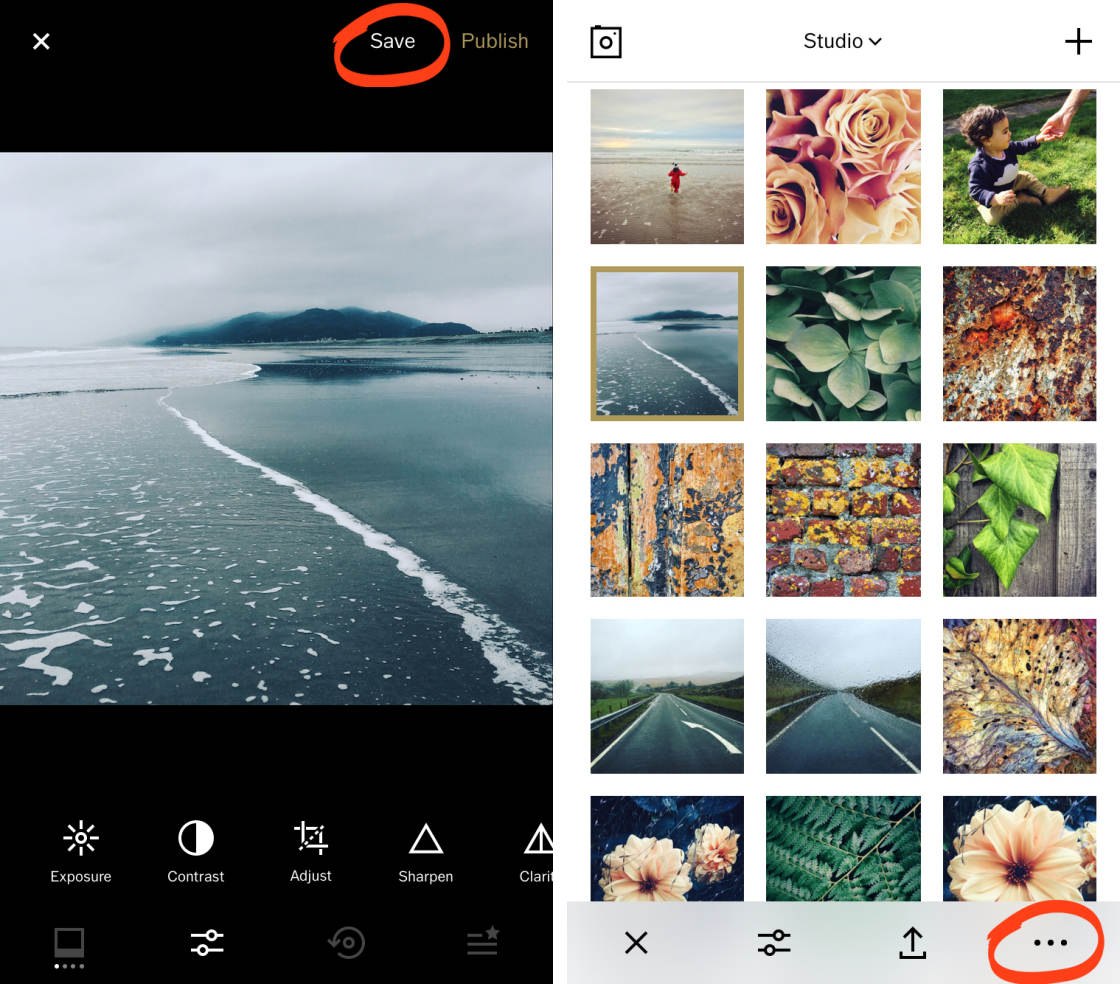
When you've finished editing your photo, tap Salvage at the top of the screen. This saves your edited photo into your VSCO studio.
You now demand to save the image to the Photos app on your iPhone. Select the image in your VSCO studio. Or select several images to relieve them all to your Photos app in one go. And then tap the Options icon (iii dots) at the lesser of the screen.
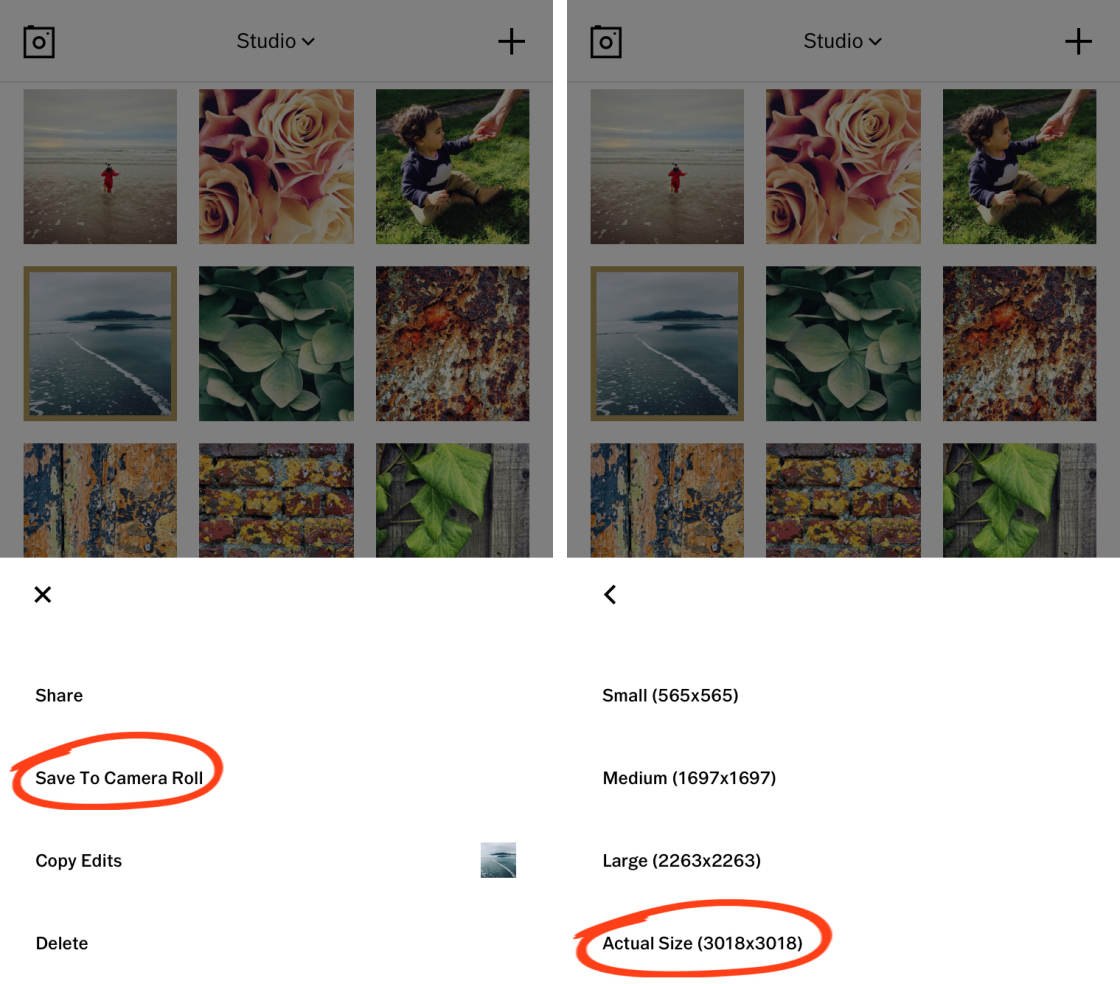
In the pop-up carte, tapSalve To Photographic camera Curlicue. Then select Bodily Size to save the image at the largest size and highest quality.
v. How To Use VSCO Camera
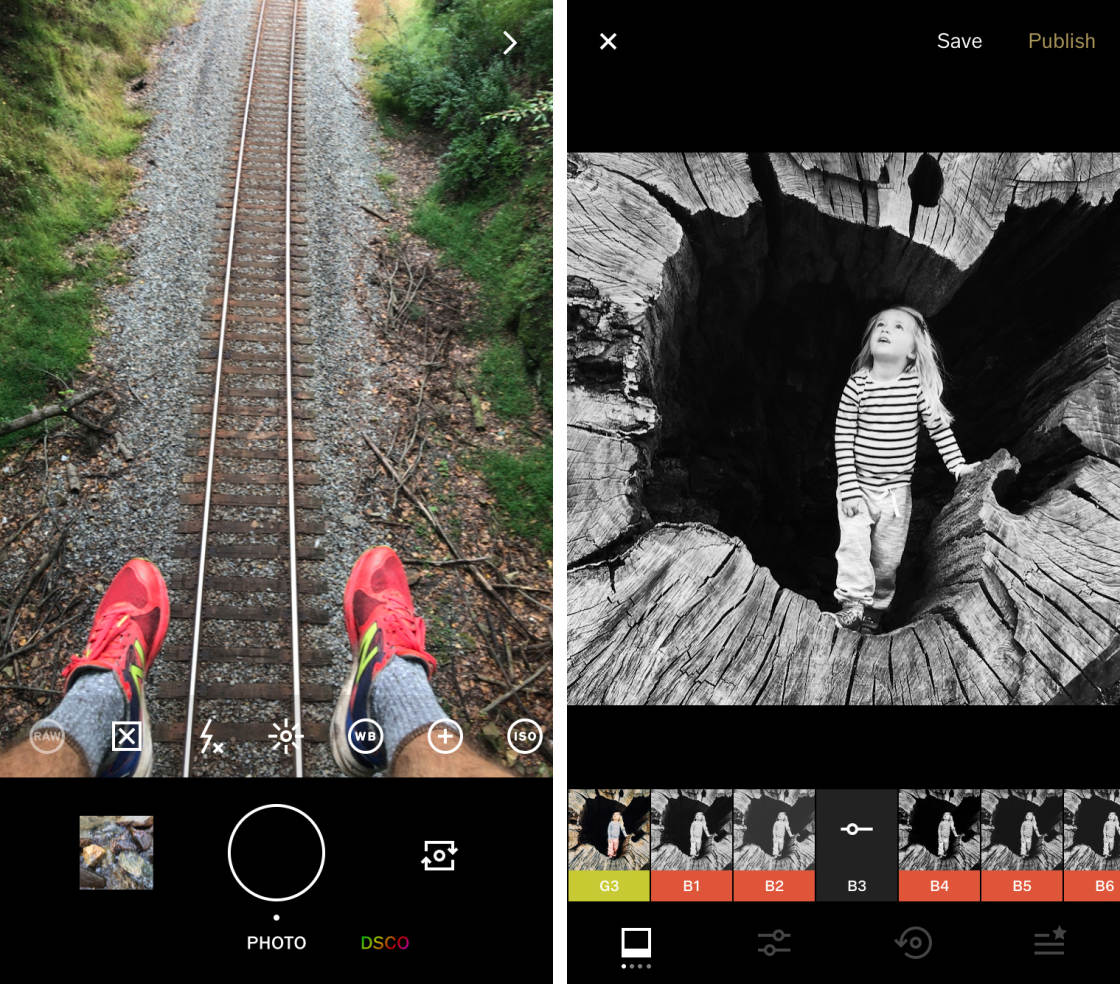
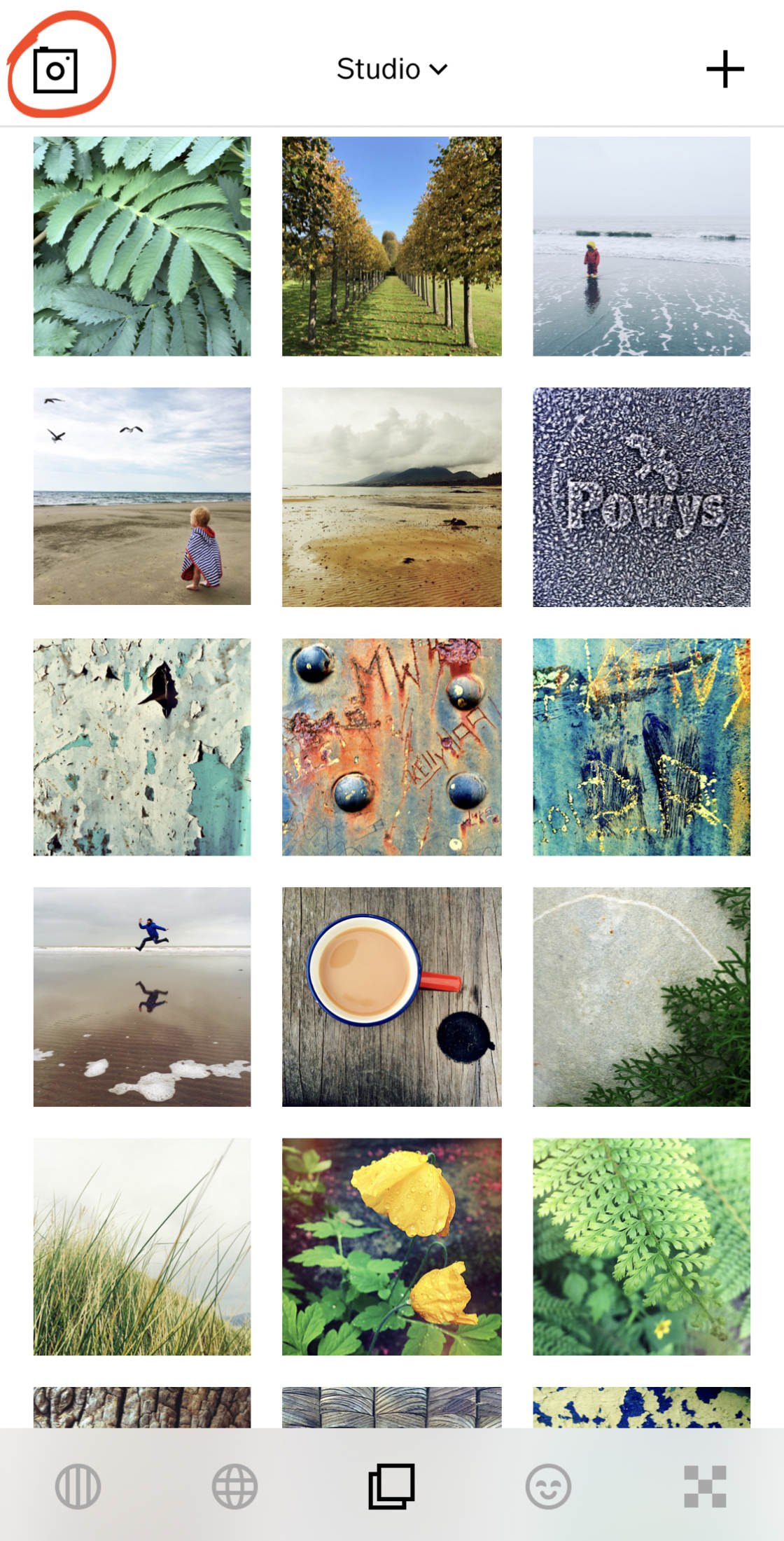
You can apply the VSCO camera to take photos, instead of using the iPhone's built-in Camera app. Tap theCameraicon at the top of the VSCO studio screen.
You can utilize the camera's auto settings. Or take control with DSLR-like advanced manual camera controls.
These include exposure compensation, shutter speed, ISO, white balance and manual focus.
Below you'll learn how to use the VSCO photographic camera controls. Only beginning, ensure the camera is fix to Photo fashion.
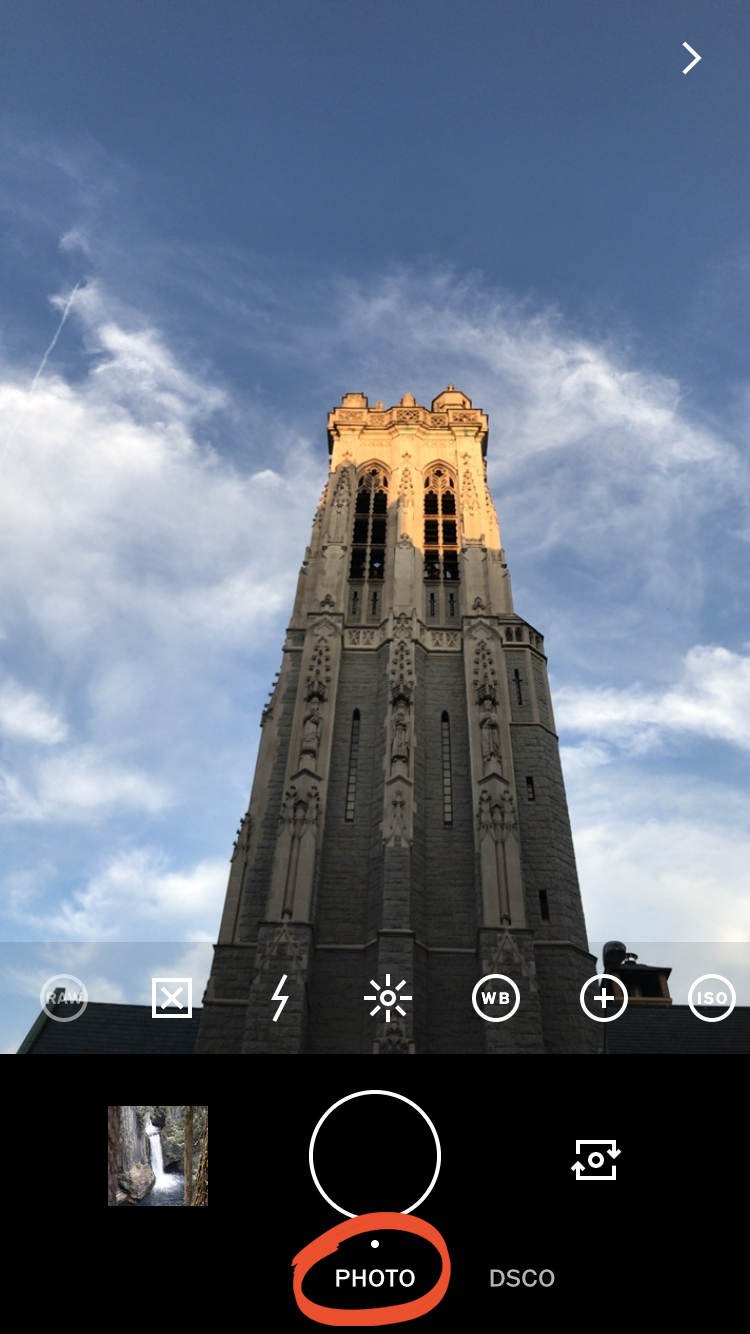
DSCO mode is for creating animated GIF videos. Y'all don't want to use this mode for shooting photos.
five.1 Focus & Exposure
It's essential to set focus and exposure before taking a photo. Setting focus ensures the most important part of the scene appears crisp and sharp.
Exposure controls the brightness of the image. Setting exposure ensures the prototype doesn't appear nether-exposed (too night) or over-exposed (too bright).
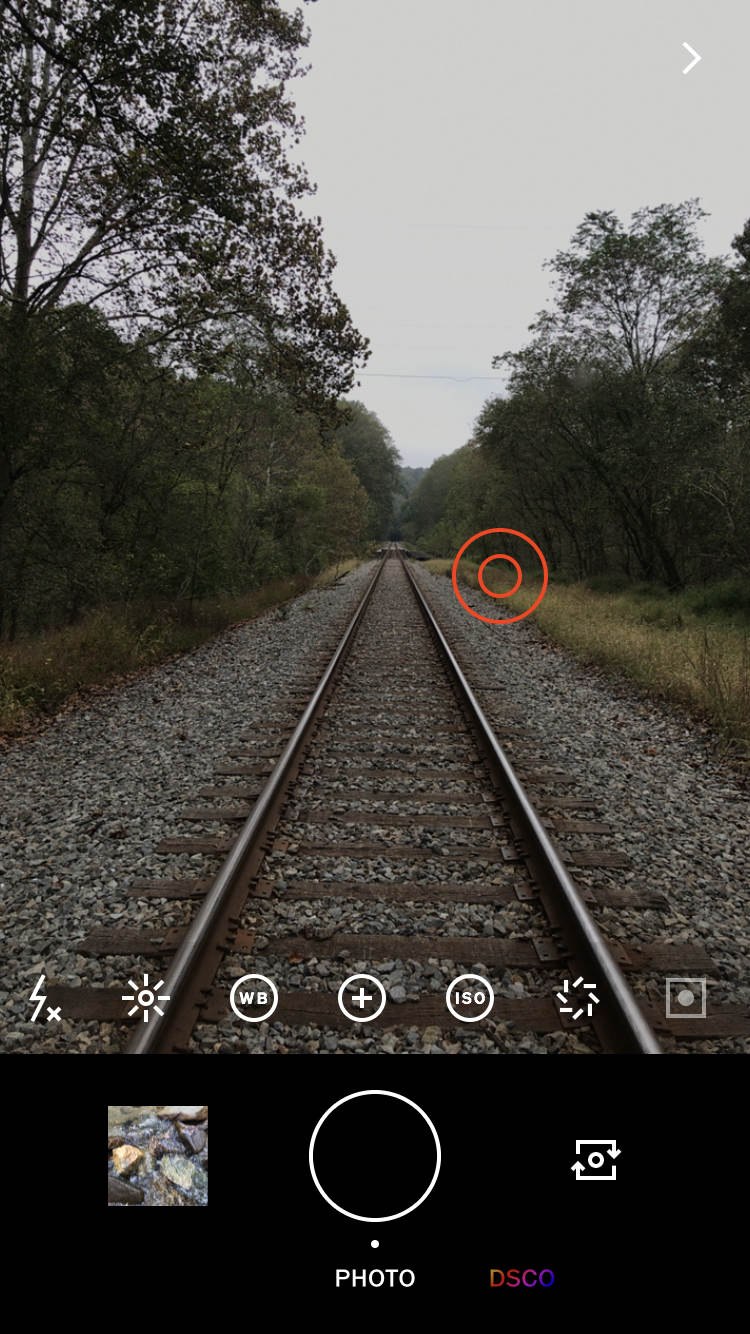
Tap the screen to set focus and exposure at a single indicate (indicated by two red circles).
To split the focus and exposure points, tap the screen with two fingers. The focus and exposure points will announced as two separate circles.
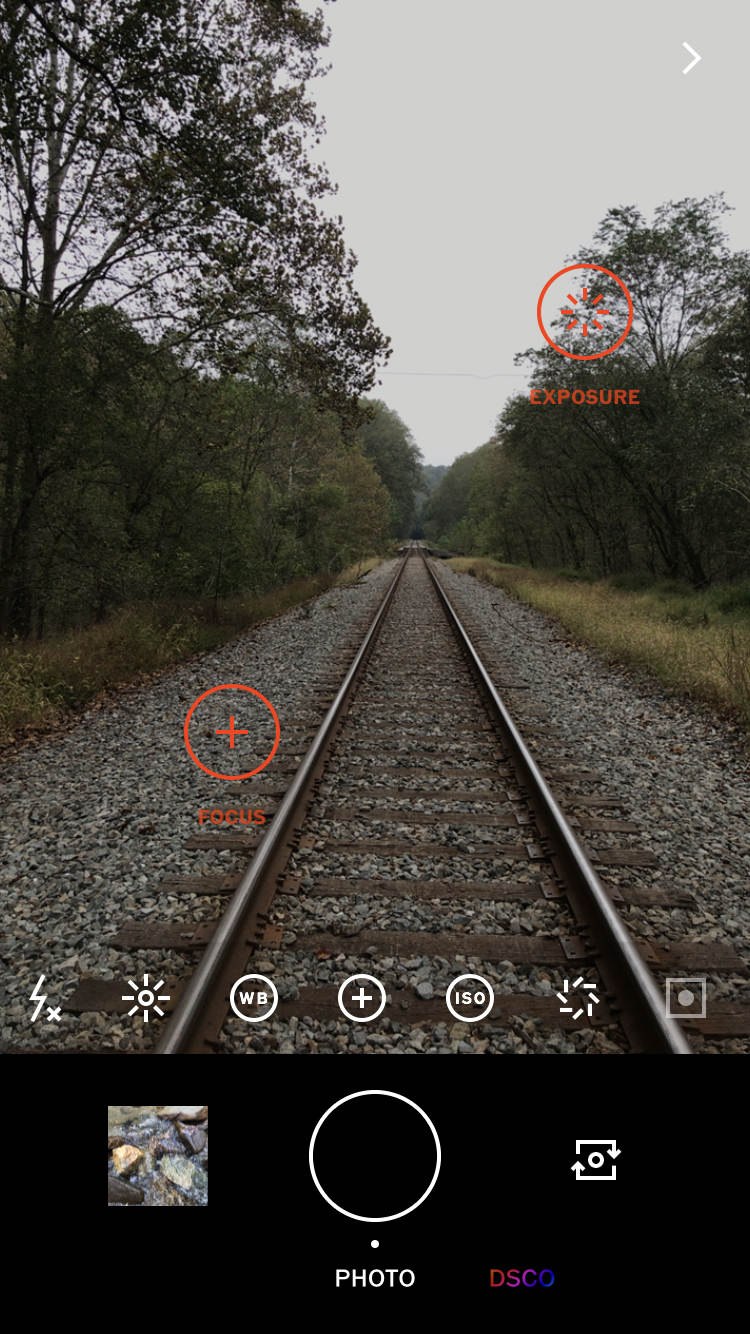
You can drag these focus and exposure points to any position. Drag the focus indicate to the function of the scene yous desire in sharp focus. And drag the exposure point to the area yous want correctly exposed.
Double-tapping the focus or exposure indicate will lock the current setting. Lock focus and exposure whenever you want to take several photos of the same scene. This will save you having to set focus and exposure for each new shot.
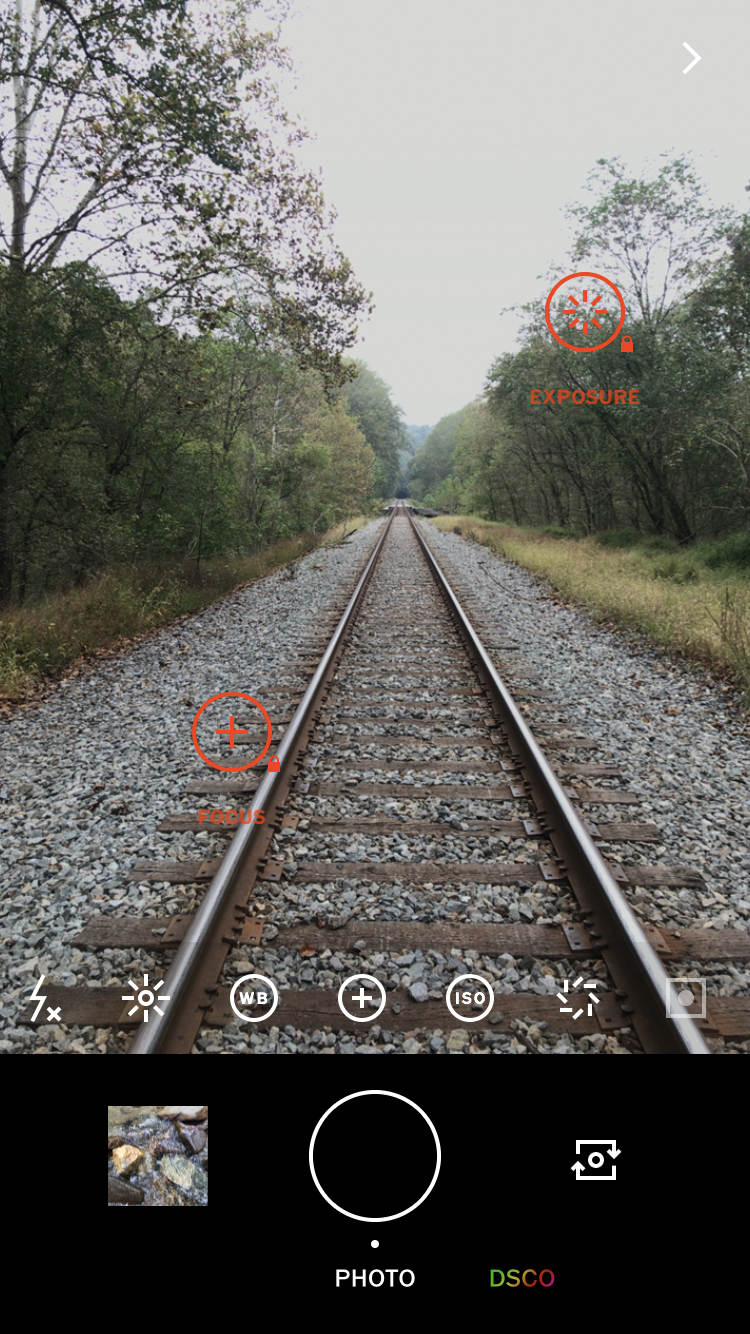
To unlock focus and exposure, drag the cerise circles to a dissimilar role of the screen. To exit the separate focus and exposure mode, double-tap the screen or drag 1 cerise circle onto the other.
five.2 Manual Camera Controls
The transmission camera controls are at the bottom of the viewfinder. Below you'll discover how to apply the VSCO photographic camera settings.
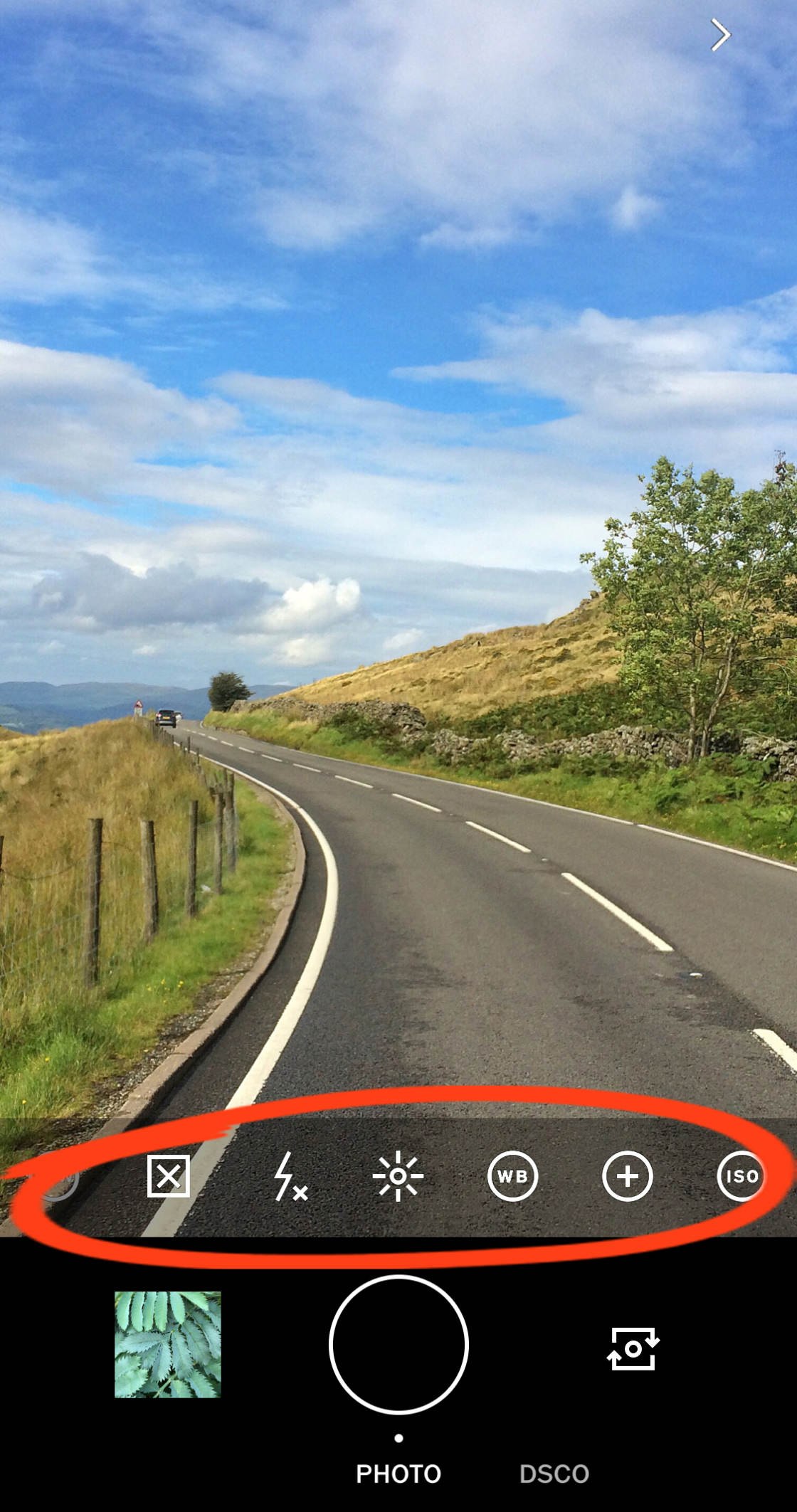
5.three RAW Format
The RAW icon lets you shoot in RAW file format. RAW images aren't compressed like a standard JPEG photo, and then they're much higher quality.
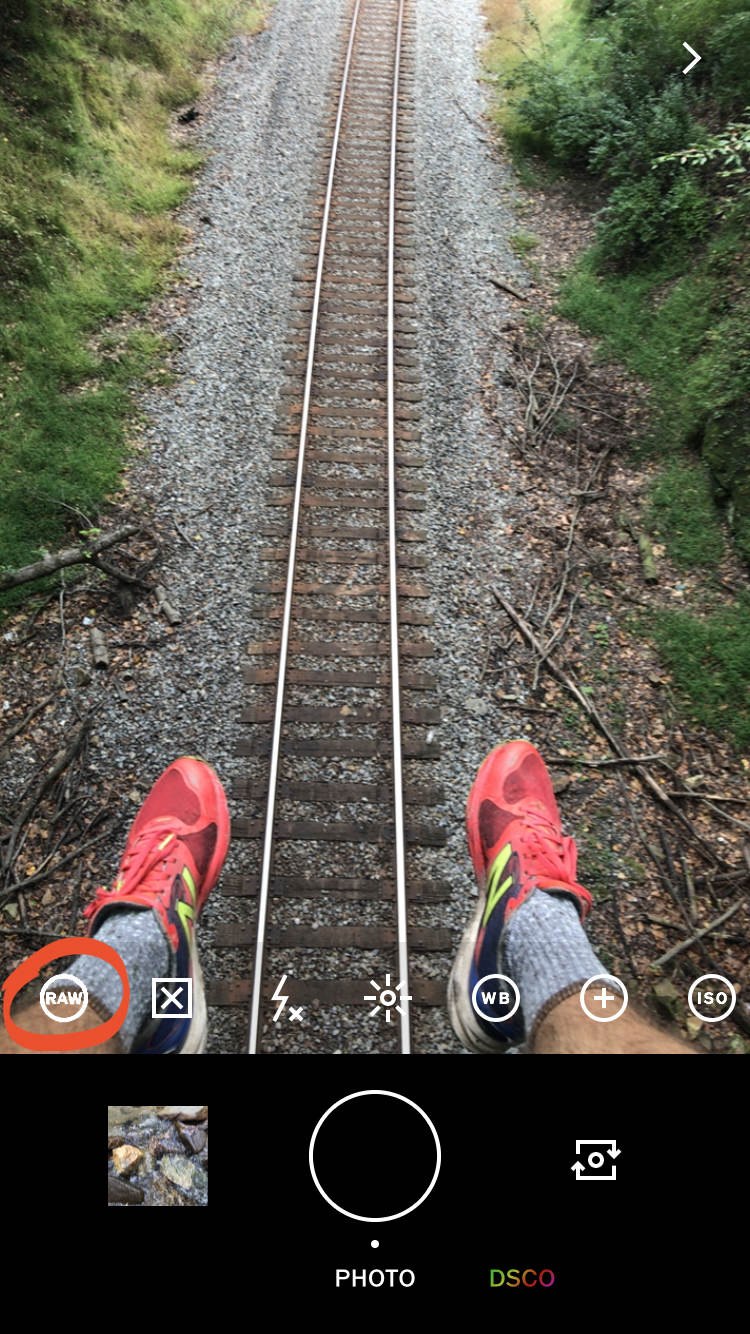
Shooting in RAW offers greater control when editing. For example, it allows you lot to bring out more detail in over-exposed and under-exposed areas.
Normally, if an image contains over-exposed areas that are pure white, you can't bring back any detail. But if you shoot in RAW, there'southward a improve take a chance that y'all'll be able to recover this lost detail.
If you want to create the highest quality edits in VSCO, switch on RAW when shooting. Simply be aware that RAW images accept much larger file sizes than JPEGs. And so yous may run out of storage space on your iPhone if you lot shoot a lot of photos in RAW.
5.4 Grid & Tiltmeter
The Grid icon lets you switch on the gridlines or tiltmeter.
Utilise the gridlines to help you line up the elements in your shot. Or switch on the tiltmeter to ensure your iPhone is level. This is useful for making sure the horizon is direct in your landscape photos.
Keep tapping the Filigree icon to toggle through the different filigree display options. When the icon appears as a filigree, you lot'll see the gridlines in the viewfinder.
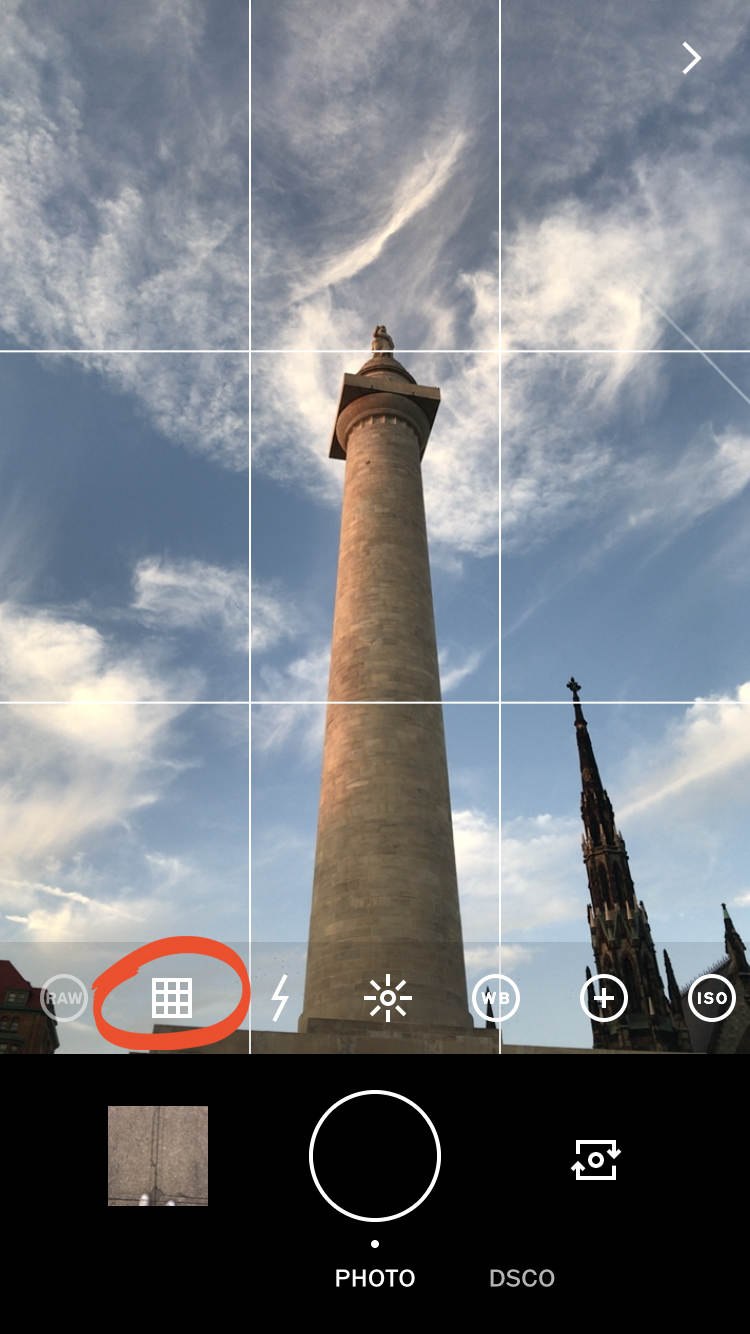
When the Grid icon appears with a single horizontal line, you'll run into the tiltmeter on your screen. This is an astonishing tool for ensuring your camera is level before taking your shot.
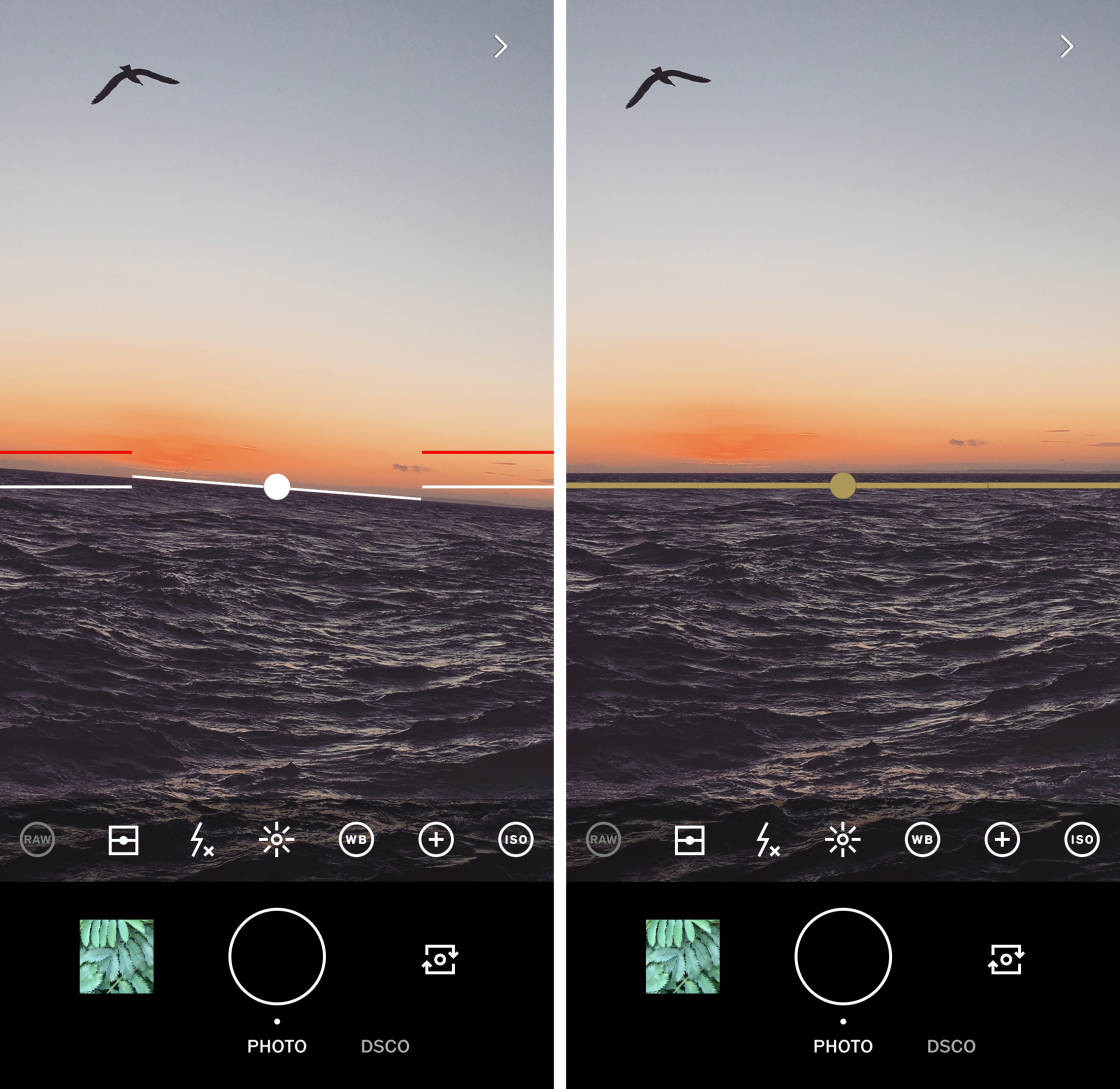
As you rotate your iPhone left or right, watch the leveling line rotate at the center of the screen. When the fundamental line turns dark-green, your phone is level.
The two red lines tell you whether your phone is tilted forwards or backward. To ensure your phone isn't tilted, line upwards the ruddy lines with the ii white lines on either side of the screen. They'll turn green when your phone is perfectly direct.
v.5 Flash
The lighting bolt icon offers four different flash options. You can use the flash to low-cal up a nighttime scene. But employ information technology with circumspection as the bright lite can create glare and harsh shadows.
Keep tapping the Flash icon to toggle through the unlike settings. When the Flash icon appears with an "Ten" side by side to it, the flash is off. The letter of the alphabet "A" means Auto Flash. If at that place isn't enough calorie-free, the flash volition automatically fire.
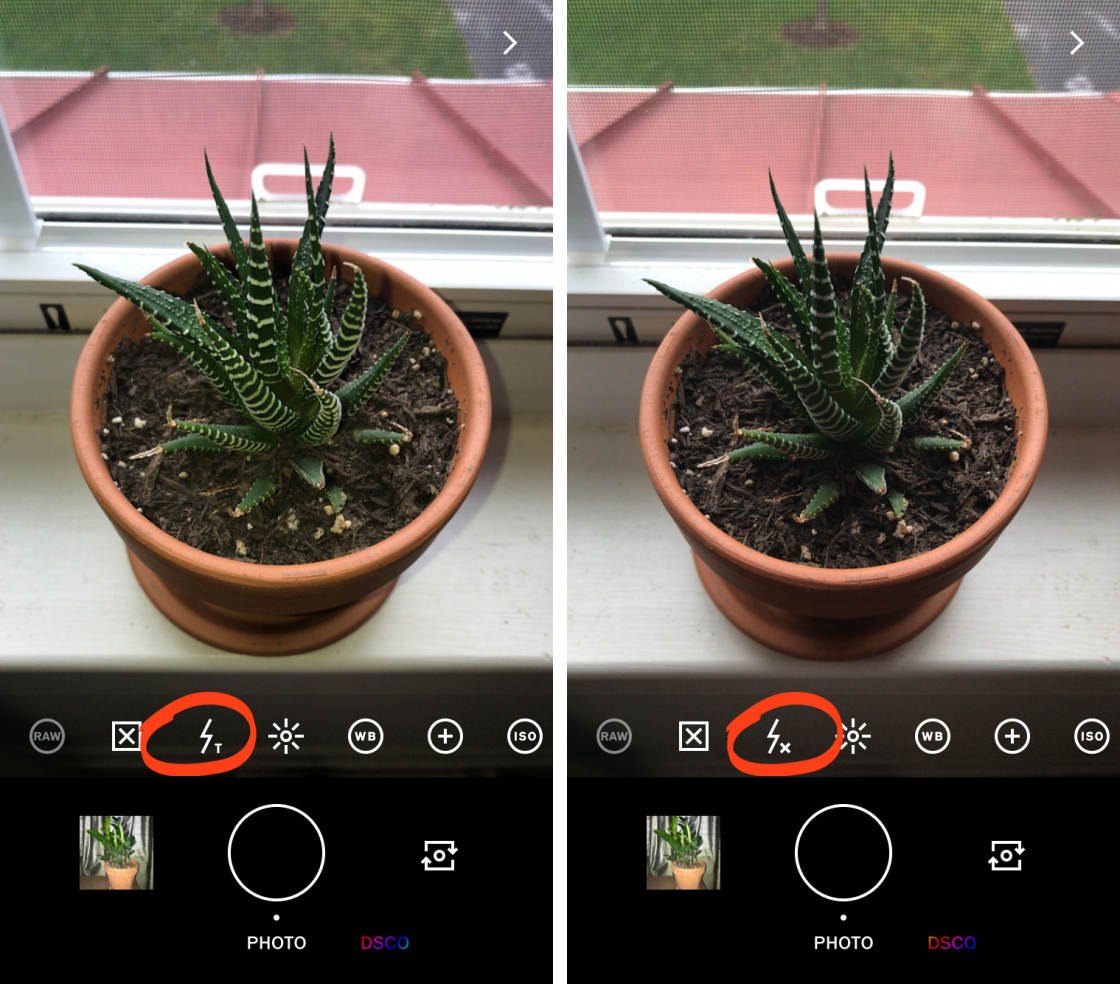
The lightning bolt icon without a letter next to it means the flash is On. The flash volition fire every time you have a photo.
The alphabetic character "T" means Torch mode, which provides a continuous beam of light. This is useful in very dark scenes to illuminate the field of study fifty-fifty before you printing the shutter.
v.vi Exposure Compensation
Exposure Bounty lets you control the effulgence of your prototype. Tap the Exposure Compensation icon (sun) at the bottom of the screen. Then drag the slider to adapt brightness.
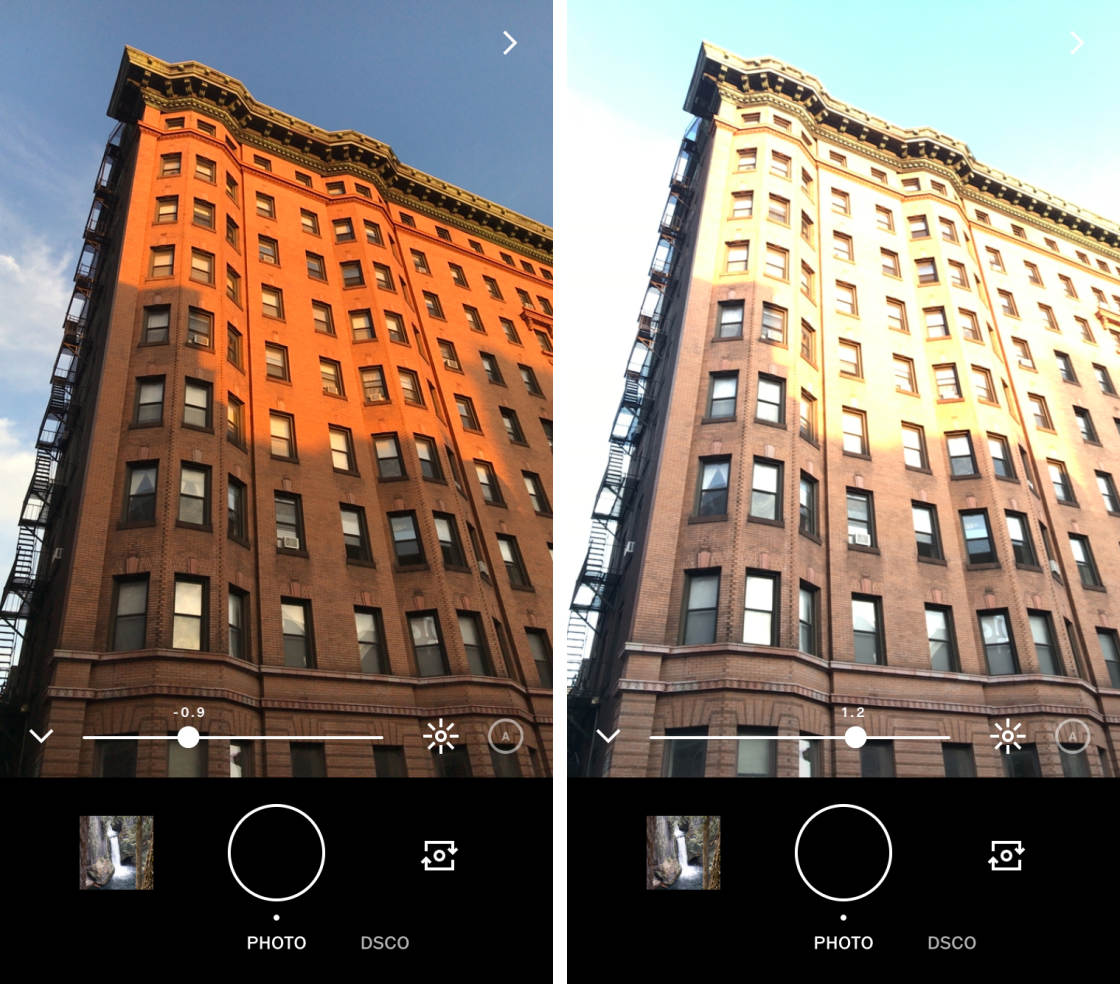
Tap "A" to the right of the slider if you want to revert to Auto Exposure. Tap the pointer to the left of the slider to leave Exposure Compensation.
5.seven White Balance
White Balance allows y'all to make the colors in your photo libation (more than blue) or warmer (more orange). Tap the WBicon, then drag the slider to accommodate the color.
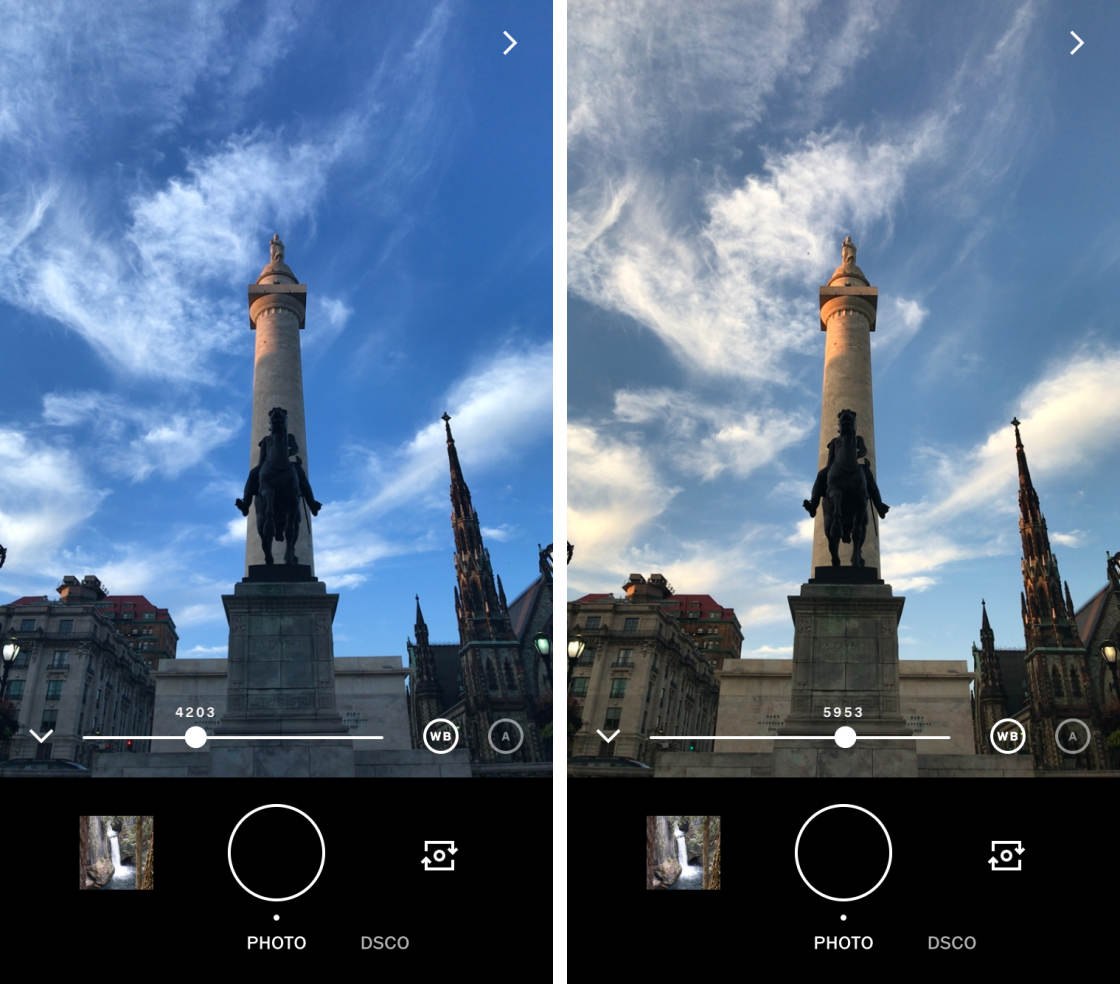
Tap "A" to the right of the slider to return to Auto White Balance. Tap the arrow to the left of the slider to leave the White Balance setting.
v.8 Manual Focus
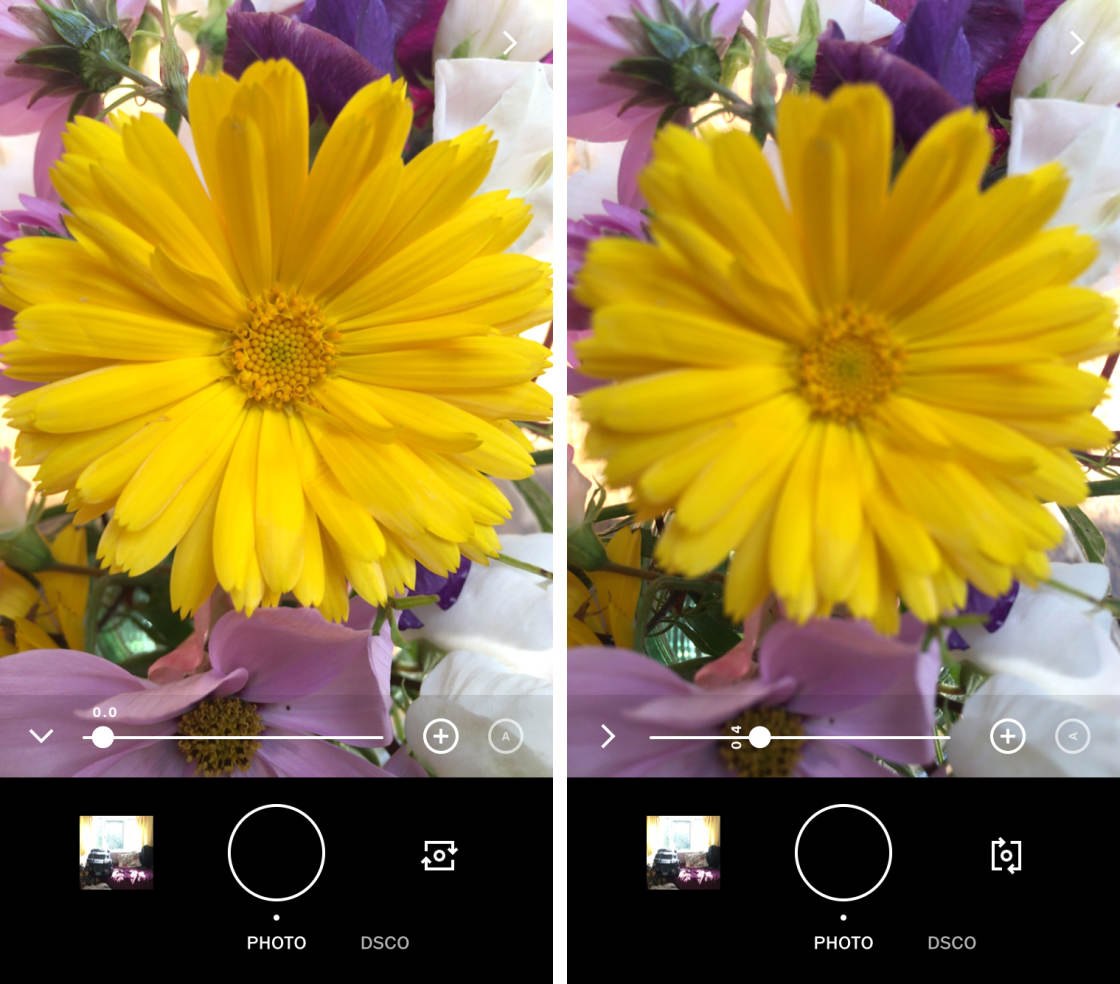
Manual Focus lets you control focus using a slider, rather than tapping on the screen. This is nifty for close-up photography when you want to ensure focus is assault the verbal spot you want.
Tap the Manual Focusicon (+ symbol), then drag the slider left or right to adjust focus. Tap "A" to revert to Car Focus. Tap the arrow to exit Transmission Focus.
5.9 Shutter Speed
The Shutter Speed icon (circumvolve fabricated up of minor lines) lets you adjust the photographic camera'due south shutter speed. Shutter speed refers to the corporeality of time the shutter is open when you have a photograph.
Drag the slider left to make the shutter speed faster. Or drag it right for a slower shutter speed.
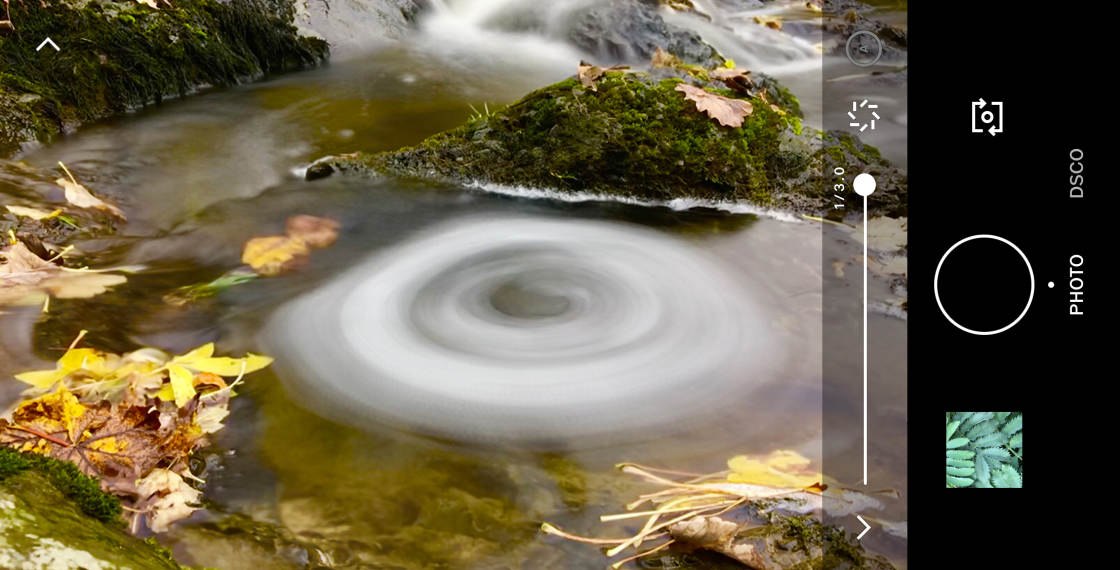
A boring shutter speed lets you create stunning long exposure photos. Any movement in the scene, such as flowing water or moving vehicles, will appear equally move blur.
Past contrast, a fast shutter speed freezes motion. Use a fast shutter speed to capture abrupt photos of moving subjects or to avoid camera milkshake in low calorie-free.
5.x ISO
The ISO setting controls the camera's sensitivity to low-cal. Increasing the ISO makes the photographic camera more sensitive to light. This ways you can shoot with faster shutter speeds in low calorie-free, helping y'all avoid camera shake.
Tap the ISOicon, then drag the slider left or right. Drag left to brand the camera less sensitive to calorie-free. Drag correct to make the camera more sensitive to light.
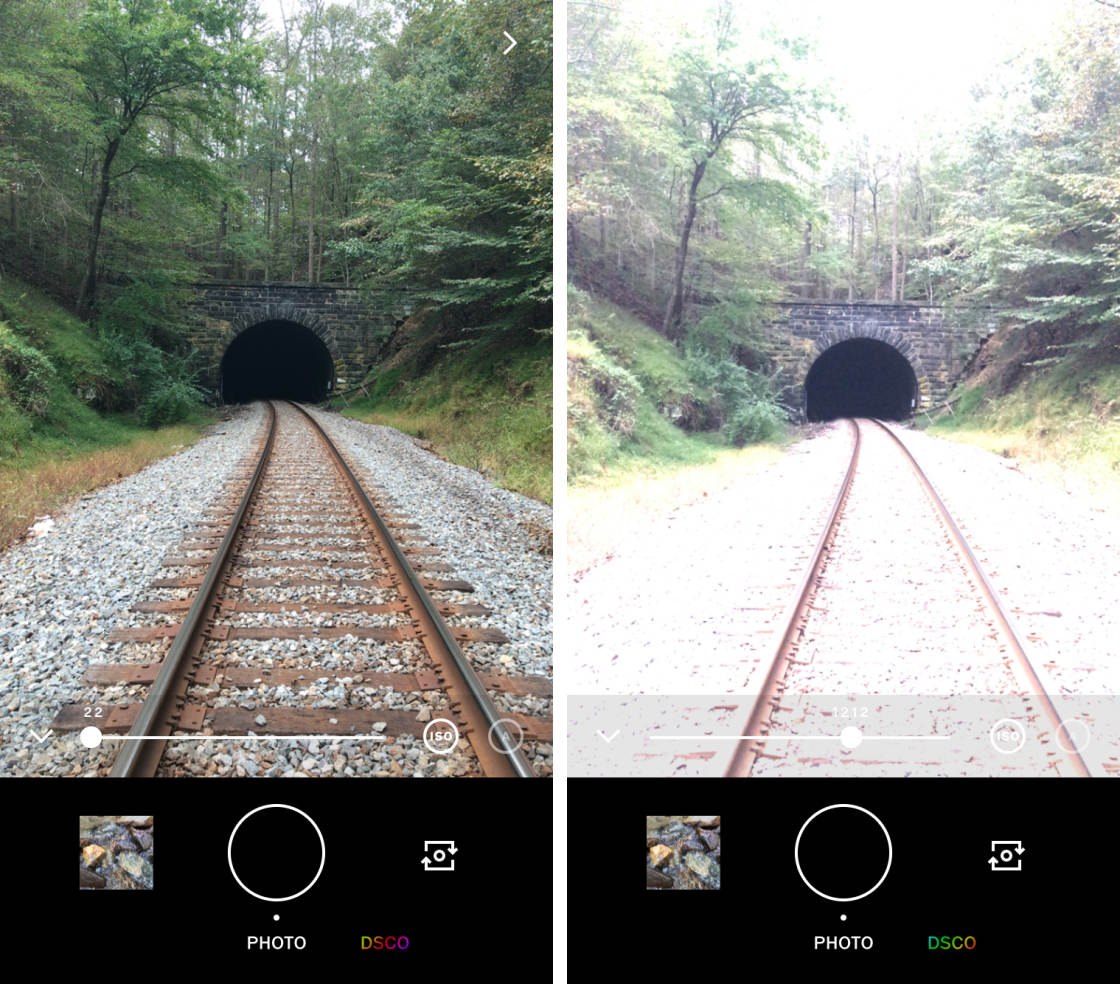
Employ a low ISO setting in bright conditions. If you apply a high ISO in bright light, your photo may appear over-exposed as shown in the right-hand paradigm above.
Use loftier ISO settings in depression light, so that you can employ a faster shutter speed. But proceed in listen that loftier ISO settings tin can innovate noise (grain) into your photo.
5.11 Preview Your Photos
When you take a photo, you can view information technology by tapping the paradigm thumbnail at the bottom left of the screen. Scroll through your recent photos past swiping across the screen.
When viewing a photograph, you have several options. To edit the paradigm, tap theEditicon (two sliders) at the bottom of the screen. Tap theOptions icon (iii dots) to save, delete or share the photograph.
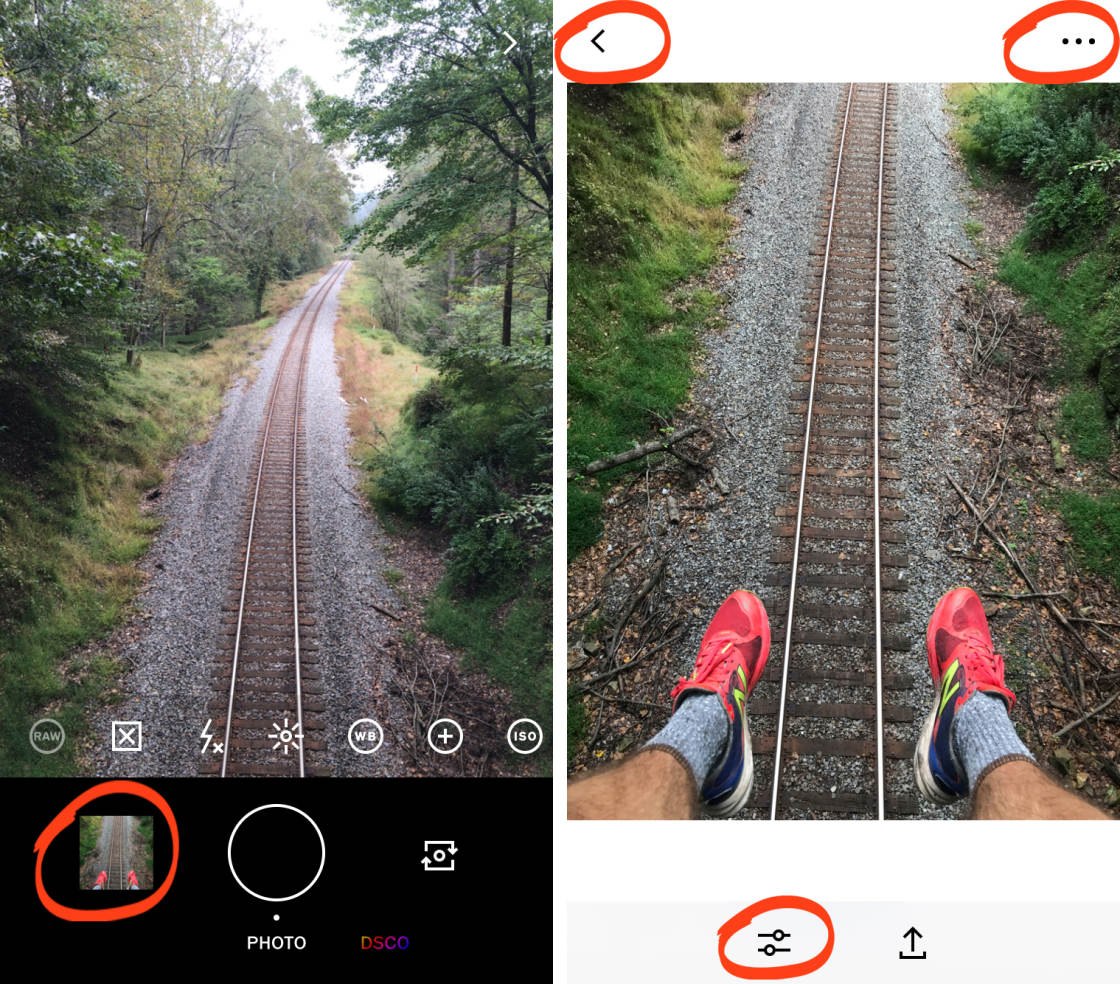
To leave the image preview, tap the arrow at the acme left. This takes y'all to your VSCO studio where all of your images are stored.
If you want to take more photos, tap theCameraicon at the superlative of the screen. To exit the camera and return to your VSCO studio, tap the arrow at the summit right of the photographic camera screen.
v.12 VSCO Camera Vs. iPhone Camera App
The VSCO camera has more manual controls than the iPhone's congenital-in Camera app. If you desire to control white rest, shutter speed, ISO and transmission focus, VSCO is a great choice.
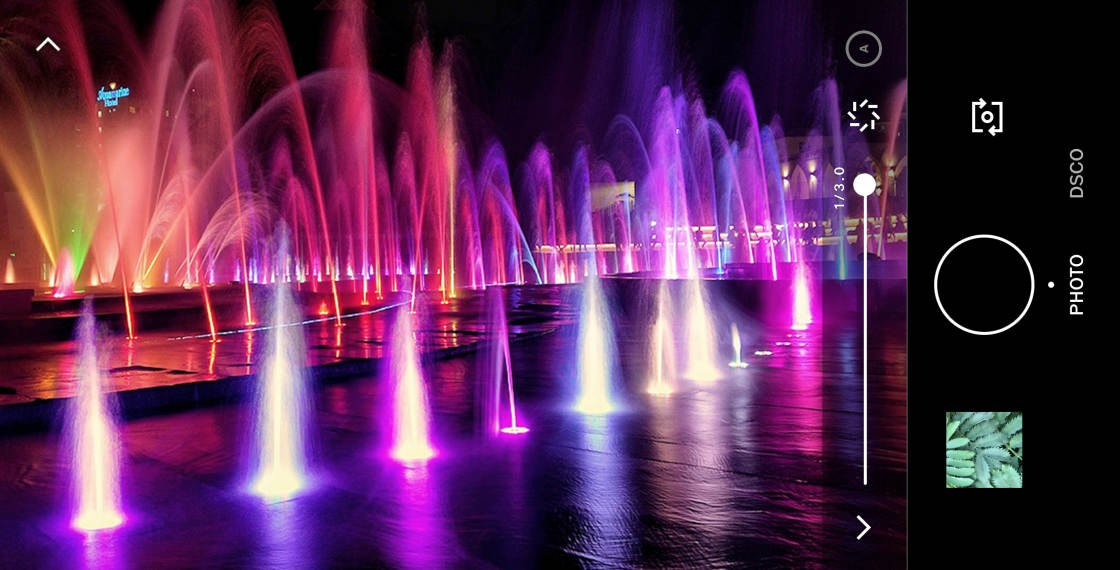
Only the VSCO photographic camera does lack sure features that you'll observe in the iPhone Photographic camera app. VSCO doesn't have burst mode, self-timer, HDR, Portrait Mode or Live Photos.
You lot tin't shoot broad panoramic photos with VSCO. And you can't shoot video, time-lapse or slow-motion footage.
Source: https://iphonephotographyschool.com/vsco/
0 Response to "How to Upload Raw Photos to Vsco"
Postar um comentário